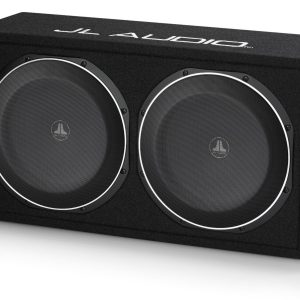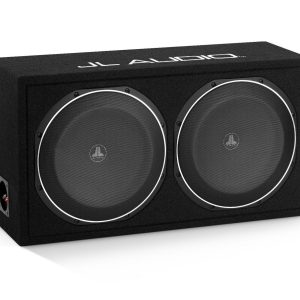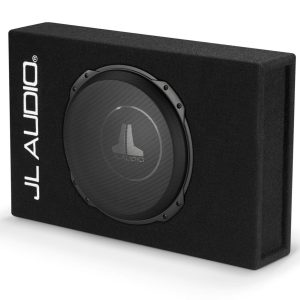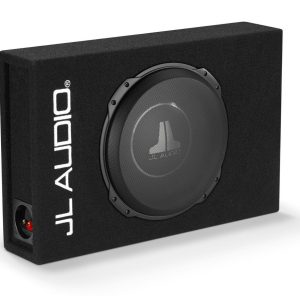
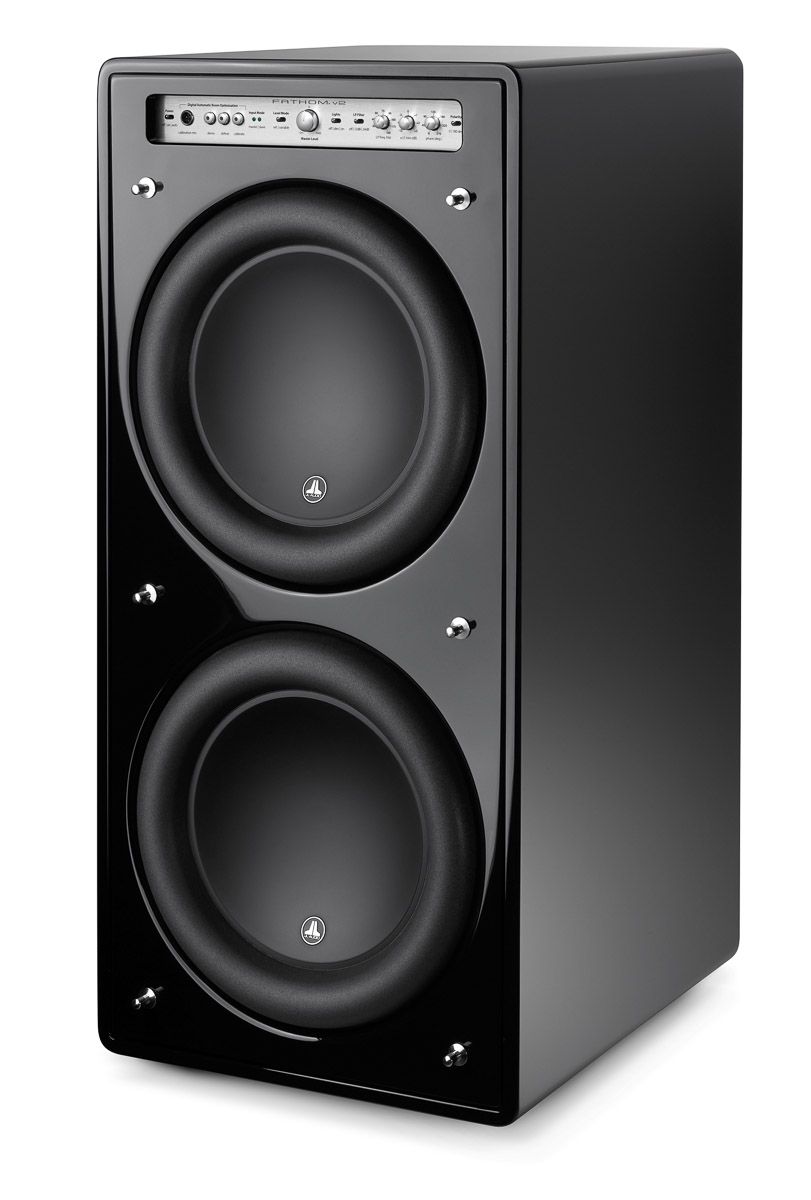
JL Audio Fathom f212v2-GLOSS Subwoofer
10 000,00 €
JL Audio Fathom f212v2-GLOSS is an active subwoofer for demanding stereo and home cinema systems. Its sealed enclosure and 20-97 Hz frequency response within ±1.5 dB support precise adjustment of the low-frequency channel. RCA and XLR inputs provide two line-level connection options, but there is no speaker-level input. D.A.R.O. calibration with the supplied microphone helps adapt reproduction to the room.
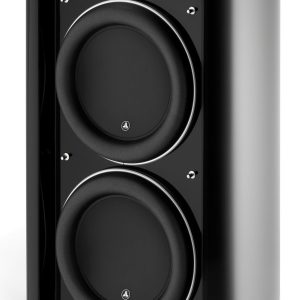
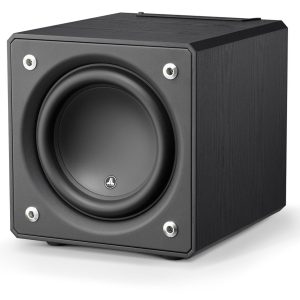
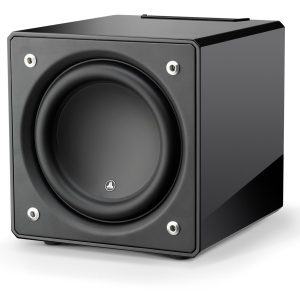
JL Audio Fathom f212v2-GLOSS is an active subwoofer for stereo and home cinema systems. It features a sealed enclosure with a gloss black finish. Its anechoic frequency response is 20-97 Hz within ±1.5 dB, while the built-in amplifier delivers 3.6 kW RMS in short-term operation.
Design and purpose
This model is designed for systems that require a self-powered low-frequency channel. Its sealed enclosure has no bass-reflex port. However, nearby walls and corners will still affect bass output at the listening position.
The effective piston area is 0.1084 m², and the effective displacement is 9.4 litres. These measurements describe the effective moving surface and the volume it can displace.
Signal connections
Two RCA inputs accept an unbalanced stereo or mono signal. Two XLR input sockets support a balanced stereo or mono connection. XLR is useful with equipment fitted with balanced outputs or where the signal cable needs to cover a longer distance.
There is no speaker-level input. The source must therefore provide a compatible RCA or XLR line-level, preamplifier or subwoofer output. The grounding configuration can be set to isolated or grounded. This option can help when troubleshooting hum caused by a ground loop.
Master and slave operating modes allow suitably configured subwoofers to be linked. A single balanced XLR slave output is provided for this purpose. There are no conventional line-level outputs.
Adjustment and control
The level control offers a fixed reference setting and a variable mode. In variable mode, the level can be adjusted from complete mute to 15 dB above the reference level. The fixed setting is convenient when an AV receiver or processor controls the subwoofer volume.
The low-pass filter can be adjusted from 30 to 130 Hz, with a choice of 12 or 24 dB per octave slopes. It can also be switched off when crossover duties are already handled elsewhere in the system. This prevents two filters from affecting the same frequency range.
Polarity can be switched between 0° and 180°, while phase is continuously adjustable from 0° to 280°. Compare the settings from the main listening position rather than beside the enclosure. Select the setting that produces the most seamless transition between the main speakers and the subwoofer.
D.A.R.O. automatic room optimisation is supplied with a laboratory-grade calibration microphone. Calibration should be carried out after the subwoofer and main listening position have been finalised.
Power can be switched off, left permanently on or activated automatically when a signal is detected. The indicator can be switched on, switched off or dimmed.
Placement
Begin with the subwoofer near the front wall, then compare several positions from the listening seat. Placing it in a corner will usually increase bass output, but it may also emphasise room resonances. Use a firm, level surface and leave sufficient clearance for the connections and controls.
Technical specifications
| Type | Active subwoofer |
|---|---|
| Enclosure | Sealed |
| Finish | Gloss black |
| Anechoic frequency response | 20-97 Hz, ±1.5 dB |
| -3 dB limits | 19 Hz and 110 Hz |
| -10 dB limits | 15 Hz and 157 Hz |
| Effective piston area | 168 sq. in. / 0.1084 m² |
| Effective displacement | 574 cu. in. / 9.4 l |
| Amplifier power | 3.6 kW RMS, short-term |
| Power modes | Off, on or automatic signal detection |
| Indicator modes | Off, on or dimmed |
| Unbalanced inputs | 2 RCA, stereo or mono signal |
| Balanced inputs | Two XLR input sockets, stereo or mono signal |
| Speaker-level inputs | None |
| Grounding | Isolated or grounded |
| Operating modes | Master or slave |
| Level control | Fixed reference level or mute to +15 dB |
| Filter | Low-pass |
| Filter slope | 12 or 24 dB per octave |
| Filter frequency | 30-130 Hz |
| Filter defeat | Yes |
| Polarity | 0° or 180° |
| Phase | Continuously adjustable from 0° to 280° |
| Conventional line outputs | None |
| Slave output | One balanced XLR slave output |
| Calibration | D.A.R.O. automatic room optimisation |
| Calibration microphone | Laboratory-grade microphone included |
FAQ
Can the subwoofer be connected directly to an amplifier’s speaker terminals?
No. It does not have a speaker-level input. A compatible RCA or XLR line-level, preamplifier or subwoofer output is required.
When should I use RCA, and when should I use XLR?
Use RCA with a source that has an unbalanced output. Choose XLR for balanced equipment or a longer signal run. The connecting cable must match the source output.
How should I use the filter with an AV receiver?
If the receiver manages the crossover, switch off the subwoofer’s internal filter. This avoids applying two filters to the same frequency range.
How should I begin adjusting the phase?
Start by comparing the 0° and 180° polarity settings. Then adjust the phase continuously while listening to the transition between the subwoofer and the main speakers.
Where should I place this subwoofer?
Place it on a firm, level surface and test several locations. Judge the final position from the main listening seat rather than while standing next to the enclosure.
What is the supplied microphone used for?
The microphone is intended for D.A.R.O. room calibration. Run the calibration after selecting the final positions of the subwoofer and the main listening seat.