Audio System AE650C Component Speaker System
300,00 €
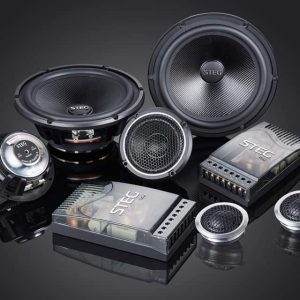
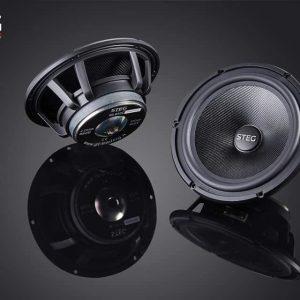
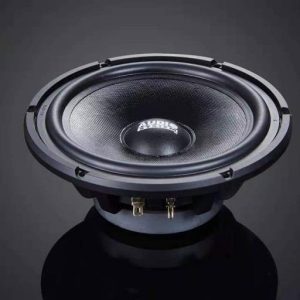
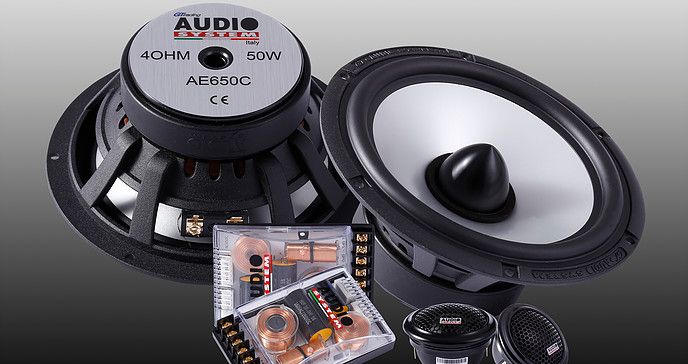
Audio System AE650C is a two-way component speaker system for car audio installations. Its separate woofer and tweeter allow their mounting positions to be selected independently. The woofer has a synthetic-metal diaphragm, while the tweeter uses a black silk diaphragm. Installation requires cutouts measuring 147 mm and 52.5 mm in diameter. The stated power figures are the maximum input ratings of the individual drivers.
Audio System AE650C speakers are a two-way component system designed for in-car audio installations. The woofer and tweeter reproduce separate frequency ranges, allowing their installation positions to be planned independently.
The woofer requires a 147 mm mounting cutout and 68 mm mounting depth. The tweeter requires a 52.5 mm cutout and 31 mm mounting depth. These measurements are more important when checking compatibility than the general 16 cm size classification.
Who this system is for
This model is intended for a car audio system with separate mounting positions for the two drivers. It is not a coaxial speaker in which both frequency sections are installed together in a single assembly.
The separate design provides greater flexibility when creating a front or rear sound stage in a vehicle. The position of the tweeter can be selected independently of the main speaker opening.
Diaphragm construction
The woofer diaphragm is described as being made from synthetic metal. The tweeter uses a black silk diaphragm. These are two different constructions designed for their respective frequency ranges.
Tweeter performance is noticeably affected by its direction and position inside the cabin. It is worth comparing several positions before securing it permanently. Keep the mounting height and direction as similar as possible on both sides of the vehicle.
Woofer performance is influenced by the rigidity of the mounting surface and the door cavity. There should be no unsealed gaps between the speaker frame and its mounting position.
Planning the installation
Before cutting any trim, measure both the mounting opening and the available space behind it. When installing the speaker in a door, check the path of the lowered window, the window mechanism and the position of the wiring. The specified mounting depth must fit without coming into contact with moving parts.
The tweeter also requires sufficient space behind the mounting surface. Checking only the diameter of the front opening is not enough. An angled or strained mounting position can alter the speaker’s orientation and make it more difficult to refit the trim correctly.
Connection and frequency distribution
The DC resistance of both drivers is specified as 4.0 Ω. This is a DCR measurement, not a confirmed nominal system impedance. The amplifier load should therefore not be selected using this figure alone.
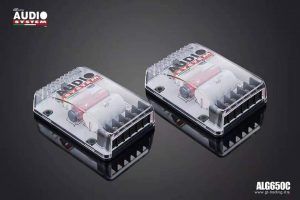
A two-way component system requires appropriate frequency distribution. When using a passive crossover, the connection arrangement must follow the terminals of the selected crossover. In an active system, each driver must be assigned a suitable frequency range.
The tweeter must not receive the full low-frequency signal. The stated overlap between the drivers’ frequency ranges does not by itself determine a suitable crossover point. That point depends on the filter circuit, installation position and selected filter slope.
Understanding power and sensitivity
The woofer’s maximum input power is 50 W. The tweeter has a stated maximum input power of 30 W. These figures do not represent a combined system rating or a continuous power rating.
Sensitivity was measured with 1 W of power at a distance of one metre. The woofer is rated at 89 dB and the tweeter at 90 dB. A difference of one decibel does not determine the final balance after installation in a vehicle.
Begin adjustment with a low amplifier gain setting. Set the final balance after installation, when both drivers are operating through the chosen crossover circuit.
Woofer parameters
Qms, Qes and Qts describe mechanical, electrical and total losses at resonance. These parameters are useful when assessing how the driver may operate in the chosen installation environment.
The Q parameters alone are not sufficient for calculating a separate enclosure. They should also not be interpreted as a direct score of sound quality. In a car door, performance is affected by the cavity, sealing and rigidity of the installation.
Use within an audio system
In a car stereo system, the separate construction allows the position of the high-frequency source to be selected independently. This model is not a complete home cinema speaker with its own enclosure.
If several sets are used, each one requires suitable amplifier channels and filtering. Do not connect multiple systems in parallel based only on the DCR figure. The total electrical load must remain within the amplifier’s permitted limits.
Technical specifications
| Model | Audio System AE650C |
|---|---|
| Type | Two-way component car speaker system |
| Drivers | Separate woofer and tweeter |
| Woofer diaphragm | Synthetic metal |
| Woofer DCR | 4.0 Ω |
| Woofer maximum input power | 50 W |
| Woofer frequency range | 55-6000 Hz |
| Woofer sensitivity | 89 dB at 1 W / 1 m |
| Qms | 4.3 |
| Qes | 0.59 |
| Qts | 0.53 |
| Woofer weight | 1.33 kg |
| Woofer mounting depth | 68 mm |
| Woofer mounting diameter | 147 mm |
| Tweeter diaphragm | Black silk |
| Tweeter DCR | 4.0 Ω |
| Tweeter maximum input power | 30 W |
| Tweeter frequency range | 650-22000 Hz |
| Tweeter sensitivity | 90 dB at 1 W / 1 m |
| Tweeter weight | 0.12 kg |
| Tweeter mounting depth | 31 mm |
| Tweeter mounting diameter | 52.5 mm |
FAQ
Will this system fit the factory mounting positions in my car?
Compatibility depends on the actual opening, the available mounting depth and the space provided for the tweeter. The 16 cm size classification alone is not sufficient.
Can these speakers be connected to a 4-ohm amplifier?
The specified 4.0 Ω figure is the DC resistance. It does not replace the nominal load rating used when selecting a suitable amplifier.
Does a component speaker system require a crossover?
The signal must be distributed correctly between the two frequency ranges. This can be achieved with either passive or active filtering.
Is 50 W the power rating of the complete system?
No. This maximum input power applies to the woofer. A separate 30 W maximum input power figure is specified for the tweeter.
Where is the best place to install the tweeter?
Compare several symmetrical positions before securing the tweeters. The listening result will depend on their height, direction and distance from the listener.
Is this model suitable for a home cinema system?
It is designed for installation in a car audio system. It is not an enclosed home cinema speaker or a self-powered active system.
Are crossovers included with the system?
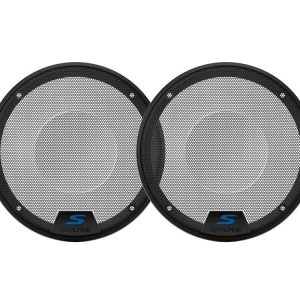
The supplied information does not confirm which crossover components or other accessories are included.
Do the frequency-range limits indicate the crossover settings?
No. They describe the ranges reproduced by the individual drivers. The crossover point must be selected according to the complete installation and the filtering circuit being used.