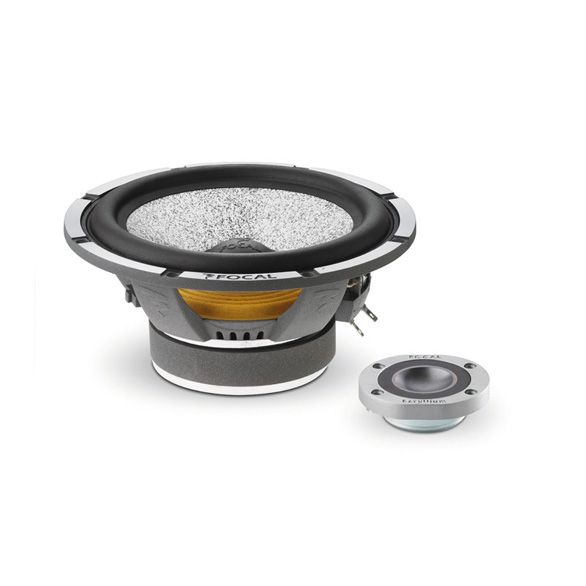
Focal 165 W-RC ACTIVE Car Speaker Kit
869,00 €
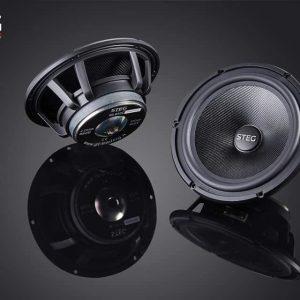
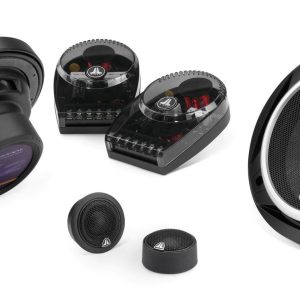
Focal 165 W-RC ACTIVE is a two-way car speaker kit for a custom-tuned active system. It is supplied without a passive crossover, so its frequency bands must be managed by an external processor or other suitable equipment. This configuration allows the bands to be adjusted separately, but it requires planned amplification channels and an accurate initial setup.
Focal 165 W-RC ACTIVE is a two-way car speaker kit designed for an active audio system. It is intended for buyers who plan to manage frequency distribution using external equipment. This active version is supplied without a passive crossover. The filtering, amplification channels, and initial system setup must therefore be planned before installation.
Who is this kit for?
This model is suitable for a custom-designed car audio system. Active frequency division makes it possible to control the signal for each frequency band separately. Crossover points, levels, and other settings are selected in the system processor or other suitable equipment.
ACTIVE in the product name describes the filtering method. It does not mean that the speakers have a built-in amplifier. Before selecting the associated equipment, check that its configuration options support your planned system layout.
This approach is best suited to an installation that will be carefully tuned, with the user setting channel levels, frequency limits, and delay. If you are looking for a simple replacement for the factory speakers, consider the amount of additional setup required before purchasing.
Active system configuration
When preparing the wiring plan, assign a processor output and an amplifier channel to each frequency band in advance. Mark the left-side and right-side connections clearly so that the signal paths are not accidentally swapped during installation.
This configuration provides greater tuning flexibility, but it also requires accurately planned connections. Every independently controlled band must receive a signal prepared for its intended operating range. An incorrectly connected or unfiltered circuit may expose a speaker to frequencies it was not intended to reproduce.
When choosing a processor and amplifier, do not consider only the total number of channels. Count the independently controlled bands for the left and right channels separately. Any additional actively controlled speakers will also require their own filtering and amplification paths.
Connection and initial tuning
Before switching on the system for the first time, assign the appropriate outputs in the processor. Clearly label every cable pair by channel and frequency band. This reduces the chance of an incorrect connection when settings are changed later.
Carry out the initial test at a low volume. First confirm that each band is receiving the intended signal. Only after completing this check should you adjust channel levels, crossover points, delay, and frequency correction.
Select the crossover settings according to the operating ranges of the speakers being used and the design of the complete system. No specific crossover values have been confirmed for this model, so they cannot be set safely from the product name alone. Begin with conservative limits and a low signal level.
Adjust delay only after all frequency bands have been connected correctly. Start by aligning the arrival of sound at the listening position. Apply frequency correction last, as equalisation should not be used to compensate for unsuitable speaker placement or reversed polarity.
Installation position in the vehicle
Before installation, compare the dimensions and depth of the vehicle’s speaker opening, as well as its mounting points, with the selected speakers. The model name by itself does not confirm physical compatibility with a particular vehicle.
In a two-way system, the relative position of the two frequency bands is important. A large distance between their drivers can make it more difficult to create a coherent stereo image. The installation angle can also affect the high-frequency balance at the driver’s and passenger’s seating positions.
The mounting location should be rigid, and both sides of the vehicle should be prepared in the same way. Different cavities or unequal sealing can create differences in channel balance. These mechanical causes should be corrected before electronic tuning begins.
Use within the complete audio system
When integrating the kit into a car stereo system, copy settings between the left and right channels only after checking for differences between the mounting locations. Adjust channel levels and delay for the driver’s listening position, then check the final balance from the passenger seat as well.
A low-frequency speaker may be integrated only through the main system processor or another suitable filtering stage. It is not part of this two-way kit. Its phase, level, and frequency limit must be adjusted according to the overall result of the complete system.
This is a car audio product, not a home cinema speaker system. An amplifier intended for home use does not automatically provide the active filtering required here. Whether it can be connected depends on the purpose of its outputs, its channel count, and its configuration functions.
Technical specifications
| Manufacturer | Focal |
|---|---|
| Model | 165 W-RC ACTIVE |
| Product type | Two-way speaker kit |
| Application | Car audio system |
| Version | Active |
| Passive crossover | Not included |
| Frequency filtering | Provided by external equipment |
FAQ
What does ACTIVE mean for this model?
It means that the frequency bands are managed actively by external equipment. The name does not indicate that the speakers contain their own amplifier.
What should I check before buying a processor or amplifier?
Check whether the required outputs can be assigned separately, whether the frequency limits can be set for each band, and whether a suitable amplification channel can be provided for every band.
Can the kit be connected directly to a car stereo?
Only if the stereo provides the required active filtering and suitable outputs. Those features alone are not enough, however: each band must also have an appropriate amplification channel. If the stereo does not provide the filtering, an audio processor is required between the source and the amplifier.
How should I begin tuning the system safely?
First assign the outputs and set conservative frequency limits. Start at a low volume, check every band, and increase the levels only after confirming that the signal routing is correct.
Can I use a universal passive crossover?
A randomly selected crossover should not be used. Its electrical characteristics and frequency limits must suit the specific speakers and the chosen installation layout.
Are specific crossover frequencies provided?
No. Specific crossover values have not been confirmed for this model. They must be selected according to the operating ranges of the speakers being used and the design of the complete system.
Is this model intended for home cinema use?
No. This speaker kit is designed for a car audio system. Its active installation requires a suitably configured in-car audio signal chain.