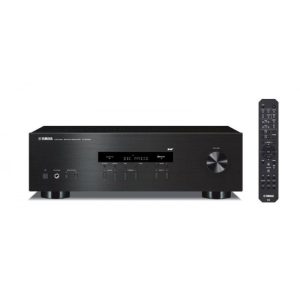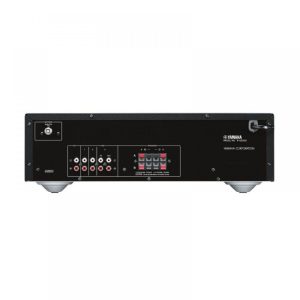
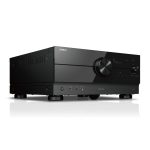
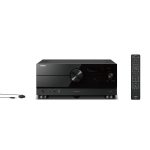
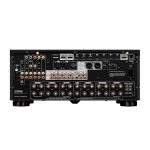
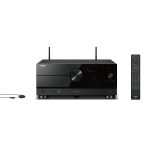
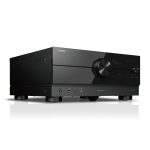
Yamaha RX-A8A AV Receiver
Original price was: 4 000,00 €.3 470,00 €Current price is: 3 470,00 €.
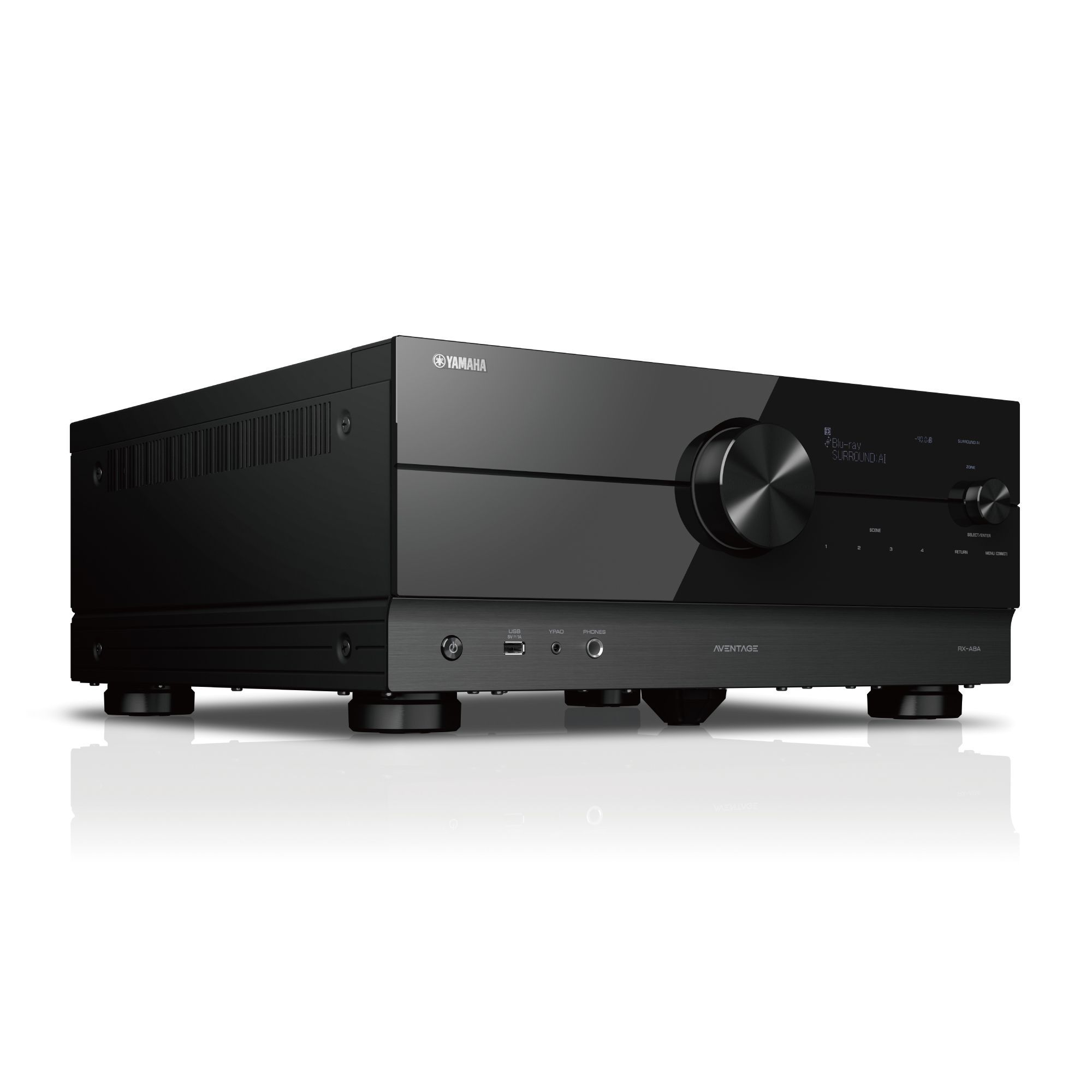
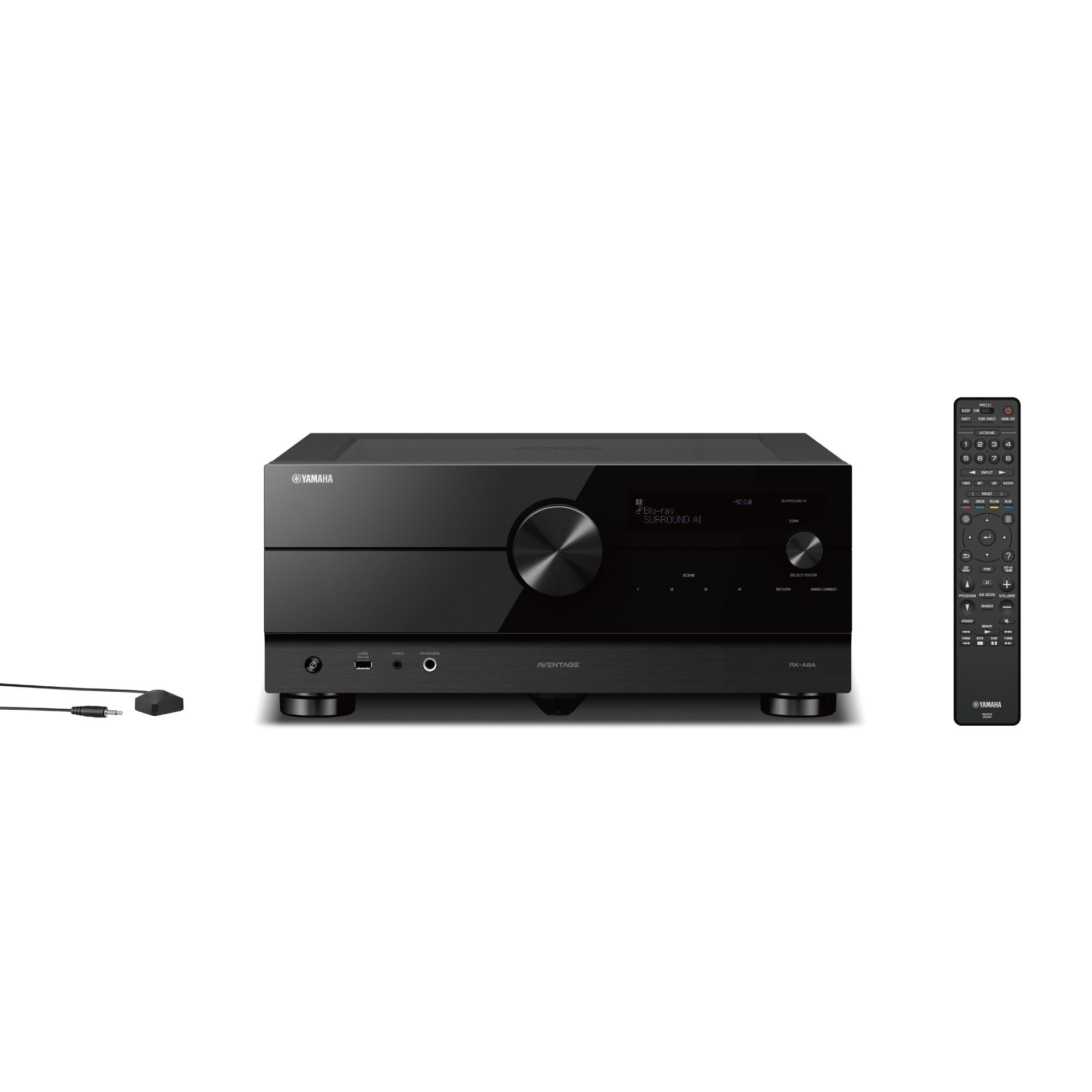
The Yamaha RX-A8A is an 11.2-channel AV receiver for large home cinema and music systems. Its eleven built-in amplifier channels can power a 7.1.4 system without an external power amplifier. Seven HDMI inputs accommodate multiple video sources, while 8K60AB and 4K120AB pass-through suits modern displays. YPAO correction calibrates the channels for the room’s acoustics.
The Yamaha RX-A8A AV receiver is designed for sophisticated home cinema and music systems. Eleven built-in amplifier channels can directly power a 7.1.4 speaker system without requiring an additional power amplifier. Two subwoofer outputs accommodate two subwoofers, while the 11.2-channel pre-outs allow external power amplifiers to be connected.
Construction and installation space
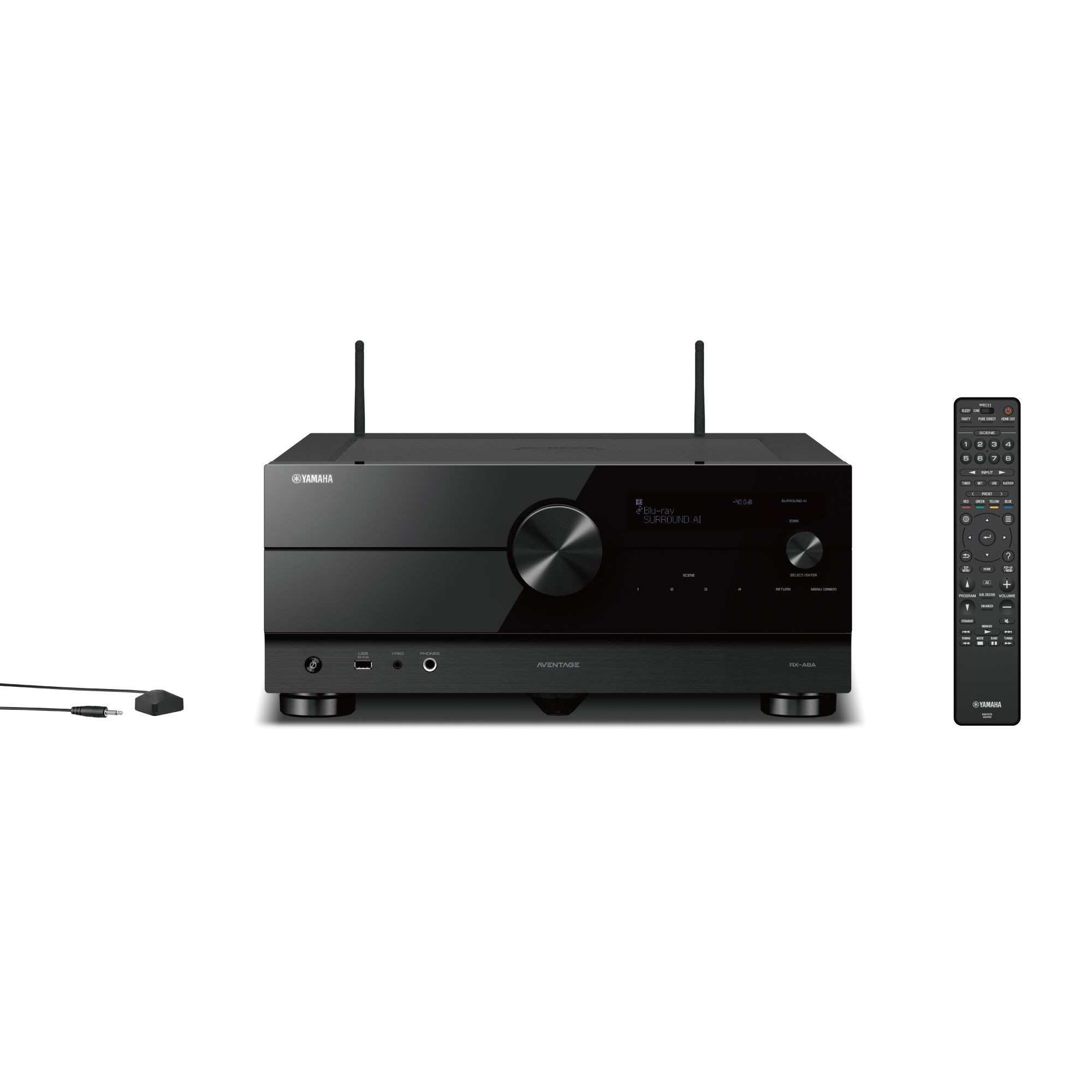
The High Slew Rate amplifier design is complemented by Yamaha’s A.R.T. Wedge support. The receiver is 477 mm deep, so additional room must be left behind it for cables. The chassis is 192 mm high, increasing to 271 mm when the wireless antennas are raised.
Surround sound and room calibration
Surround:AI adjusts the surround effect in real time, while CINEMA DSP HD3 provides 24 DSP programmes. Supported formats and technologies include Dolby Atmos, Dolby Atmos Height Virtualizer, Dolby TrueHD, Dolby Digital Plus, Dolby Surround, DTS:X, DTS-HD Master Audio and Auro-3D.
YPAO room acoustic correction uses multipoint, 3D and angle measurements together with R.S.C. and 64-bit precision equaliser calculation. YPAO Volume, Adaptive DRC, dialogue level adjustment and Dialogue Lift provide further ways to tailor the sound to the room and listening preferences.
Video and television connections
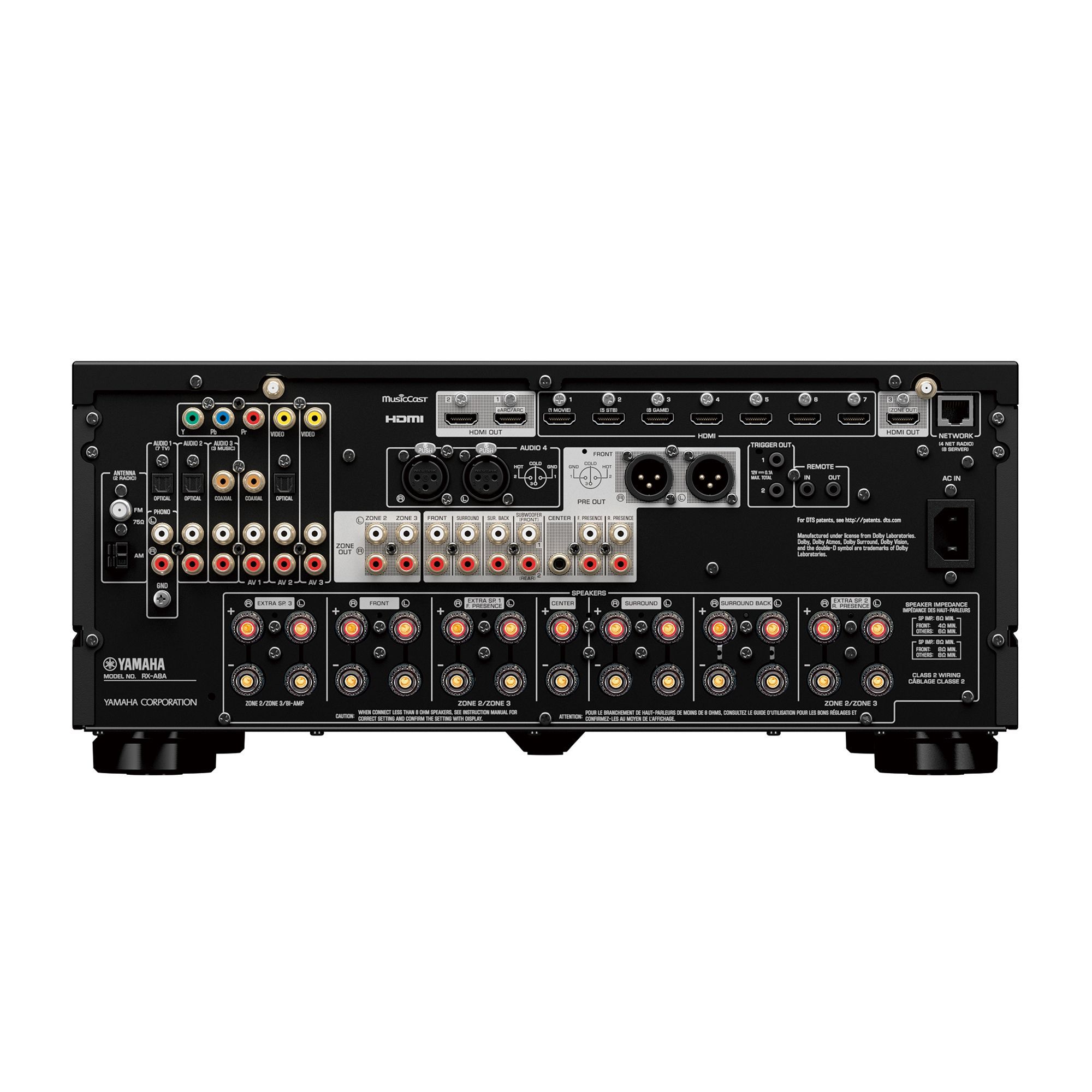
Seven HDMI inputs and three outputs support HDCP 2.3 and bandwidth of up to 40 Gbps. The receiver supports 8K60AB and 4K120AB pass-through, upscaling to 8K, Dolby Vision, HDR10+, eARC, ARC and HDMI CEC. Gaming features include VRR and ALLM. QMS is not supported and cannot be added through a firmware update.
Audio sources and network functions
The front-panel AV input is USB. The receiver also provides analogue, optical, coaxial digital, phono and XLR connections, along with connections for legacy video equipment. The phono input is intended for a turntable. Two ESS Hyperstream ES9026PRO chips perform digital-to-analogue conversion. Compressed Music Enhancer is intended for compressed audio files, while High-resolution Music Enhancer is designed for high-resolution music.
MusicCast, AirPlay 2, Spotify Connect, MusicCast Surround, Bluetooth and dual-band Wi-Fi provide network and wireless playback options. Built-in amplifier channels can power Zones 2 and 3, while Zone 4 audio is carried over HDMI. The receiver can be controlled through an app on iPhone, iPad and Android devices. Availability of Alexa and Google Assistant control, as well as FM, AM and DAB tuners, depends on the region.
Power output and how to interpret it
The stated 150 W output is measured into 8 ohms across the 20 Hz-20 kHz frequency range, with two channels driven and 0.06% THD. It does not mean that all eleven channels continuously deliver 150 W each at the same time.
Technical specifications
| Product type | 11.2-channel network AV receiver, AVENTAGE series |
|---|---|
| Amplifier channels | 11 |
| Subwoofer channels | 2 |
| Rated output power | 185 W, 8 ohms, 1 kHz, one channel driven, 0.9% THD |
| Rated full-range output power | 150 W, 8 ohms, 20 Hz-20 kHz, two channels driven, 0.06% THD |
| Maximum effective output power | 220 W, 8 ohms, 1 kHz, one channel driven, 10% THD |
| Amplifier design | High Slew Rate, A.R.T. Wedge, bi-amping capability |
| Processor | Qualcomm QCS407 |
| Surround processing | Surround:AI, CINEMA DSP HD3, 24 DSP programmes |
| Dolby formats | Dolby Atmos, Atmos Height Virtualizer, TrueHD, Digital Plus, Dolby Surround |
| DTS and other formats | DTS:X, DTS-HD Master Audio, Auro-3D |
| Virtual sound | Virtual Presence Speaker, Virtual Surround Back Speaker, SILENT CINEMA, Virtual CINEMA DSP |
| Dialogue control | Dialogue level adjustment, Dialogue Lift |
| Room correction | YPAO multipoint R.S.C., 3D and angle measurement, 64-bit precision EQ calculation |
| Dynamic range and volume control | YPAO Volume, Adaptive DRC, initial and maximum volume settings |
| Audio delay | 0-500 ms |
| Digital-to-analogue converters | Two ESS Hyperstream ES9026PRO DACs, 384 kHz/32-bit |
| Audio modes | Pure Direct, Compressed Music Enhancer, High-resolution Music Enhancer |
| Audio files | MP3, WMA, MPEG-4 AAC; ALAC up to 96 kHz/24-bit |
| High-resolution files | FLAC up to 384 kHz/24-bit; WAV and AIFF up to 384 kHz/32-bit; DSD up to 11.2 MHz |
| HDMI inputs and outputs | 7 inputs, 3 outputs, HDCP 2.3 |
| HDMI video pass-through | 8K60AB and 4K120AB, up to 40 Gbps |
| HDMI audio return | eARC and ARC |
| Video features | Upscaling to 8K, analogue video-to-HDMI conversion, video adjustment |
| Video formats | Dolby Vision, HDR10+ |
| Gaming features | VRR and ALLM; QMS is not supported |
| HDMI control | CEC |
| Front-panel AV input | USB |
| Optical inputs and outputs | 3 / 0 |
| Coaxial digital inputs and outputs | 2 / 0 |
| Analogue audio inputs and outputs | 6 / 0 |
| Phono input | Yes |
| XLR connections | Yes |
| Component video connections | 1 input / 0 outputs |
| Composite video connections | 2 inputs / 0 outputs |
| Pre-outs | 11.2 channels |
| Headphone output | 1 |
| Network | Wired network connection, 2.4 and 5 GHz Wi-Fi |
| Wireless playback | AirPlay 2, Bluetooth with SBC and AAC |
| Network music features | Spotify Connect, MusicCast, MusicCast Surround |
| Radio tuners | FM, AM and DAB; availability depends on the region |
| Control interface | On-screen graphical interface, app, web browser, remote control |
| Scene memory | SCENE PLUS, 8 sets |
| Voice control | Alexa and Google Assistant devices; availability depends on the region |
| Zone 2 audio | Pre-out and HDMI outputs; can be powered by the built-in amplifier |
| Zone 3 audio | Pre-out; can be powered by the built-in amplifier |
| Zone 4 audio | HDMI output |
| Zone video | HDMI, up to 4K/60 Hz |
| Additional zone features | HDMI Zone B, zone graphical interface, Party Mode |
| 12 V trigger outputs | 2 |
| Remote-control input and output | 1 / 1 |
| RS-232C connection | None |
| Standby power consumption | Less than 0.4 W in infrared control mode only |
| Energy features | Auto standby, ECO mode |
| Dimensions | 435 × 192 × 477 mm; 435 × 271 × 477 mm with antennas raised |
| Weight | 21.4 kg |
FAQ
Can a 7.1.4 speaker system be connected directly?
Yes. The eleven built-in amplifier channels can power seven main channels and four height channels.
When is an external power amplifier needed?
It is not required for a 7.1.4 system, although external power amplifiers can be connected to the 11.2-channel pre-outs.
How should I connect a television?
The most convenient approach is to connect the television to the eARC-compatible HDMI connection. This allows sound from the television’s apps to return through the same cable.
How do I begin room acoustic calibration?
Perform a YPAO multipoint measurement at the main listening positions, then check the channel levels, speaker distances and bass balance.
Is the receiver suitable for stereo music?
Yes. It has a Pure Direct mode, a phono input and XLR connections, and it supports high-resolution audio files.
How can I distribute audio to other rooms?
Zones 2 and 3 can use the built-in amplifier channels, MusicCast supports a compatible wireless multi-room system, and Zone 4 uses HDMI.
How much space is required in an AV cabinet?
Allow for the 477 mm chassis depth, additional space behind the receiver for cables and a height of 271 mm when the antennas are raised.
Related products and categories
Related products