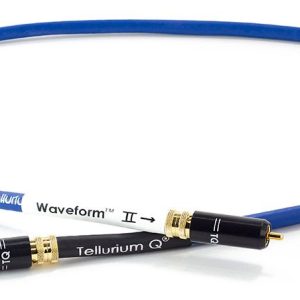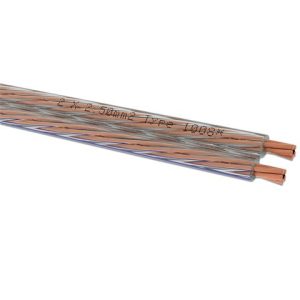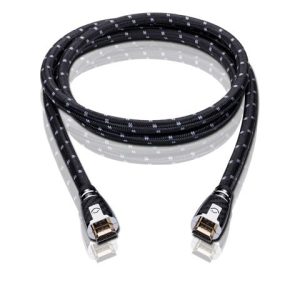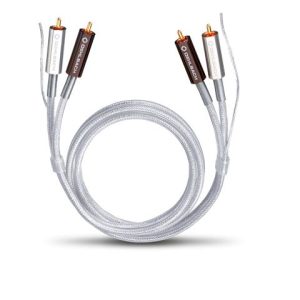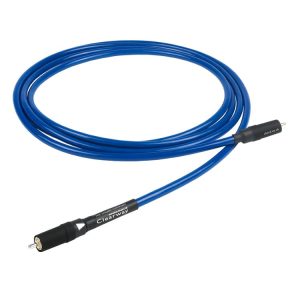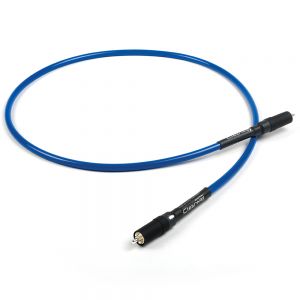
Tellurium Q BUD-SC Speaker Cable (1m)
198,00 €
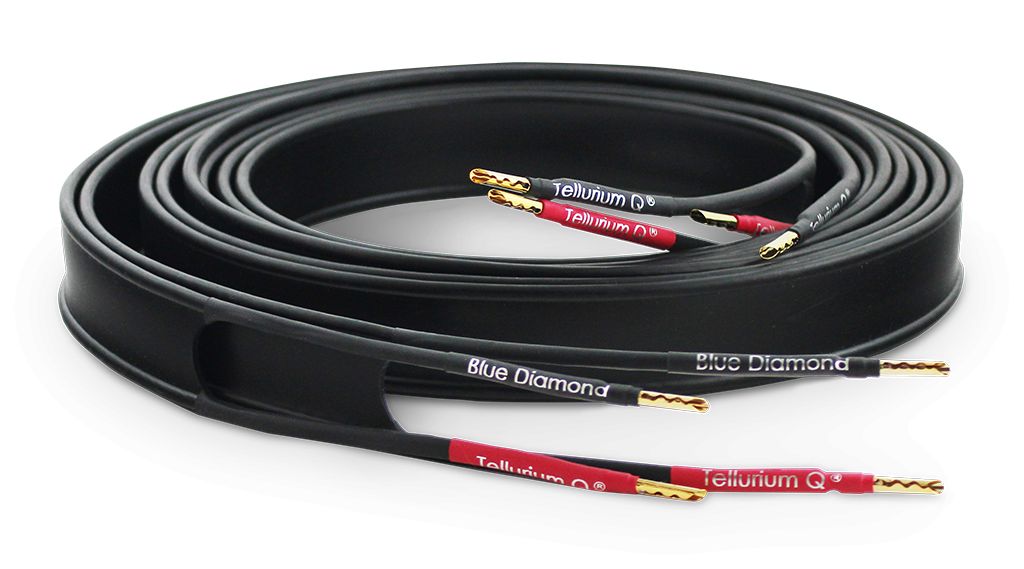
Tellurium Q BUD-SC (1m) is a one-metre speaker cable designed to connect an amplifier to a passive speaker. It is intended for a short cable run in a compact audio system. Measure the complete route between the terminals and allow some slack before choosing it. This cable must not be confused with the Tellurium Q Blue Diamond or SD-SC models.
Tellurium Q BUD-SC (1m) is a one-metre speaker cable designed to connect an amplifier to a passive speaker. This variant is a practical choice for a short, clearly planned connection.
The one-metre length is suitable when the amplifier and speaker are positioned close together. A short cable run also helps avoid leaving unnecessary excess cable behind the equipment.
Where a one-metre cable is suitable
Before choosing the cable, measure its complete route from the speaker output on the amplifier to the corresponding terminal on the speaker. Include vertical sections, furniture corners, bends and the space required to make the connection comfortably.
Allow a small amount of slack beside both devices so that the cable is not placed under tension. If you expect to move either the speaker or the amplifier, include that planned movement in your measurement. The one-metre version can be practical for a desktop system, a compact equipment shelf or an amplifier placed beside the speaker. Its suitability ultimately depends on the actual routed distance rather than a straight-line measurement.
Purpose within an audio system
The BUD-SC is intended for the speaker-level circuit. It connects the power output of an amplifier to the input terminals of a passive speaker.
It is not a line-level cable for connecting a source component, preamplifier or the usual line input of an active subwoofer. Those connections require cables intended for a different purpose. Check the labels on your equipment before making any connection and follow the instructions supplied by the equipment manufacturers.
Connection and polarity
Switch off the amplifier before connecting the cable. Attach it only to the amplifier outputs intended for speakers and to the terminals of a passive speaker. Make each connection secure, but avoid using force or handling the cable in a way that could damage it or the equipment terminals.
Maintain consistent polarity throughout the system. Connect the positive amplifier terminal to the positive speaker terminal and the negative amplifier terminal to the negative speaker terminal. If the polarity of one channel is reversed, the speakers in a multi-speaker system may not reproduce sound in a properly coordinated way.
Do not bend the cable sharply next to the terminals. Form a natural curve and make sure that the cable’s weight or tension is not pulling on the connection. Before switching the system on, check the polarity at both ends again and confirm that there is no accidental contact between terminals of opposite polarity.
Controls and the first system check
The speaker cable itself has no controls. Initial settings are made on the amplifier. Before the first test, turn the volume down and place the balance control in its centre position if the amplifier has one. Switch on the system and then raise the volume gradually.
In a stereo system, check the two channels separately to confirm that sound is coming from the intended speaker. With a home cinema amplifier, perform the channel test according to the amplifier’s own setup procedure. The cable does not require a dedicated operating mode, frequency setting or level adjustment.
Positioning the cable in the room
Route the cable so that it cannot be trapped beneath furniture legs, caught in a door or pressed against the edge of an equipment shelf. Avoid walkways and any position where the cable could be stepped on, pulled or repeatedly bent. Keep the connections behind the equipment visible and reasonably easy to reach so that channel assignment and polarity can be checked without difficulty.
If the proposed route crosses an area where people or furniture regularly move, choose another path. Do not wind the cable around terminals or parts of the equipment. If any surplus length remains, arrange it loosely so that it does not pull on the connected devices.
Stereo, home cinema and multi-speaker systems
A stereo system requires a separate cable run for each channel. Measure the left and right routes individually because speaker positions and furniture layouts may differ. Once the cables are connected, label them or distinguish the channels clearly in another way to prevent confusion later.
In a home cinema system, this cable can be used to connect one passive speaker. The one-metre version is suitable only for a channel whose complete route fits within that length in practical use. The required cable length for every other speaker must be assessed separately.
In a system with multiple speakers, zones or amplifiers, plan each connection between an amplifier and a passive speaker as a separate channel. Do not connect several speakers to one output merely because they are close together. The amplifier manufacturer determines which connection arrangements and loads are permitted.
How to assess this version before buying
The main consideration when selecting this version is its 1m length. You should also confirm that the chosen product and the way it is prepared for connection are suitable for the terminals on your amplifier and speaker. Construction or package details that are not stated should not be assumed from the model name alone.
Do not infer its construction, conductor material or sound characteristics from descriptions of other Tellurium Q cables. BUD-SC is a separate model and must not be confused with Blue Diamond or SD-SC.
Technical specifications
| Manufacturer | Tellurium Q |
|---|---|
| Model | BUD-SC |
| Product type | Speaker cable |
| Length | 1m |
FAQ
How can I tell whether one metre will be enough?
Measure the actual route between the two terminals, including bends and vertical sections. The final measurement must be shorter than the cable so that enough length remains to make the connection comfortably.
Is this cable suitable for a stereo system?
Yes. It is designed to connect one passive-speaker channel. Plan separate cable runs for the left and right channels.
Can it be used in a home cinema system?
It can be used to connect one passive speaker, provided the route for that particular channel fits within the practically usable one-metre length.
Is this a line-level cable for connecting an audio source?
No. It is a speaker cable connected between the power output of an amplifier and a passive speaker.
How do I maintain the correct polarity?
Connect the positive terminals of the two devices to each other. Do the same with the negative terminals and repeat this arrangement consistently for every channel.
How much extra length should I allow if the equipment may be moved?
Include the expected movement of the amplifier or speaker in your measurement and leave some slack beside the terminals. If the complete route then exceeds one metre, choose a longer version.
Is BUD-SC the same model as Blue Diamond or SD-SC?
No. They are different Tellurium Q models, so their properties and usage claims cannot automatically be applied to this cable.
Related products and categories
Related products