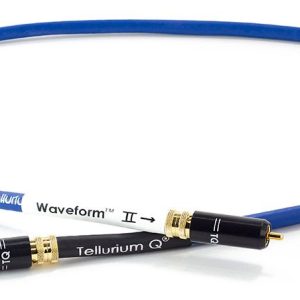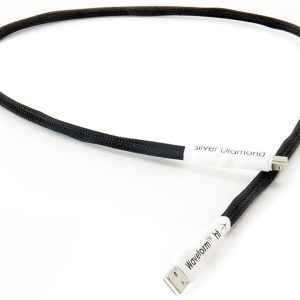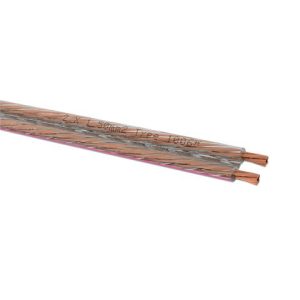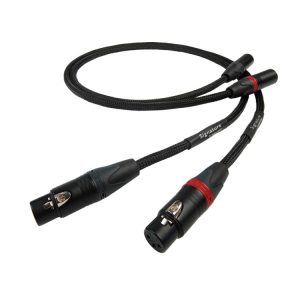
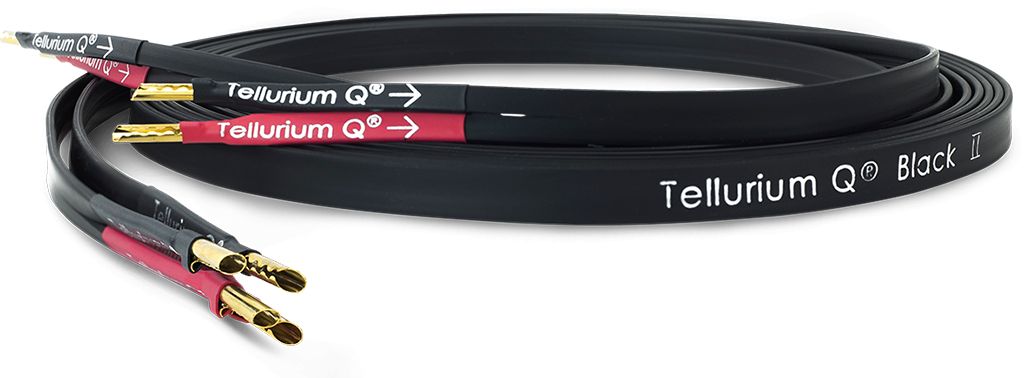
Tellurium Q BK-SC II Speaker Cable (1 m)
63,00 €
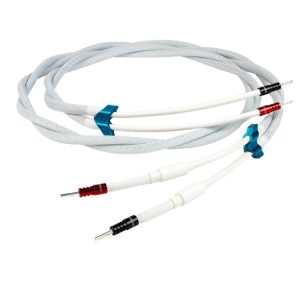
Tellurium Q BK-SC II (1 m) is the 1-metre version of this speaker cable, designed to connect an amplifier to passive speakers. It is suited to short cable routes where the equipment is positioned close to the speaker. Black II is the successor to the earlier Tellurium Q Black model.
Tellurium Q BK-SC II (1 m) is the 1-metre version of this speaker cable. It is designed to connect an amplifier to passive speakers. This second-generation model replaces the earlier Tellurium Q Black cable.
Purpose in an audio system
The cable carries an amplified signal from an amplifier’s speaker outputs to the terminals of a passive speaker. It is not intended for line-level RCA or XLR connections, digital audio links, or mains power connections.
This model can be considered when planning passive-speaker connections in either a stereo or home cinema system. Before choosing it, plan the complete route of every cable and confirm that the 1 m version suits the intended equipment layout. The contents and configuration of the individual offer should also be checked separately.
When to choose the 1 m version
The 1 m version is practical when the amplifier and speaker are positioned close to one another. Measure the entire route that the cable will follow rather than only the straight-line distance between the two components. Allow for furniture edges, speaker stands, and the extra space needed to reach and connect the terminals comfortably.
The cable should not be pulled tight between the terminals. Leaving a small amount of slack makes it possible to move the equipment slightly without immediately disconnecting the system. Any excessive spare length should not be wound into a tight coil or trapped behind furniture.
In a stereo system, it is worth planning the routes for both channels before installation. This makes it easier to arrange the cables neatly and reduces the risk of discovering that the intended route is too long for the selected cable.
Connection and polarity
Switch off the amplifier before making any connections. Connect one end of the cable to the selected speaker channel on the amplifier. Connect the other end to the corresponding passive speaker.
Maintain consistent polarity throughout the system. Connect the amplifier’s positive terminal to the speaker’s positive terminal, and connect the two negative terminals to each other. Reversing the polarity of one channel may weaken the central stereo image and reduce the perceived impact of low frequencies.
Once the cable is connected, check that every contact is secure. A loose connection can cause the signal to cut out intermittently. Conductive parts of the cable must not touch an adjacent terminal or the metal chassis of the equipment.
Cable routing
Route the cable where it will not be crushed by furniture or forced into a sharp bend near the terminals. Replace any tight corner with a wider, relaxed curve. This helps prevent the connection from remaining under continuous mechanical strain.
Do not keep the speaker cable tightly bundled together with power cables. If the routes must cross, arrange the crossing at as close to a right angle as the installation allows. Keeping the routes organised also makes it easier to identify the correct cable when changing components in the system.
Use in stereo and home cinema systems
For both stereo and home cinema installations, choose the 1 m version only after checking the actual route to the passive speaker. A short direct distance can be misleading when the cable must pass around furniture, speaker stands, or other equipment.
Routes to different speakers may not be the same, so measure each one separately. Make sure the planned path reaches the relevant terminals without tension while leaving a small amount of slack for convenient connection.
This type of cable is suitable for an active speaker only when that speaker has a speaker-level input. A speaker that accepts only a line-level signal requires the appropriate line-level cable instead.
Black II generation
Black II is the successor to the earlier Tellurium Q Black model. The “II” designation distinguishes this version from the first-generation cable. This distinction is useful when comparing offers or when selecting cable lengths from the same generation for use within one system.
Technical specifications
| Manufacturer | Tellurium Q |
|---|---|
| Model | BK-SC II |
| Product type | Speaker cable |
| Length | 1 m |
| Generation | Black II, successor to the earlier Black model |
FAQ
What is this cable designed for?
It is designed to connect an amplifier’s speaker outputs to passive speakers. A different type of cable is required for line-level and digital audio inputs.
How can I determine whether the selected length is sufficient?
Before buying, check that the 1 m version can reach the amplifier and speaker terminals while still leaving a small amount of free cable. Take the terminal positions into account as well, so the cable will not need to be stretched or bent sharply.
Can this cable be used with a stereo amplifier?
Yes. It can be used to connect a stereo amplifier to a passive speaker. The left and right amplifier channels must be connected to their corresponding speakers.
Is it suitable for a home cinema amplifier?
Yes. This cable type is suitable for connecting passive speakers. Choose the 1 m version according to the position of the speaker and the route that the cable will need to follow.
Why is polarity important when connecting the cable?
Consistent polarity helps the speakers operate in phase with one another. Reversing the positive and negative connections on one channel may reduce the coherence of the overall sound image.
Can this cable be used instead of an RCA cable?
No. An RCA cable carries a line-level signal between audio components. This model is intended to carry an amplified speaker signal.
How should the cable be routed behind furniture?
Leave a relaxed curve near the terminals and do not trap the cable against the edge of a piece of furniture. Keep it separate from power cables whenever the system layout makes this possible.