
TAD TD-2002 High-Frequency Driver
3 900,00 €
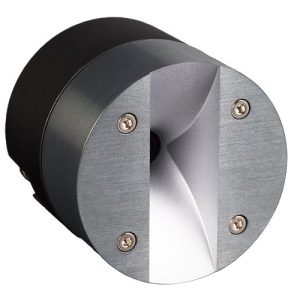
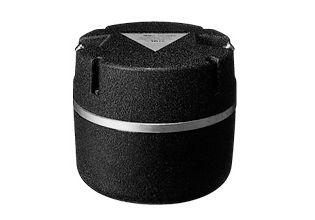
The TAD TD-2002 is a 1-inch throat high-frequency driver for a custom-built horn loudspeaker. It uses a beryllium diaphragm, an Alnico 5 magnet, and an aluminium three-slit phase plug. This 8 Ω model delivers a sensitivity of 111 dB when measured with 1 W of input power at a distance of one metre. The lowest recommended crossover frequency is 800 Hz.
The TAD TD-2002 high-frequency driver is a 1-inch throat model designed for a custom-built horn loudspeaker. It uses a beryllium diaphragm, an Alnico 5 magnet, and an aluminium three-slit phase plug. Its nominal impedance is 8 Ω.
This is not a complete loudspeaker with an enclosure and ready-made amplifier connections. It is intended for a system designer who will select the appropriate horn, crossover, and mechanical mounting arrangement. Its construction is based on the TD-2001.
Application and system planning
This 1-inch throat high-frequency driver covers the specified frequency range of 800-22,000 Hz. The lower limit is also the lowest recommended crossover frequency. For that reason, 800 Hz should not be treated as a universal setting suitable for every system.
The crossover must restrict lower frequencies and be matched to the other drivers in the loudspeaker. The final crossover point depends on the filter slope, the horn, and the rest of the system.
A stereo system requires matching high-frequency sections in both channels. In a home cinema system, each channel must be designed around the crossover and sensitivity of the relevant loudspeaker. The 111 dB figure was measured with 1 W of input power at a distance of one metre. It should only be compared with specifications stated under the same measurement conditions.
Diaphragm, magnet, and phase plug
The beryllium diaphragm is the main moving element in this model. Its size should not be confused with the throat connection size. The 48 mm measurement refers to the voice coil, while the 25.4 mm measurement identifies the throat opening.
The phase plug is made from aluminium and has a rear three-slit design. It is an internal part of the acoustic assembly and is not adjusted by the user. It should not be regarded as a separate adapter supplied with the driver.
The Alnico 5 magnetic system has a flux density of 1.95 T. Total magnetic flux is 7.42 × 10⁻⁴ Wb. These two figures describe the magnetic circuit, but they do not replace the sensitivity and power-handling specifications.
Connection and signal management
The Direct Power Coupling construction allows the loudspeaker cable to connect directly to the beryllium diaphragm system. This is a loudspeaker-level signal path, not an RCA or XLR line-level input. The signal must be routed through a properly designed crossover.
The model has a nominal impedance of 8 Ω. When selecting an amplifier channel, account must be taken of the complete loudspeaker filter and its resulting impedance. The value specified for this component alone does not describe the load presented by an assembled multiway loudspeaker.
The rated input power is 10 W, while the maximum input power is 40 W. These figures are not interchangeable. The maximum rating is neither a continuous operating specification nor a direct recommendation to choose an amplifier with that output rating.
The driver has no user-operated volume, phase, or crossover controls. These adjustments are made in an external filter or audio processor. When combining multiple frequency bands, their levels must be matched and polarity should be checked at the listening position.
Choosing a horn and mounting arrangement
The throat opening diameter is 25.4 mm, so the mechanical connection must match the 1-inch format. Two mounting measurements are provided: 57.2 mm for three holes and 76.2 mm for four holes. Select the applicable hole pattern before making the mounting plate.
The 141 mm diameter body requires sufficient space behind the horn. Its 137 mm depth is important when calculating the loudspeaker’s internal space and clearance from the rear panel. Space must also be left for the cable so that the connection is not placed under mechanical strain.
One driver weighs 6.9 kg. Its weight should therefore not be supported solely by a thin front panel or by the horn itself. A suitable support must carry the load and prevent it from being transferred to the throat connection.
Technical specifications
| Model | TAD TD-2002 |
|---|---|
| Type | 1-inch throat high-frequency driver |
| Construction based on | TAD TD-2001 |
| Diaphragm | Beryllium |
| Magnet material | Alnico 5 |
| Phase plug | Aluminium, rear, three-slit |
| Signal-transfer construction | Direct Power Coupling |
| Nominal impedance | 8 Ω |
| Frequency range | 800-22,000 Hz |
| Rated input power | 10 W |
| Maximum input power | 40 W |
| Sound pressure level | 111 dB at 1 W and 1 m |
| Total magnetic flux | 7.42 × 10⁻⁴ Wb |
| Magnetic flux density | 1.95 T |
| Lowest recommended crossover frequency | 800 Hz |
| Voice coil diameter | 48 mm |
| Throat opening diameter | 25.4 mm |
| Mounting dimensions | 57.2 mm with 3 holes; 76.2 mm with 4 holes |
| Dimensions | 141 mm diameter × 137 mm depth |
| Weight | 6.9 kg |
| Diaphragm replacement part | SXV-1005 |
FAQ
Is this a complete loudspeaker?
No. It is a high-frequency driver for a custom-built horn loudspeaker. It requires a horn, crossover, enclosure, and components for the remaining frequency bands.
What type of horn can be connected?
The horn throat connection must match the 25.4 mm opening. Its mounting must also correspond to either the three-hole or four-hole mounting dimensions.
Can the driver be connected directly to a full-range signal?
No. Lower frequencies must be restricted by a suitable crossover. The lowest recommended crossover frequency is 800 Hz, but the complete system determines the required filter design.
How should I choose an amplifier?
Consider the 8 Ω nominal impedance, the crossover load, and the 10 W rated input power. Do not treat the 40 W figure as the permissible continuous power rating.
How can it be used in a stereo or home cinema system?
In a stereo pair, the high-frequency sections must match. In a home cinema system, each channel must be configured for the crossover and sensitivity of its particular loudspeaker. Channel levels and polarity are adjusted through an external filter or processor.
Why does the weight matter during installation?
This 6.9 kg component requires its own rigid support. Proper support reduces the mechanical load placed on the horn, mounting plate, and throat connection.
Is the diaphragm replacement part included?
The store identifies SXV-1005 as the diaphragm replacement part number, but its inclusion in the package and its current availability have not been confirmed.