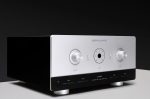
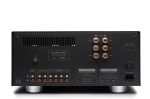
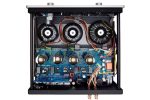
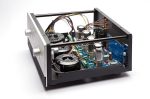
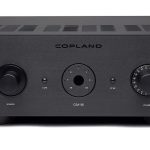
Copland CTA407 Tube Amplifier
6 900,00 €
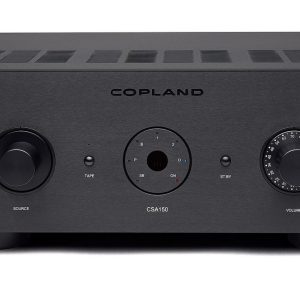
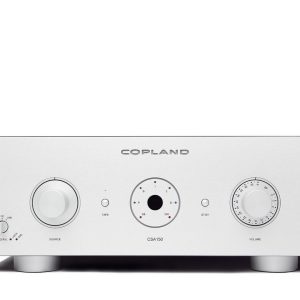
Copland CTA407 is an integrated tube amplifier for an analogue two-channel stereo system. It delivers 2 × 50 W into a 4-ohm or 8-ohm load. Five line inputs and a built-in phono stage for MM and high-output MC cartridges accommodate several analogue sources. Automatic bias adjustment supports six compatible power-valve types and reduces the need for manual setup.
Copland CTA407 tube amplifier is an integrated two-channel valve amplifier designed for an analogue stereo system. It delivers 50 W per channel into either a 4-ohm or an 8-ohm load. The built-in phono stage allows a turntable to be connected, while automatic valve bias adjustment makes it easier to use different compatible power valves.
Who this amplifier is for
The CTA407 combines a preamplifier, power amplifier and RIAA phono stage in a single enclosure. It can therefore serve as the main control centre of an analogue stereo system. Five line-level sources and a compatible turntable can be connected directly.
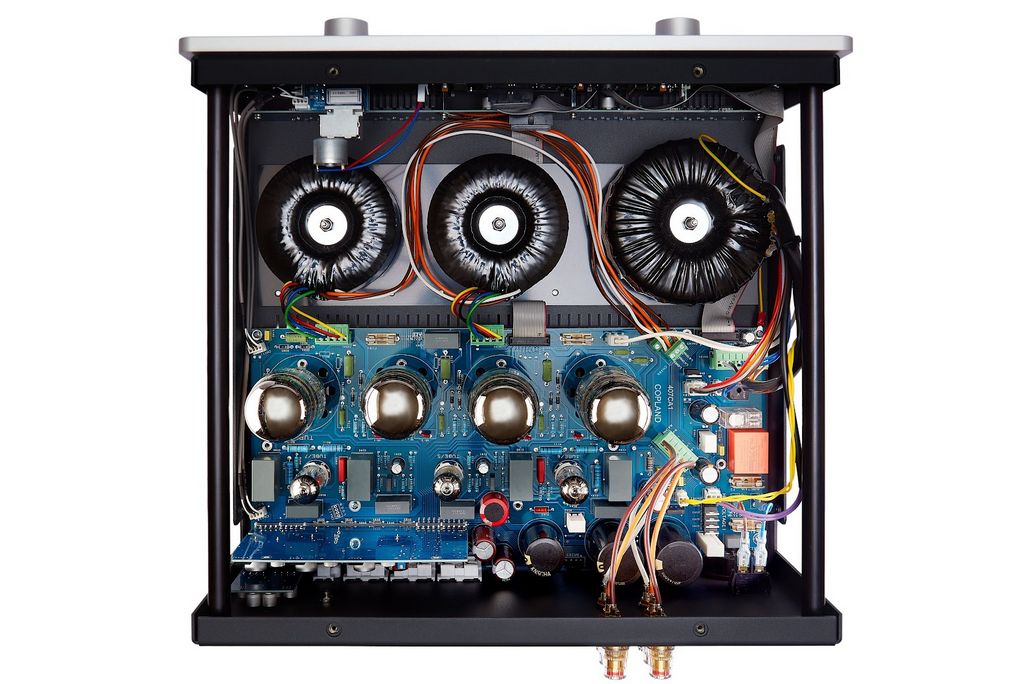
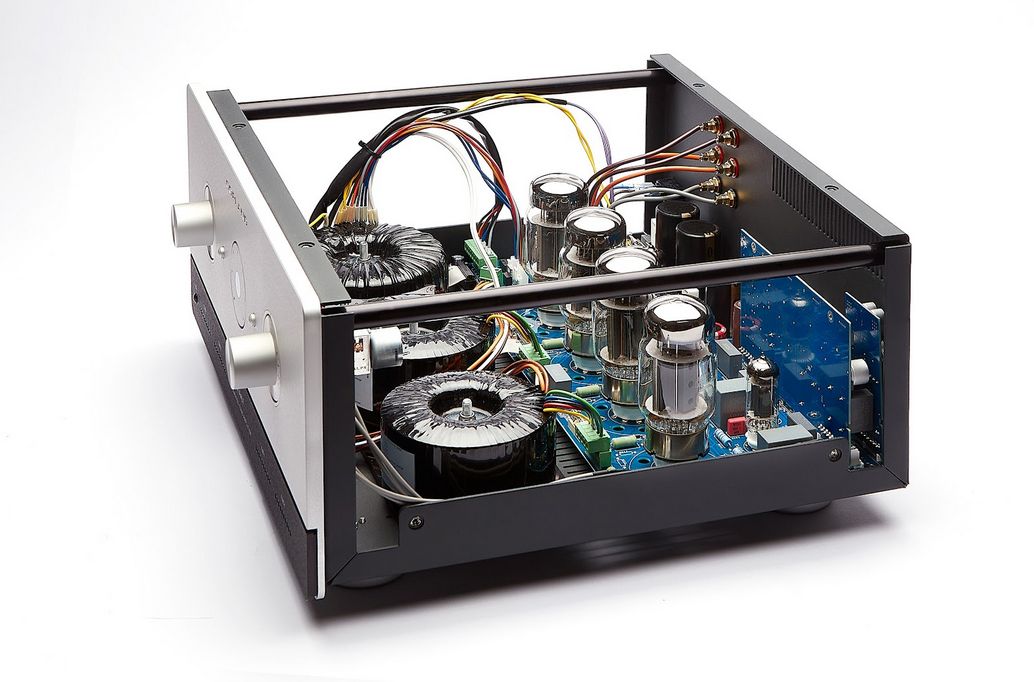
The model was developed from the earlier CTA405. Its matched power valves operate in push-pull output stages with a fixed ultralinear configuration. The specified operating mode is high-biased Class A/AB, and the feedback loop is rated at 18 dB.
Valve management and diagnostics
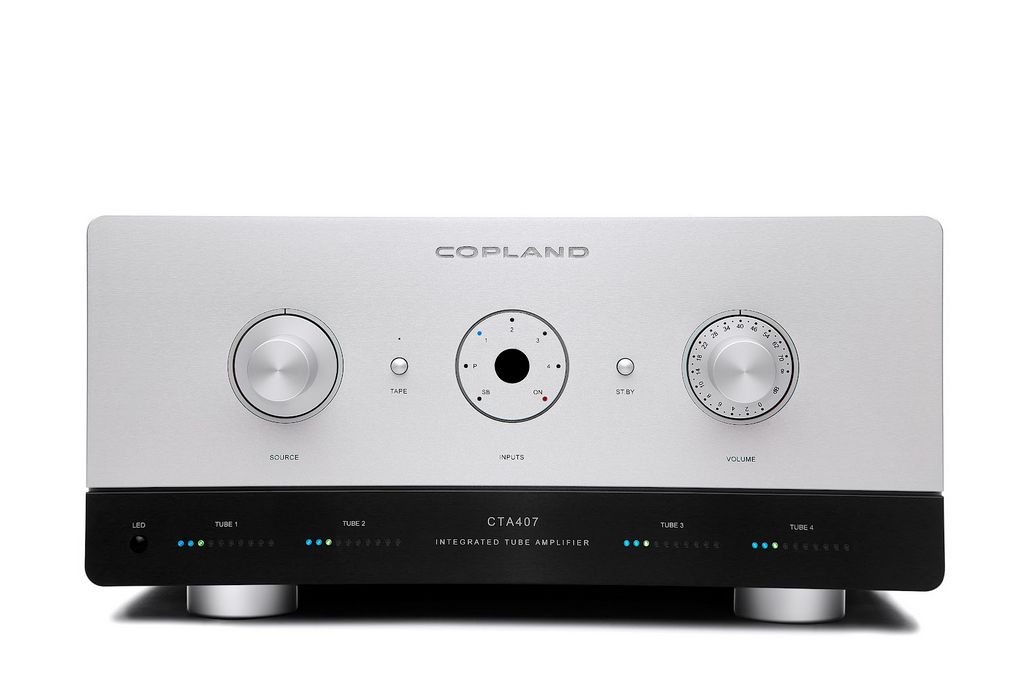
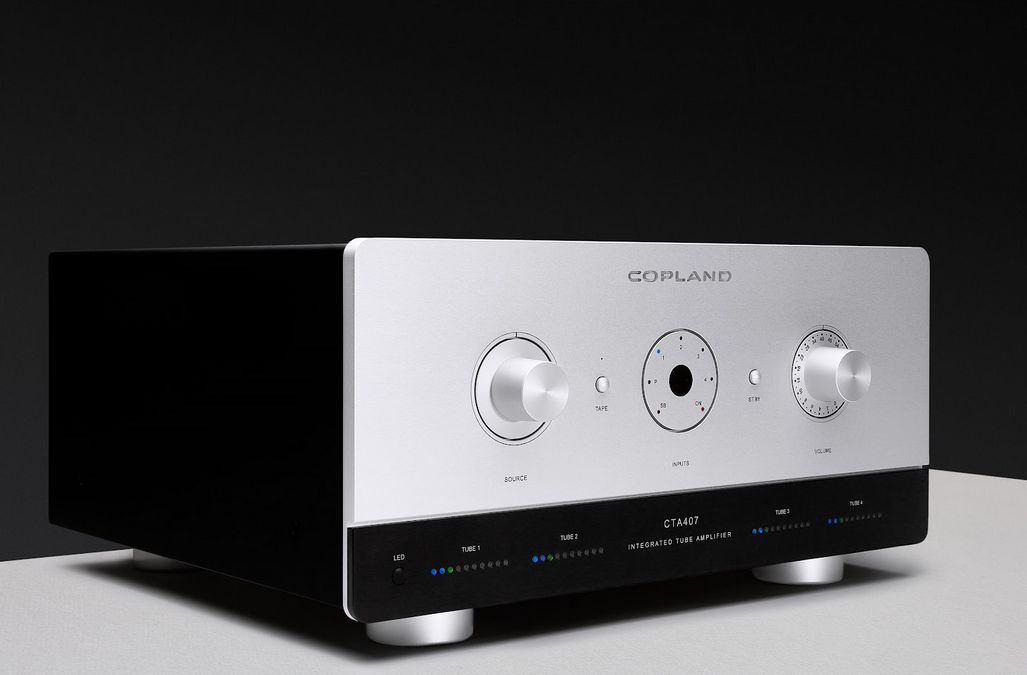
The front panel features 40 LED indicators, with ten dedicated to each of the four power valves. They display valve bias and diagnostic information. All the indicators can be switched off when monitoring is not required.
The automatic bias system adapts to 6550, KT88, KT90, KT100, KT120 and KT150 power valves. This reduces the need for manual adjustment after replacing the valves. The servo system also contributes to internal high-frequency filtering and is aligned with the transfer function of the amplification circuit.
The amplifier’s technical configuration specifies four 6550 or KT88-family power valves, two 12BH7 valves and one ECC83 valve. The particular type of power valve supplied must be confirmed for the individual offer. Matched power valves are used in the output stages, so it is advisable to retain a matched set when replacing them.
Connecting source equipment
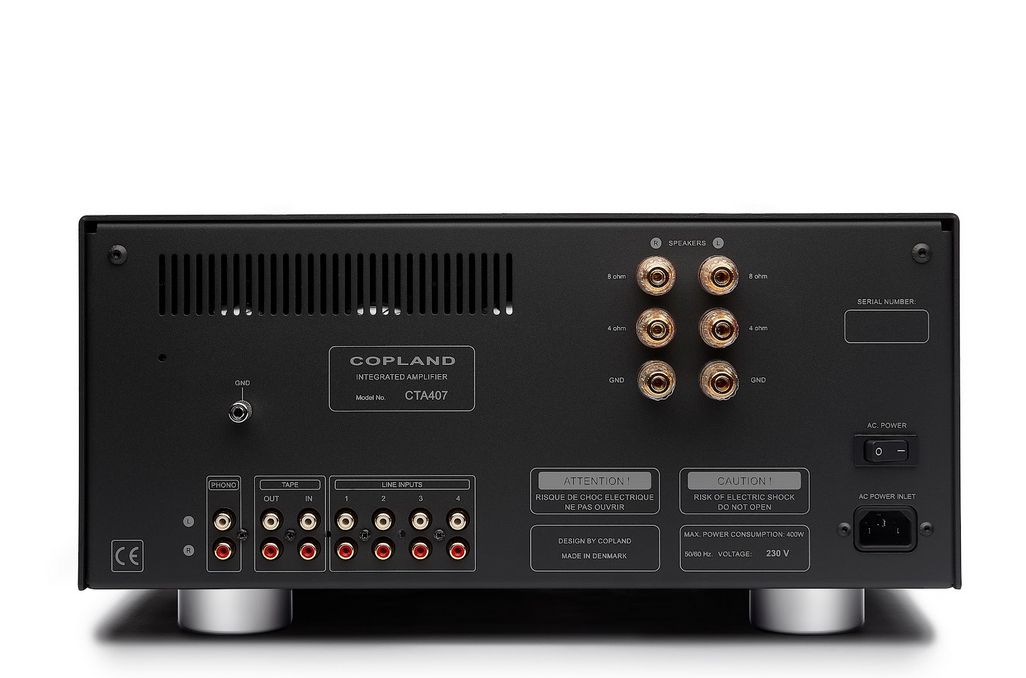
Five line-level inputs are provided for sources with analogue outputs. Suitable equipment may include a CD player, network player, external digital-to-analogue converter or another line-level device. A digital source without an analogue output requires a separate digital-to-analogue converter.
One of the line-level options includes a tape monitor loop. This is intended for connecting a recording device and monitoring the signal being recorded when the device itself supports that function.
The integrated phono stage accepts MM cartridges and high-output MC cartridges. Its input sensitivity is 2.5 mV and its input impedance is 47 kΩ. For a low-output MC cartridge, choose a suitable external phono stage.
Operation and initial setup
The volume control is motor-driven. This allows the same analogue control to be adjusted from the front panel or with a compatible remote handset. The Copland RC102A supports full remote operation of the amplifier, but compatibility does not mean that the handset is included.
When switching on the system for the first time, turn the volume down and select the input used by the connected source. The automatic system sets the required bias for supported power valves. Leave the front-panel indicators switched on if you want to monitor their status.
Loudspeakers and the listening system
The specified rated output is 50 W per channel with a 4-ohm or 8-ohm load. This is the CTA407’s specific output rating and should not be confused with broader claims about the higher power capabilities of KT-family valves. When choosing loudspeakers, consider their nominal impedance and sensitivity as well as the size of the listening room.
The frequency response extends from 10 Hz to 150 kHz at the -3 dB points. The stated total harmonic distortion of less than 0.5% applies at all specified levels. No additional measurement conditions are provided for this figure.
Placement and power supply
The enclosure measures 435 mm wide, 215 mm high and 420 mm deep. At 20 kg, the amplifier requires a strong, stable shelf. Leave open space above the valves so that heat can escape, and do not place the amplifier inside an enclosed, unventilated compartment.
Nominal power-supply versions are available for 115 V or 230-240 V, with a permitted range of ±12%. The voltage is factory-set for the destination country. A system used in Lithuania requires the corresponding 230-240 V version.
Technical specifications
| Type | Integrated two-channel tube amplifier |
|---|---|
| Model origin | Development of the CTA405 |
| Rated output power | 2 × 50 W into a 4 or 8 Ω load |
| Operating mode | High-biased Class A/AB |
| Output stages | Push-pull, with matched power valves and a fixed ultralinear configuration |
| Negative feedback | 18 dB |
| Power valves | Technical configuration specifies 4 × 6550 or KT88-family valves; the exact valves supplied must be confirmed for the individual offer |
| Other valves | 2 × 12BH7, 1 × ECC83 |
| Automatically biased power valves | 6550, KT88, KT90, KT100, KT120 and KT150 |
| Valve status indicators | 40 LEDs, ten for each power valve; switchable |
| Line inputs | 5, including a tape monitor loop |
| Phono stage | Built-in RIAA phono stage for MM and high-output MC cartridges |
| Line input sensitivity | 200 mV for rated output |
| Phono input sensitivity | 2.5 mV for rated output |
| Line input impedance | 50 kΩ |
| Phono input impedance | 47 kΩ |
| Frequency response | 10 Hz-150 kHz, -3 dB |
| Total harmonic distortion | Less than 0.5% at all levels |
| Signal-to-noise ratio | 100 dB, IHF-A weighted |
| Volume control | Motor-driven control |
| Remote control | Compatible with the Copland RC102A handset; full control supported |
| Power consumption | 300 W |
| Nominal supply voltage | 115 V or 230-240 V; factory-set for the destination country |
| Supply-voltage range | ±12% of the nominal value |
| Dimensions | 435 × 215 × 420 mm (width × height × depth) |
| Weight | 20 kg |
FAQ
Can I connect a turntable without a separate phono stage?
Yes, provided that the turntable uses an MM or high-output MC cartridge. A low-output MC cartridge requires a suitable external phono stage.
Which input should I use for a CD player or network player?
Use any available line-level input if the player has an analogue output. A digital signal must first be converted by an external converter or one built into the player.
Do I need to adjust the bias manually after replacing the power valves?
The automatic system adjusts it for supported 6550 valves and the listed KT-family types. The LED indicators allow the status of each power valve to be monitored.
Is the amplifier intended for stereo or home cinema?
It is a two-channel stereo amplifier. It does not replace an AV receiver for multichannel decoding, and its connections are designed around its role as the integrated centre of a stereo system.
Is the remote control included?
Compatibility with the Copland RC102A is confirmed, but this does not guarantee that the handset is included. Before choosing a package, check whether the remote is offered separately.
How much space does the amplifier require?
The shelf must support a weight of 20 kg and accommodate the 435 × 215 × 420 mm enclosure. Unobstructed ventilation space must also be left above the valves.
Related products and categories
Related products