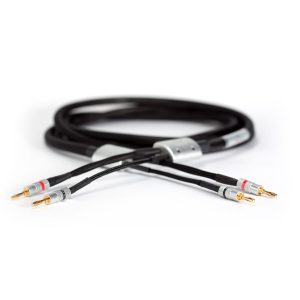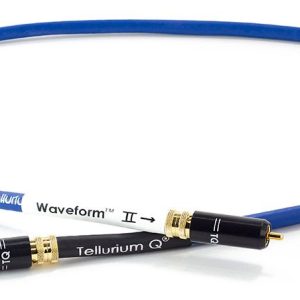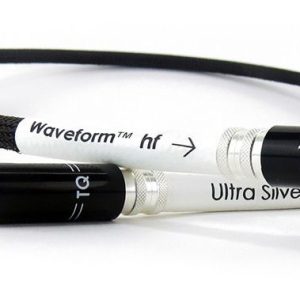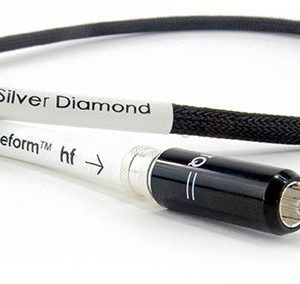
Chord Signature Tuned ARAY Analogue RCA Cable
930,00 €
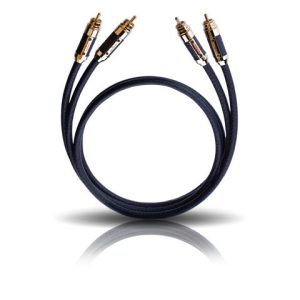
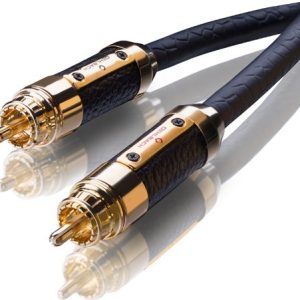
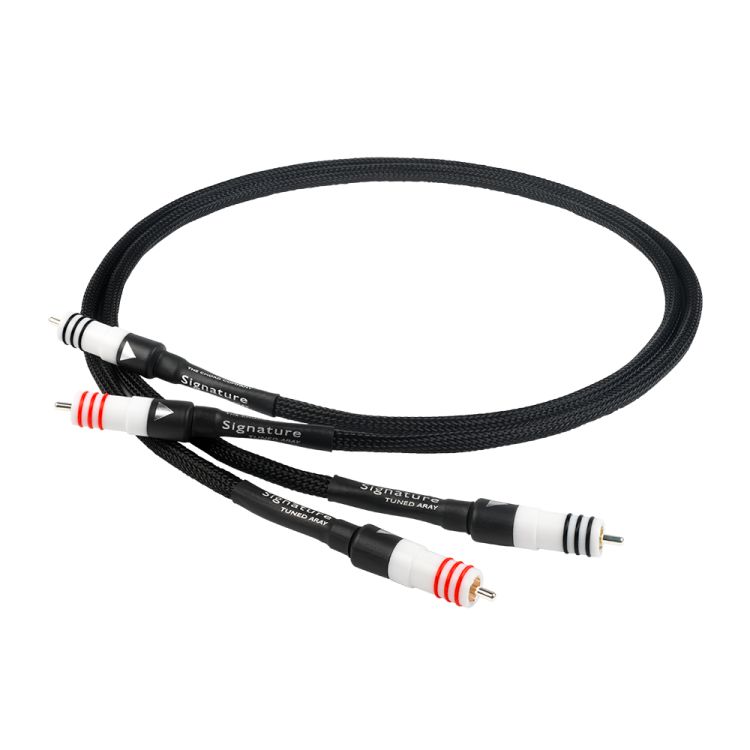
Chord Signature Tuned ARAY Analogue RCA is a 1 m analogue interconnect for connecting an audio source to an amplifier with RCA connections. Individually shielded silver-plated oxygen-free copper conductors carry the line-level signal. PTFE insulation, dual-layer foil and a high-density braided shield help limit the effects of high-frequency interference. This version uses PTFE RCA plug surrounds.
Chord Signature Tuned ARAY Analogue RCA is a 1 m analogue RCA interconnect designed to carry line-level audio signals between components fitted with RCA connections. It uses silver-plated oxygen-free copper conductors, PTFE insulation and a multi-layer shielding system.
What this cable is designed for
This analogue RCA interconnect is suitable for connecting an audio source to an amplifier. It can be used between a CD player, media player, digital-to-analogue converter or phono stage and an amplifier’s analogue input. Both components must use RCA connections intended for line-level signals.
This is not a speaker, XLR, HDMI or optical cable. It must not be connected to an amplifier’s speaker outputs. A turntable may also require a separate phono stage if phono equalisation is not built into either the turntable or the amplifier.
Construction and materials
The signal is carried by silver-plated oxygen-free copper conductors. Each conductor is shielded individually. This construction allows the separate signal paths to be screened independently instead of relying solely on a single shared outer shield.
The conductors are arranged according to Tuned ARAY conductor geometry. PTFE provides their electrical insulation, while every conductor is also covered by its own FEP outer jacket. These separate layers form part of the cable’s defined internal construction.
A black braided outer jacket holds the intended cable configuration together. It combines the individually jacketed conductors into one cable and helps preserve their relative positions as the interconnect is routed through an audio system.
Shielding and its purpose
The shielding system combines dual-layer foil with a high-density braided shield. This arrangement is intended to limit the effect of external electromagnetic and radio-frequency interference on the analogue signal passing through the cable.
The shielding remains effective at very high frequencies. This is relevant in systems where signal cables run close to digital equipment, power supplies or other possible sources of high-frequency interference. Sensible cable routing is still recommended when the interconnect is installed.
Connection and initial setup
Switch off both audio components before connecting the cable. Attach one end to the source component’s analogue RCA output. Connect the other end to the corresponding RCA input on the amplifier or other receiving component.
Follow the left- and right-channel markings on the equipment. Insert each RCA plug straight into its socket without twisting the cable itself. The connection should be secure, but the plug should not be forced into place.
Input selection and signal level are controlled by the connected components. The cable does not provide input switching, level adjustment or phono equalisation.
Installing the cable in an audio system
Before choosing the cable, measure the actual distance between the relevant sockets. Take account of the depth of the equipment, the position of the connections and the route the cable will need to follow behind the shelf or equipment rack. Leave a small amount of slack so that the RCA plugs are not exposed to continuous pulling force.
Do not install the cable under tension or bend it sharply close to the plugs. Where possible, keep the signal cable separate from mains power cables. If the cables must cross, arrange the crossing at as close to a right angle as practical rather than running them alongside each other for an extended distance.
In a stereo system, the cable can connect an analogue source to an integrated amplifier or preamplifier. In a home cinema system, it can provide an analogue line-level connection between components equipped with suitable RCA sockets. Every additional connection in a multi-component system requires its own appropriate interconnect.
Technical specifications
| Model | Chord Signature Tuned ARAY Analogue RCA |
|---|---|
| Type | Analogue RCA interconnect cable |
| Length | 1 m |
| Connections | RCA |
| Conductor material | Silver-plated oxygen-free copper |
| Conductor construction | Individually shielded conductors |
| Conductor geometry | Chord Tuned ARAY |
| Insulation | PTFE |
| Shielding | Dual-layer foil and high-density braided shield |
| Shielding frequency range | Effective at very high frequencies |
| Individual conductor jacket | FEP |
| Overall outer jacket | Black braided jacket maintaining the intended cable configuration |
| RCA plug surrounds | PTFE |
| Previous-version surrounds | Acrylic |
FAQ
What equipment can be connected with this cable?
It is intended for analogue line-level RCA connections. One component must have an analogue RCA output, while the other must have a corresponding input. For example, it can be used to connect an audio source to a stereo amplifier. It is important to check the connection type and purpose on both components before installation.
Can the cable be connected to a turntable?
Yes, provided that the turntable or its phono stage has suitable RCA connections. A turntable signal still requires phono equalisation. This cable does not perform that function and does not change the signal level, so a separate phono stage may be needed when one is not built into the turntable or amplifier.
Is it suitable for a home cinema system?
It can be used to carry an analogue signal between home cinema components. Both devices must have corresponding RCA connections intended for that signal. The cable does not replace an HDMI or optical connection, and it cannot be used as a speaker cable.
How can I determine whether the selected length will be sufficient?
Measure the cable’s planned route rather than a straight line between the components. Include the depth of the equipment and enough free cable behind the shelf or rack to avoid strain. The cable should not hang from the RCA sockets or remain pulled tight after installation.
How should the cable be routed near power cables?
Keep signal and power cables separated where possible, and avoid long sections in which they run parallel. If the cables must cross, arrange them at as close to a right angle as practical. Do not create sharp bends in the interconnect while positioning it.
How can this version be distinguished from the previous version?
This RCA version uses PTFE plug surrounds. Earlier variants used acrylic surrounds. This construction detail provides a way to distinguish between the different versions of the cable.