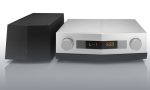
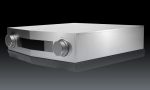
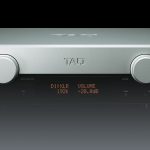
TAD C700 Preamplifier
69 000,00 €
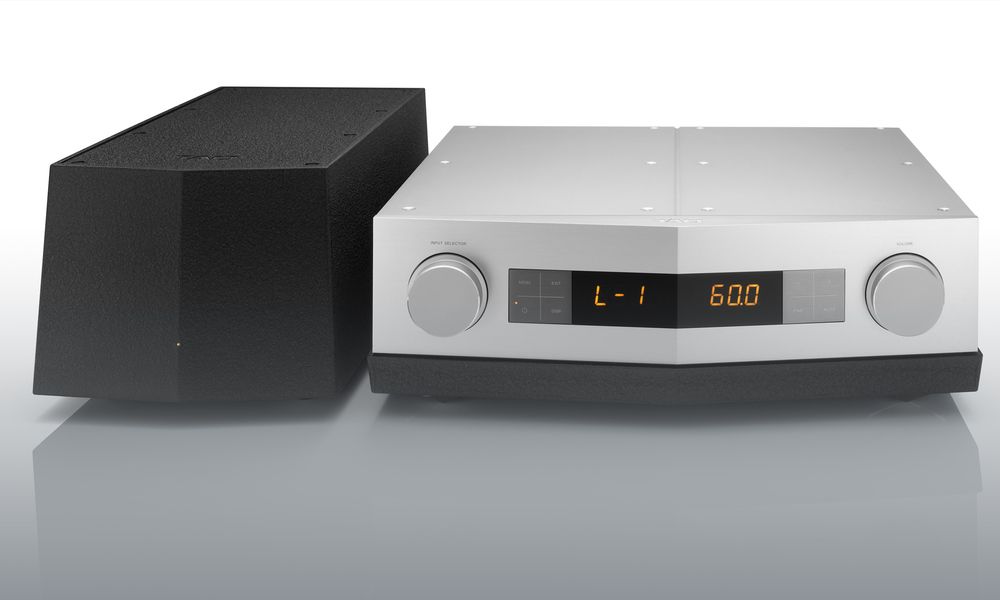
The TAD C700 preamplifier is designed for a Reference Series stereo system with a separate power amplifier. Its fully balanced, dual-mono construction separates the channel circuits, while the separate 400 VA power supply isolates them from transformer vibration and magnetic flux. Four balanced and two unbalanced inputs accommodate a range of line-level sources.
The TAD C700 preamplifier is designed to manage signals between stereo sources and power amplifiers. Its fully balanced circuitry, dual-mono construction and separate power supply reduce interaction between circuits. The model is suited to systems with several line-level sources and either one or two connected power amplifiers.
This TAD Reference Series model replaces the earlier TAD-C600. It can form the control centre of a no-compromise two-channel system or integrate a stereo signal path into a home cinema installation. Multiple units can also be used in systems with three or more channels.
Fully balanced, dual-mono construction
The fully balanced signal path is maintained throughout the amplification chain. When balanced connections are used, this arrangement helps limit the influence of common-mode interference. Balanced connections are also required on the other connected components to retain this configuration throughout the system.
The dual-mono construction separates the left- and right-channel circuits. After the electronic volume control sets the signal level, the signal is amplified by a single-stage voltage amplifier. This avoids adding further amplification stages after volume adjustment.
Each of the two line outputs has its own dedicated output-amplifier circuit. This reduces electrical interaction between components connected at the same time and is particularly useful when controlling two power amplifiers.
Separate power supply and mechanical foundation
The amplifier circuitry and power supply are housed in separate enclosures. This arrangement isolates the audio circuits from transformer vibration and magnetic flux. The power-supply unit contains a 400 VA toroidal transformer.
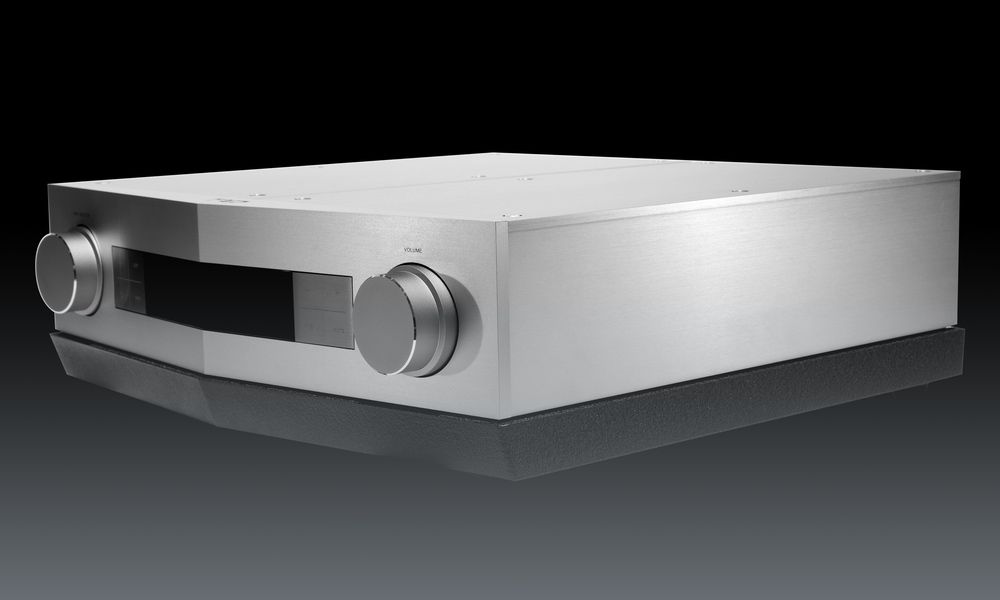
The main amplifier circuitry is mounted on a 33 mm-thick, 15 kg sub-chassis machined from pure aluminium. Its substantial mass provides the circuits with a rigid mechanical foundation. The main enclosure rests on three spike-shaped support feet.
Inputs and outputs
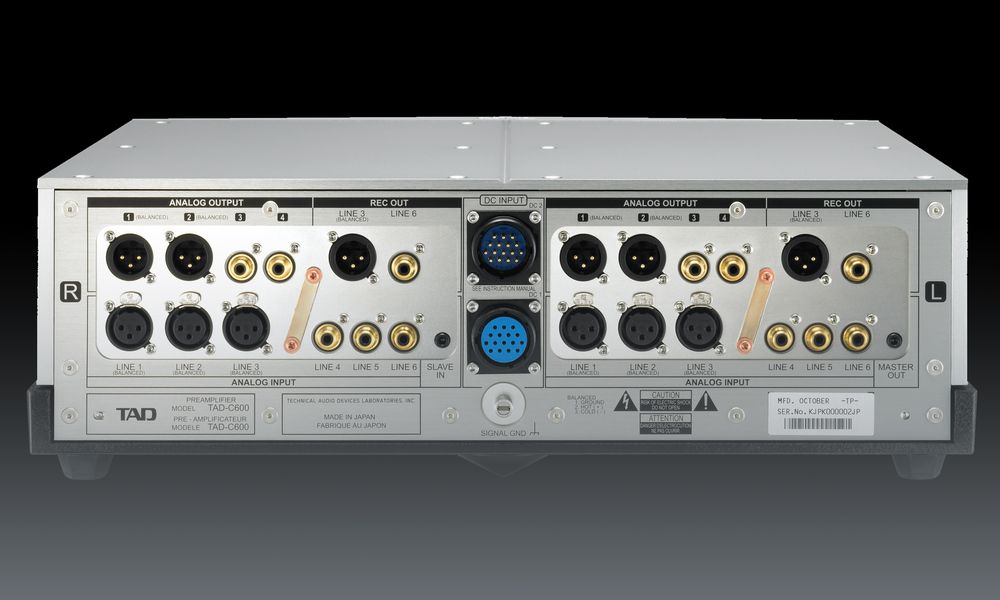
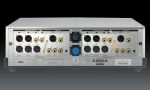
The six line inputs comprise four balanced inputs and two unbalanced inputs. Choose a balanced connection for a source with a corresponding output, particularly when using a longer cable. The unbalanced connections accommodate sources with conventional RCA outputs.
Two balanced and two unbalanced outputs are provided. Match the connection type to the input on the power amplifier and avoid unnecessary signal conversion through additional adapters.
Input impedance is 100 kΩ for the balanced inputs and 50 kΩ for the unbalanced inputs. These figures describe the electrical load presented to the source. They are not loudspeaker impedance ratings.
Volume, recording and system control
The electronic volume control sets the signal level before the single-stage voltage amplifier. When switching on the system for the first time, begin with a low volume setting. Increase it only after confirming that the correct input has been selected.
Pass-through mode bypasses the normal volume control. It is useful when integrating a stereo power amplifier into a home cinema system. In this configuration, the AV processor or receiver controls and calibrates the volume for the relevant channel.
Before activating pass-through mode, reduce the volume on the controlling component. This keeps the initial playback level under control. Use the C700’s conventional volume control for everyday stereo listening.
A recording output can send the signal to a separate recording device. There is no recording monitor switch, so the source signal and the signal returning from the recorder cannot be compared using a single switch.
The MASTER OUT connection allows several C700 units to be controlled together. This is intended for separate monophonic configurations or systems with three or more channels. Such an arrangement requires more than one C700.
Signal levels and frequency range
The nominal output levels describe the normal operating signal, while the maximum figures indicate the available output headroom. They should not be interpreted as power-amplifier output ratings. This preamplifier carries a line-level signal and cannot drive passive loudspeakers directly.
The 10 Hz-100 kHz frequency response is specified at the -1 dB point. This measurement criterion matters when comparing the stated frequency ranges of different components. The 120 dB signal-to-noise ratio describes the difference between the useful signal and the background noise level.
Placement and installation
This is a two-enclosure component, so it requires two sturdy supporting surfaces. The main unit weighs 29 kg, while the power-supply unit weighs 15 kg. Each shelf must safely support the weight of the enclosure placed on it.
The 440 mm depth of the main unit does not include the extra clearance needed for cable bends. The power-supply unit also requires a support surface at least 430 mm deep. Leave enough room behind both enclosures for connections and cables without placing them under strain.
Place the three-point supports on a level, rigid surface. The power-supply unit may be positioned away from sensitive signal cables. Both enclosures should remain accessible for connection and maintenance.
The version intended for Lithuania uses 220-240 V AC at 50 or 60 Hz. The US version operates at 120 V AC and 60 Hz. Select the version intended for the local mains supply.
Technical specifications
| Model | TAD-C700 |
|---|---|
| Type | Reference Series stereo preamplifier with separate power-supply unit |
| Signal circuitry | Fully balanced, dual-mono construction |
| Voltage amplification | Single amplification stage after the electronic volume control |
| Balanced inputs | 4 |
| Unbalanced inputs | 2 |
| Balanced outputs | 2, with dedicated output-amplifier circuits |
| Unbalanced outputs | 2, with dedicated output-amplifier circuits |
| Nominal balanced output voltage | 1.5 V |
| Nominal unbalanced output voltage | 0.75 V |
| Maximum balanced output voltage | 20 Vrms |
| Maximum unbalanced output voltage | 10 Vrms |
| Balanced input impedance | 100 kΩ |
| Unbalanced input impedance | 50 kΩ |
| Signal-to-noise ratio | 120 dB |
| Frequency response | 10 Hz-100 kHz, -1 dB |
| Additional functions | Recording output, pass-through mode, MASTER OUT |
| Recording monitor switch | Not provided |
| Power transformer | 400 VA toroidal transformer in a separate power-supply unit |
| Main circuit sub-chassis | 33 mm-thick, 15 kg pure-aluminium sub-chassis |
| Supports | Three spike-shaped feet |
| Power supply for Europe and Asia | 220-240 V AC, 50 or 60 Hz |
| Power supply for the US | 120 V AC, 60 Hz |
| Power consumption | 52 W |
| Standby power consumption | 0.5 W or less |
| Main unit dimensions | 450 × 150 × 440 mm; 17-23/32 × 5-29/32 × 17-21/64 in. |
| Power-supply unit dimensions | 220 × 185 × 430 mm; 8-21/32 × 7-9/32 × 16-59/64 in. |
| Main unit weight | 29.0 kg; 63 lb 15 oz |
| Power-supply unit weight | 15.0 kg; 33 lb 1 oz |
FAQ
Can this component drive passive loudspeakers directly?
No. It is a line-level preamplifier, so a power amplifier is required between the C700 and passive loudspeakers.
When should I choose a balanced connection?
Choose it when both the source and power amplifier provide balanced connections. This maintains the C700’s fully balanced signal path.
How can I integrate it into a home cinema system?
Use the pass-through function for the relevant channel. The home cinema processor must then control and calibrate that channel’s volume.
Can two power amplifiers be connected at the same time?
Yes. The two line outputs have separate amplifier circuits. Select the appropriate connection type for the inputs on the power amplifiers.
Can one unit be used in a system with more than two channels?
One C700 is a stereo model. For a system with three or more channels, multiple units can be linked through MASTER OUT.
What should I allow for when choosing equipment shelves?
Separate, sturdy spaces are required for the main unit and power-supply unit. Leave additional clearance behind the enclosures for connections and cable bends.
Can I monitor a recording with a recording monitor switch?
No. The C700 does not have this switch. The return signal from the recording device would need to be connected to a separate line input.