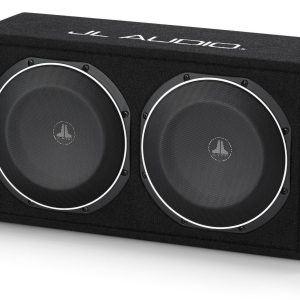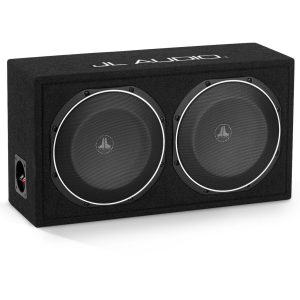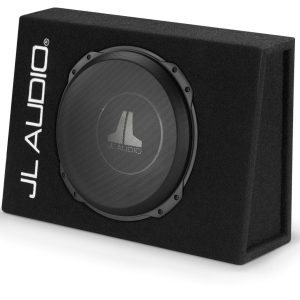
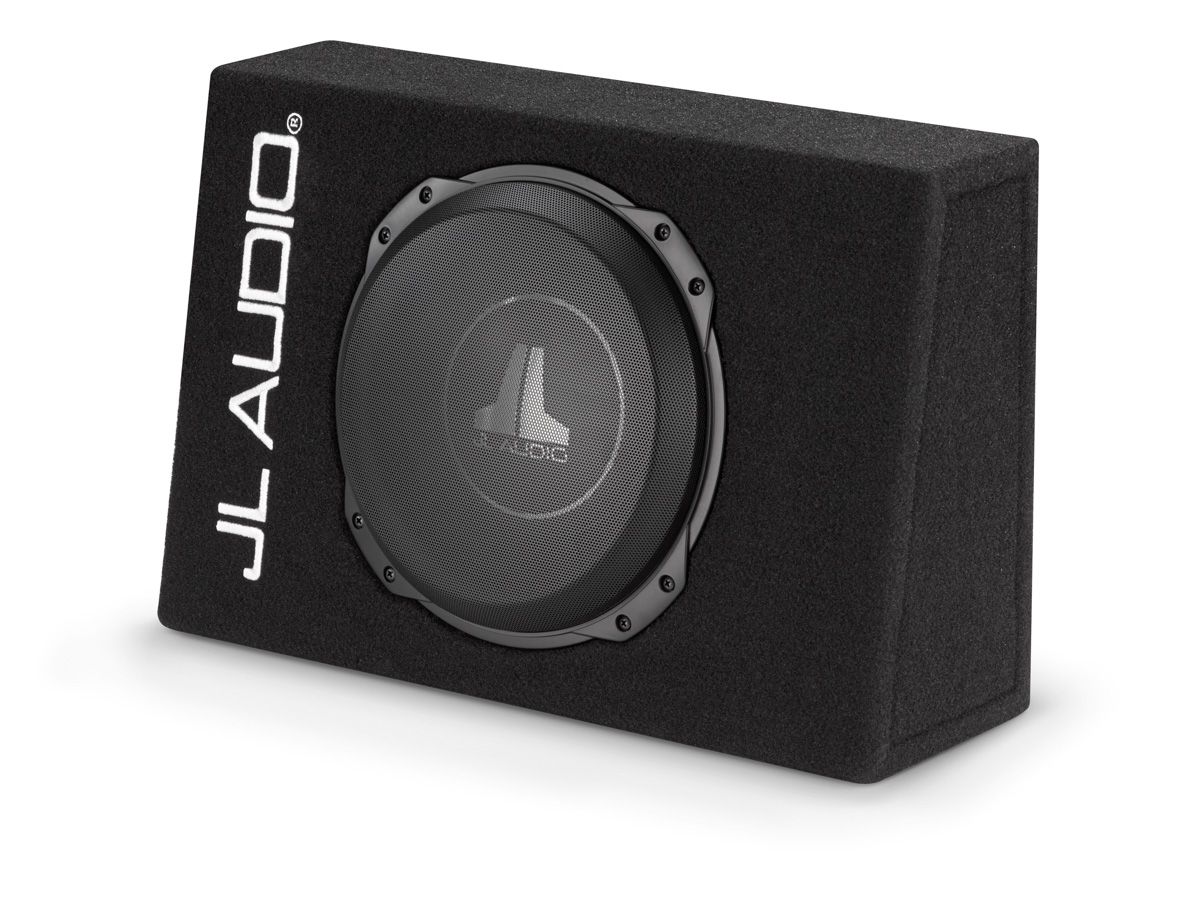
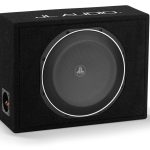

JL Audio CS110TG-TW3 Subwoofer Enclosure
530,00 €
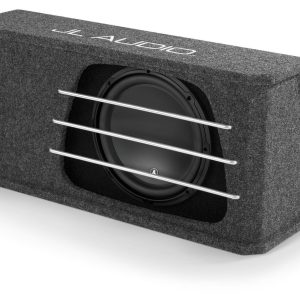
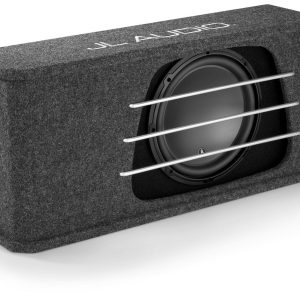
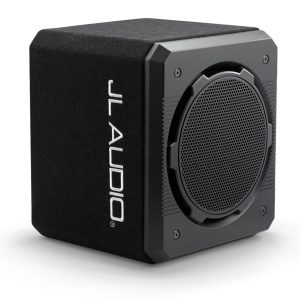
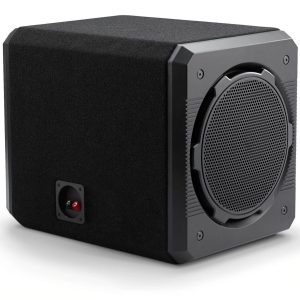
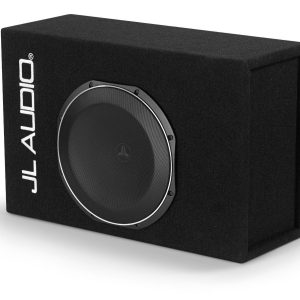
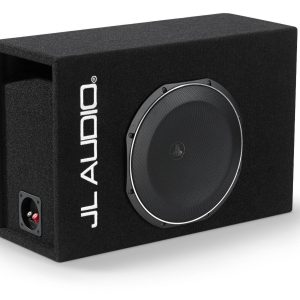
JL Audio CS110TG-TW3 is a car subwoofer in a sealed, truck-style enclosure. It handles 400 W RMS and presents a nominal 2 Ω load, providing clear power and impedance parameters for amplifier selection. The enclosure tapers toward the top to suit an installation space with varying depth. A black steel mesh grille is included.
JL Audio CS110TG-TW3 is a car subwoofer supplied in a truck-style enclosure. It handles 400 W RMS of continuous power and has a nominal system impedance of 2 Ω. These are the two key figures to consider when choosing an external amplifier and planning a safe load for the system.
Enclosure Design and Intended Use
The subwoofer is installed in a sealed enclosure, so no additional space is required for a bass-reflex port. The enclosure is 159 mm deep at its widest point and 104 mm deep across the top. This tapered profile is important when checking the available installation depth over the enclosure’s full height. Remember to allow room for the cable and keep the front grille unobstructed.
The enclosure is finished in black carpet, which blends well with many vehicle luggage-compartment and cabin interiors. The included black steel mesh grille helps protect the speaker from direct contact and from objects stored nearby.
Choosing an Amplifier
The amplifier must be capable of stable operation with the subwoofer enclosure’s specified nominal load. When comparing amplifiers, look at the RMS power rating at that impedance. A maximum or short-term power figure on its own does not show whether an amplifier is suitable for extended listening.
Extra amplifier power does not remove the need to set the input sensitivity correctly. Excessive gain can cause distortion before the system reaches a useful listening level. Begin with a low setting, increase it gradually, and listen carefully to make sure the signal remains clean.
Connection and Sound Adjustment
Connect the enclosure to an amplifier output intended for a subwoofer channel. Maintain the correct polarity throughout the signal path. Reversed polarity may weaken bass response when the subwoofer operates together with the vehicle’s front or rear speakers.
Set the frequency limit using the amplifier, head unit, or sound processor. Choose an initial crossover point according to the frequency range reproduced by the main speakers. Then adjust it from the listening position until the transition sounds continuous, without an obvious overlap between frequency ranges.
If the electronics in your system provide phase or signal-delay controls, compare the available settings from the driver’s seat. Keep the setting that produces the smoothest transition between the main speakers and the subwoofer.
Installation in the Vehicle
Allow enough space for the connecting cable and its bending radius. Do not trap the cable against a sharp trim edge. Secure the enclosure so that it cannot move during braking or while the vehicle is travelling over an uneven road.
The 9.6 kg net weight should be considered when selecting the mounting location and suitable fasteners. The supporting surface must hold the enclosure across its entire base. Never use the grille as a handle when moving the enclosure.
Because this is a sealed design, installation does not require the extra clearance associated with a bass-reflex port. The resulting sound will still depend on its position inside the vehicle and its distance from nearby surfaces. Set the final bass level and phase only after the enclosure has been secured in its intended location.
System Planning
This model is designed for a vehicle audio system and should not be treated as an active home speaker. It requires a separate amplification chain and suitable system controls. The protective grille is supplied with the enclosure, while the amplifier and installation accessories must be selected for the particular vehicle.
If you are unsure about the amplifier load or the proposed installation position, have the enclosure dimensions and amplifier specifications available. System matching can be discussed at the Audiocentras store in Kaunas. It is particularly important to verify the amplifier’s output at the intended load.
Technical Specifications
| Model | JL Audio CS110TG-TW3 |
|---|---|
| Product type | Car subwoofer in a truck-style enclosure |
| Enclosure type | Sealed |
| Continuous power handling | 400 W RMS |
| Nominal system impedance | 2 Ω |
| Finish | Black carpet |
| Protective grille | Black steel mesh grille, included |
| External width | 483 mm / 19 in |
| External height | 314 mm / 12.375 in |
| Maximum external depth | 159 mm / 6.25 in |
| Top-surface depth | 104 mm / 4.1 in |
| Net weight | 9.6 kg / 21.2 lb |
FAQ
What kind of amplifier does this subwoofer enclosure require?
Choose a car amplifier that operates reliably with the specified load. Assess its output using the RMS rating rather than relying only on a short-term or maximum power figure.
How can I check whether the enclosure will fit in the intended location?
Measure the available width and height, then check the depth at both the base and the top of the installation space. The enclosure’s maximum depth is 159 mm, while its top surface is 104 mm deep. Also allow additional clearance for the cable and the front grille.
Do I need to leave space behind the enclosure for a port?
No. This is a sealed enclosure and does not have a bass-reflex port. You should still provide enough room for the cable and avoid obstructing the speaker surface at the front.
How should I set the bass level?
Start with a low amplifier input-sensitivity setting. Increase the level gradually until the bass complements the main speakers without audible distortion or overpowering the rest of the system.
Is this enclosure suitable for a home stereo or home cinema system?
It is designed for a vehicle audio system and a truck-style installation space. Home systems use different amplifiers, connections, and power arrangements.
Can two of these enclosures be used with one amplifier?
Only if the amplifier supports the resulting combined load. Connecting two enclosures in parallel or in series changes the impedance presented to the amplifier.
Why should the enclosure be secured before the final sound adjustments?
The installation position affects the balance of low frequencies inside the cabin. Once the enclosure is secured, you can adjust the level, crossover setting, and any electronically selectable phase control more accurately.