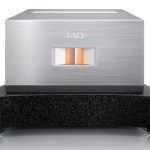
TAD-M700S Power Amplifier
64 000,00 €
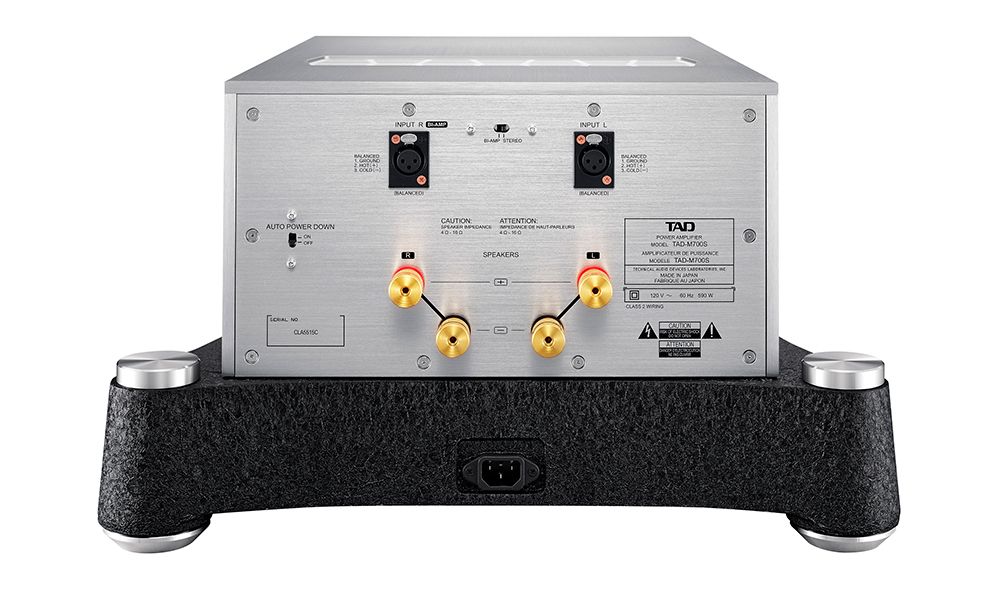
The TAD-M700S is a two-channel power amplifier designed as the dedicated power stage in a separately configured stereo system. It delivers 350 W per channel into 4 ohms at 1 kHz, allowing the output figure to be compared according to the stated load and measurement condition. Its fully symmetrical BTL circuit extends from input to output. Two power transformers with a combined rated capacity of 2.8 kVA and four 33,000 µF capacitors form the power-supply section.
The TAD-M700S power amplifier is a Reference Series two-channel model designed to serve as the dedicated power stage in a stereo system. It operates with a preamplifier or another variable-level analogue signal source. Its rated output is 350 W per channel at 1 kHz into 4 ohms. With an 8-ohm load at the same frequency, the specified output is 175 W per channel.
Role in Stereo and Home Cinema Systems
This two-channel power amplifier amplifies the signals for the left and right channels. The preamplifier selects the source and controls the listening volume. This arrangement is suitable for systems built with separate control and power-amplification stages.
In a home cinema system, the amplifier can power the front left and right channels. The processor must provide variable-level analogue outputs for this purpose. The home cinema processor then controls the volume, while the TAD-M700S operates as a separate power stage.
Symmetrical BTL Circuit
The amplifier is based on a BTL bridged transformerless configuration. Its circuitry is fully symmetrical from input to output. The same layout principle is applied to the circuit topology and printed circuit boards. It also extends to both transformers and the electrolytic capacitors arranged in parallel.
The internal layout has been designed with temperature changes, magnetic fields and vibration in mind. Both sides of the circuit follow the same arrangement. This is an important construction feature in a two-channel power amplifier, where the corresponding sections are organised according to a consistent design principle.
Power Supply
The power supply uses two power transformers with a combined rated capacity of 2.8 kVA. Their cores are wrapped by hand in insulating sheets without the use of coil bobbins. Four specially manufactured 33,000 µF electrolytic capacitors are installed beside them.
The capacitors are arranged in parallel inside the enclosure and incorporated into the overall symmetrical construction. This substantial power-supply section occupies considerable space. Before purchasing, it is therefore important to consider the amplifier’s depth and weight, as well as the load capacity of the intended equipment rack.
Enclosure and Vibration Management
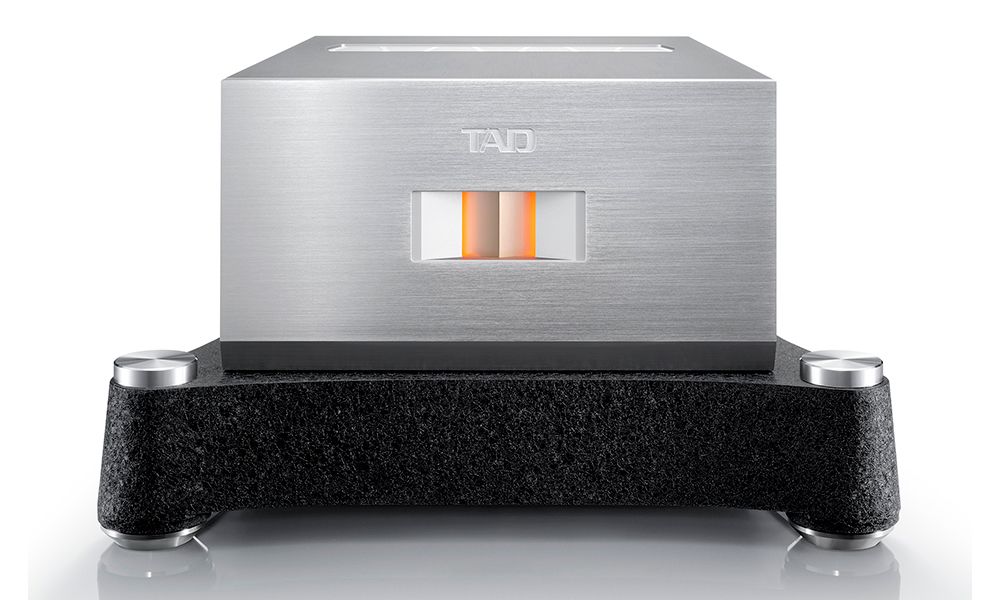
The monocoque cast-aluminium enclosure has a high internal vibration-damping factor and low electrical impedance. The internal components are positioned to improve their resistance to vibration caused by sound pressure from the loudspeakers.
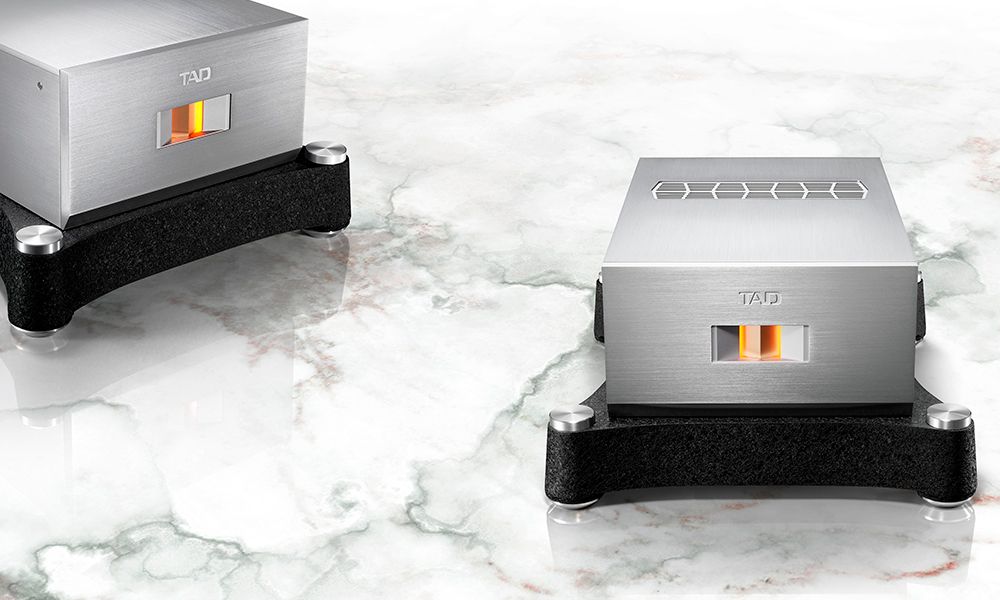
Each of the four height-adjustable pointed feet touches the supporting surface at a single point. Their wide stance and optimised angle lower the structure’s centre of gravity. Height adjustment allows this heavy amplifier to be levelled precisely on a suitable equipment rack.
The enclosure features curved sides and a redesigned front-panel emblem. Cooling vents are located at the rear of the top panel. These openings must not be covered by a shelf, another component or any other object.
Choosing a Suitable Location
The amplifier measures 516 mm wide, 296 mm high and 622 mm deep. It requires a deep, stable rack capable of supporting its 75.5 kg weight. Check the usable shelf depth before installation rather than relying only on the furniture’s external dimensions.
Leave sufficient space behind the enclosure for connected cables and their required bend radius. Open space must also remain above the rear section of the top panel so that heat can escape. Plan how the unit will be moved into place before connecting the rest of the system.
System Connection and Initial Setup
In the signal chain, the amplifier is connected between the preamplifier and the loudspeakers. Its input sensitivity is 1.5 V, while its input impedance is 100 kilohms. These figures help when assessing the electrical compatibility of a preamplifier and the output level it needs to provide.
The 29.5 dB gain describes the amount of signal amplification applied by the power stage. When switching on the system for the first time, turn down the preamplifier volume. Select the required source before raising the level gradually.
Understanding the Technical Figures
Both output-power ratings were measured at 1 kHz. They should not be interpreted as continuous power measurements covering the full frequency range. When comparing amplifiers, always check the stated load, number of channels and measurement conditions.
The distortion figure of less than 0.005% applies specifically at 1 kHz, 175 W and 4 ohms. The frequency range extends from 1 Hz to 100 kHz within +0/-3 dB limits. This describes the amplifier’s electrical range, not the acoustic response of the connected loudspeakers.
The signal-to-noise ratio of more than 125 dB describes the relationship between the useful signal and the electronic noise. It is meaningful to compare this figure only with values from other amplifiers that have been defined on the same basis.
Technical Specifications
| Model | TAD-M700S |
|---|---|
| Type | Reference Series two-channel power amplifier |
| Circuit configuration | BTL bridged transformerless configuration |
| Circuit construction | Fully symmetrical from input to output |
| Internal layout | Symmetrical arrangement of circuits, printed circuit boards, transformers and capacitors |
| Rated output power, 4 ohms | 350 W per channel at 1 kHz |
| Rated output power, 8 ohms | 175 W per channel at 1 kHz |
| Distortion | Less than 0.005% at 1 kHz, 175 W and 4 ohms |
| Signal-to-noise ratio | More than 125 dB |
| Frequency range | 1 Hz-100 kHz, +0/-3 dB |
| Gain | 29.5 dB |
| Input sensitivity | 1.5 V |
| Input impedance | 100 kilohms |
| Power transformers | Two power transformers |
| Combined rated transformer capacity | 2.8 kVA |
| Transformer cores | Hand-wrapped in insulating sheets without coil bobbins |
| Capacitors | Four specially manufactured 33,000 µF electrolytic capacitors |
| Environmental-effect management | Layout designed with temperature changes, magnetic fields and internal vibration in mind |
| Enclosure | Monocoque cast-aluminium enclosure |
| Enclosure properties | High internal vibration-damping factor and low electrical impedance |
| Internal component mounting | Arranged for resistance to vibration caused by loudspeaker sound pressure |
| Supports | Four height-adjustable pointed feet, each contacting the surface at a single point |
| Structural geometry | Wide foot placement, low centre of gravity and optimised foot angle |
| Exterior construction details | Curved sides, redesigned front emblem and cooling vents at the rear of the top panel |
| Dimensions | 516 × 296 × 622 mm |
| Weight | 75.5 kg |
FAQ
What components are required for a stereo system?
You need a preamplifier or another variable-level analogue signal source. The power amplifier then drives the left and right loudspeakers. Source selection and volume control are handled by the preceding stage in the system.
Can this amplifier be used in a home cinema system?
Yes. It can serve as the power stage for the front left and right channels. The home cinema processor must provide variable-level analogue signals for those channels.
How should I prepare a location for the amplifier?
Choose a rack capable of supporting at least 75.5 kg and accommodating a depth of 622 mm. Allow additional room for the cables, and do not obstruct the cooling vents at the rear of the top panel.
How should I set the volume level for the first time?
Begin with the preamplifier volume turned down. Switch on the selected source and raise the level gradually. This lets you assess the system’s overall gain before choosing a normal listening volume.
Does the 350 W figure describe output across the full frequency range?
No. This rating applies per channel into a 4-ohm load at 1 kHz. Compare it only with figures measured under the same conditions.
What does the 1.5 V input sensitivity mean in practice?
This value helps you select a preamplifier capable of supplying the required variable-level signal. System volume must still be controlled through the preamplifier.
What is the benefit of the height-adjustable feet?
The adjustment makes it possible to level the 75.5 kg amplifier securely on a suitable support capable of carrying its weight.
Related products