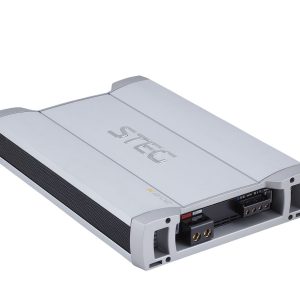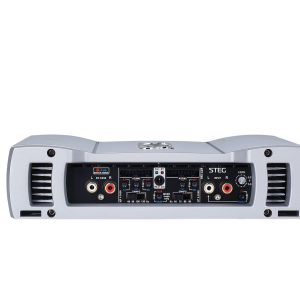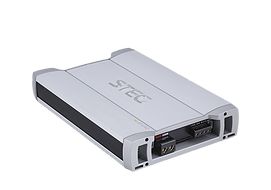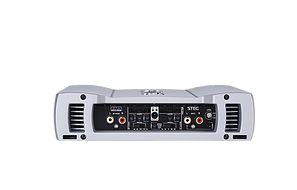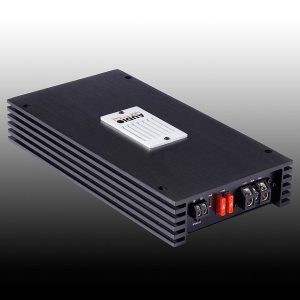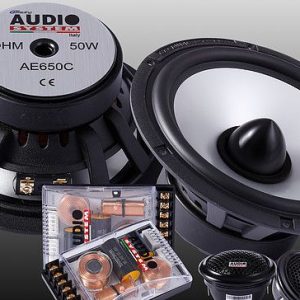
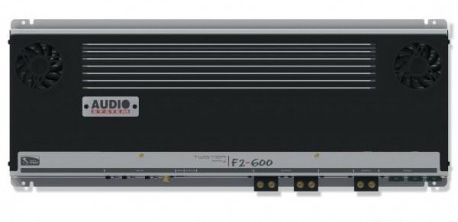
Audio System F2.600 Car Amplifier
410,00 €
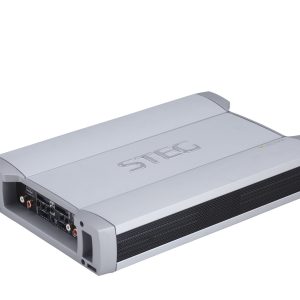
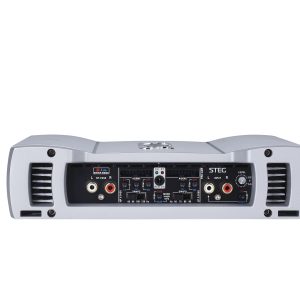
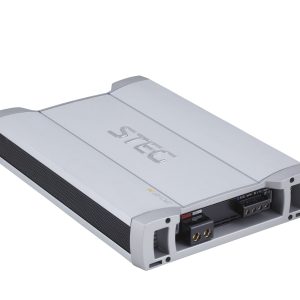
The Audio System F2.600 is a two-channel car power amplifier for a pair of speakers or a subwoofer. In stereo mode, it delivers 2 × 300 W RMS into 4 ohms. Bridged mode allows both channels to power a single subwoofer. Adjustable high-pass and low-pass filters help match the reproduced frequency range to the chosen car audio system.
The Audio System F2.600 car amplifier is a two-channel audio power amplifier. Depending on the selected connection mode, it can power car speakers or a subwoofer. In stereo mode, its stated output is 2 × 300 W RMS into a 4-ohm load.
The two channels can power the left and right speakers separately. They can also be combined in bridged mono mode. This configuration is intended for a single, higher-powered subwoofer.
Power and system selection
In stereo mode, the amplifier delivers 2 × 460 W RMS when each channel is connected to a 2-ohm load. The minimum permitted stereo load is 2 ohms, so the final impedance of the speakers connected to either channel must not fall below this value.
In bridged mode, the stated output is 1 × 1000 W RMS into 4 ohms. At 2 ohms, the specified output is 1 × 1500 W RMS. The minimum load in this mode is a 2-ohm subwoofer. A bridged installation at this power level requires a properly prepared vehicle electrical system.
Dynamic stereo power at 2 ohms is specified as 2 × 320 W. This is not the same measurement as RMS power. When choosing speakers, match their continuous power handling to the RMS figures and the intended load.
Filters and sound adjustment
The integrated high-pass filter is adjustable from 20 to 150 Hz. It reduces the amount of very low-frequency content sent to the main speakers. This is useful when a separate subwoofer handles the lowest frequencies in the system.
The low-pass filter is adjustable from 45 to 300 Hz. It helps prevent higher-frequency content from being sent to the subwoofer. Both filters have a slope of 12 dB per octave.
Begin adjustment at a frequency close to the lower operating limit of the main speakers. Then refine the setting while listening from the driver’s seat. Setting the crossover too high can make the position of the subwoofer more obvious. Setting it too low may leave an audible gap between the frequency ranges reproduced by the speakers and subwoofer.
Input-level adjustment
The stated input-sensitivity range is 0.17-4.3 mV, although the unit shown for this specification may be inaccurate. The sensitivity adjustment is not a volume control. It is used to match the amplifier’s input to the output level of the vehicle’s audio source.
Start with a lower gain setting and increase it gradually. Stop before the sound begins to distort noticeably. Correct adjustment preserves a useful range on the source unit’s volume control and reduces the likelihood of overloading the signal path.
Input impedance is greater than 11 kilohms. The specified damping factor into 4 ohms is greater than 400. A higher damping factor helps the amplifier control the movement of the connected speaker cone more accurately.
Power supply and installation
The amplifier operates from 10.5 to 16 V. For a five-metre power run, the specified minimum cable cross-section is 21 mm². A thinner cable may restrict the amplifier’s performance because of the greater voltage drop along the power line.
Maximum input current in stereo mode into 4 ohms is 46 A. In bridged mode into 4 ohms, it reaches 84 A. This difference must be considered when selecting the power cable and assessing the available capacity of the vehicle’s electrical system.
Quiescent current with no input signal is 1.32 A. Leave sufficient space around the housing for air to circulate at the installation location. Do not cover the amplifier with trim materials or press it against other equipment that produces heat.
Signal measurements
THD is below 0.025% when measured at 1 kHz and 90% of rated power. The measurement load is 4 ohms. Under the same power and load conditions, DIM distortion is below 0.015%.
The signal-to-noise ratio is 103 dB when measured over the 10 Hz-22 kHz range at 90% power. With A-weighting applied, the specified signal-to-noise ratio is 106 dB.
Technical specifications
| Type | Two-channel car audio power amplifier |
|---|---|
| RMS power, stereo, 4 ohms | 2 × 300 W |
| RMS power, stereo, 2 ohms | 2 × 460 W |
| RMS power, bridged mode, 4 ohms | 1 × 1000 W |
| RMS power, bridged mode, 2 ohms | 1 × 1500 W |
| Dynamic stereo power, 2 ohms | 2 × 320 W |
| Minimum stereo load | 2 ohms |
| Minimum bridged-mode load | 2-ohm subwoofer |
| Damping factor, 4 ohms | > 400 |
| Input sensitivity | 0.17-4.3 mV; the stated unit may be inaccurate |
| Input impedance | > 11 kΩ |
| High-pass filter | 1, adjustable from 20 to 150 Hz |
| Low-pass filter | 1, adjustable from 45 to 300 Hz |
| Filter slope | 12 dB per octave |
| Frequency range, -3 dB | 10 Hz-165,000; unit of the upper limit is unspecified |
| THD | < 0.025% at 1 kHz, 90% of rated power and 4 ohms |
| DIM distortion | < 0.015% at 90% of rated power and 4 ohms |
| Signal-to-noise ratio | 103 dB, 10 Hz-22 kHz, at 90% of rated power |
| A-weighted signal-to-noise ratio | 106 dB, 10 Hz-22 kHz, at 90% of rated power |
| Supply voltage | 10.5-16 V |
| Minimum power-cable cross-section | 21 mm² for a cable length of 5 m |
| Maximum input current, stereo | 46 A at 4 ohms |
| Maximum input current, bridged mode | 84 A at 4 ohms |
| Quiescent current without an input signal | 1.32 A |
FAQ
Can the amplifier power two speakers?
Yes. In stereo mode, each channel powers a separate speaker. The final load connected to each channel must be at least 2 ohms.
How do I use it with a subwoofer?
Combine both channels in bridged mode and limit the signal with the low-pass filter. The subwoofer impedance must not be lower than 2 ohms.
What is the difference between RMS and dynamic power figures?
The RMS figure is more suitable for assessing continuous power and selecting speakers. Dynamic power describes a power value established under different measurement conditions.
Which filter should I use for the main speakers?
Use the high-pass filter if a separate subwoofer reproduces the lowest frequencies. Begin with a setting close to the lower operating limit of the speakers and then adjust it by listening.
What power cable is required?
A five-metre power run requires a cable with a cross-section of at least 21 mm². A shorter run does not remove the need to account for the amplifier’s high current demand.
Is this model suitable for a home stereo or cinema system?
It is designed for a vehicle electrical system and operates within a 10.5-16 V range. It is not an amplifier that connects directly to a household mains supply.
Where should the amplifier be installed in the vehicle?
Choose a dry, secure and well-ventilated location. Leave room for air circulation and avoid covering the housing with trim materials.