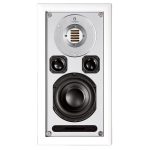
Audiovector Onwall Avantgarde On-Wall Speaker
3 600,00 €
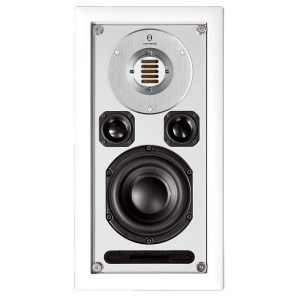
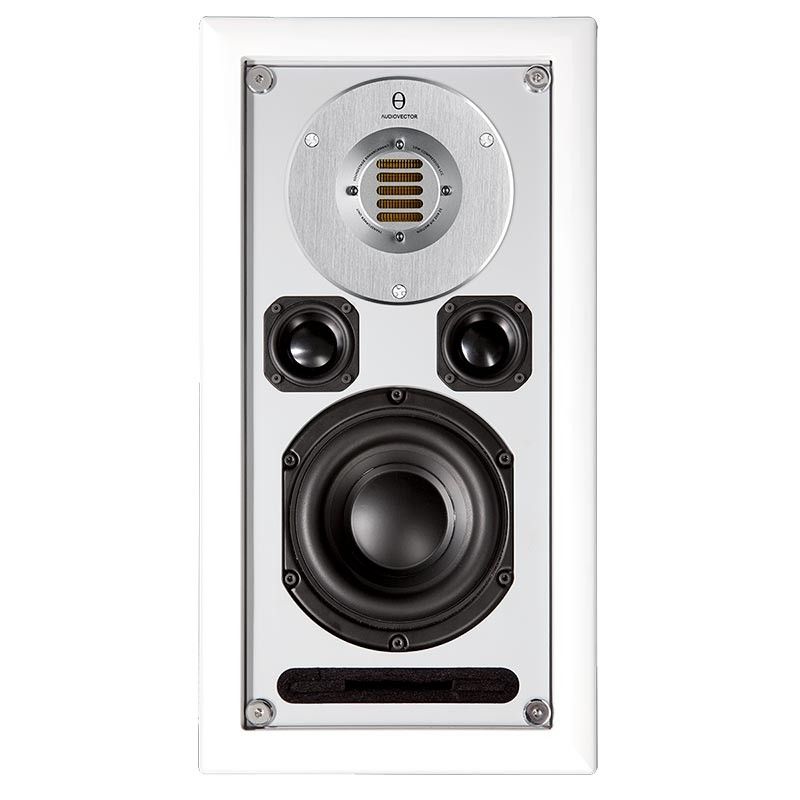
Audiovector Onwall Avantgarde is a passive on-wall speaker for home stereo and multichannel audio systems. Its 8.9 cm-deep enclosure is designed for installation close to a wall. The solid aluminium front baffle helps control vibration, while the DCS system reduces unwanted wall reflections and diffraction. An Avantgarde Air Motion Transformer driver handles the high-frequency range.
Audiovector Onwall Avantgarde is a passive on-wall speaker designed for home stereo and multichannel audio systems. Its construction combines a solid aluminium front baffle with an Air Motion Transformer high-frequency driver.
Designed for wall mounting
As an on-wall loudspeaker, its enclosure is designed to work close to a wall. Measuring 43 cm high and 23 cm wide, it is easier to incorporate into rooms where there is insufficient space for a floorstanding speaker.
The DCS system is intended to reduce unwanted wall reflections and diffraction. This is particularly relevant to an on-wall design because the enclosure is installed directly beside a large reflective surface.
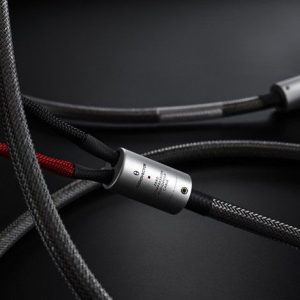
The cabinet depth of 8.9 cm helps keep the speaker close to the wall. Even so, the installation must leave sufficient space for the speaker cable. The cable should not be trapped or bent sharply. The available information does not state whether mounting hardware is included, so the supplied mounting equipment should be confirmed before purchase.
Cabinet construction
The solid aluminium front baffle is designed to help control vibration. It provides a rigid foundation for the front section of the enclosure in which the speaker drivers operate.
The cabinet surfaces are not parallel. When planning the installation, take all stated dimensions into account rather than relying only on the width and height of the front panel.
High frequencies and signal distribution
An Avantgarde Air Motion Transformer driver handles the high-frequency range. The driver type is an important distinction when comparing this model with speakers that use a conventional dome tweeter.
The speaker is fitted with a second-generation DFF crossover. It manages the distribution of frequency ranges between the drivers inside the speaker. The stated crossover values are 800 and 3000, but their unit of measurement has not been defined.
Connecting the speaker to an audio system
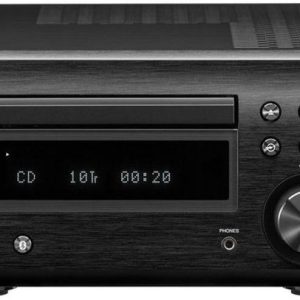
Because this is a passive speaker, it requires an external amplifier or AV receiver. A speaker cable runs between the amplifier’s speaker output and the speaker itself. The Onwall Avantgarde cannot amplify a line-level audio signal directly.
The nominal impedance is 5 ohms. When selecting an amplifier, make sure it is suitable for this type of load. Multiple speakers should not be connected in parallel merely because enough terminals are available. A parallel connection can reduce the total load impedance presented to the amplifier.
Consistent polarity must be maintained across every channel. Reversed polarity on one speaker can weaken the central stereo image and reduce the way bass output combines at the listening position.
Room placement and initial setup
For a stereo system, install both speakers at the same height and at similar distances from the listening position. The height of the high-frequency drivers should be chosen with the seated listening position in mind.
The DCS system does not remove the need for symmetrical placement. If one speaker is close to a corner while the other is positioned on an open section of wall, the acoustic surroundings of the two channels will differ. Begin by choosing locations that are as similar as possible for both speakers.
The stated frequency range extends from 54 Hz to 52 kHz at -6 dB. The lower limit does not mean that 54 Hz is reproduced at the same level as the midrange. This figure can help when deciding whether the system would benefit from the addition of a subwoofer.
In an AV system, use the receiver’s calibration results as the initial reference. When a subwoofer is included, assess the crossover setting from the listening position. Choose a setting that creates neither a gap in the bass nor an overemphasised transition between the speakers and subwoofer.
Use in stereo and home cinema systems
Two identical speakers can serve as the left and right channels of a stereo system. In a multichannel installation, each speaker requires its own amplified channel from an AV receiver or power amplifier.
This model is suitable for wall-mounted systems where a shallow enclosure is important. The final multichannel arrangement depends on the processor’s capabilities, the number of amplifier channels available and the room layout selected for the system.
The stated power handling is 180 W. The type of power rating has not been defined, so this figure should not be treated as a confirmed continuous-power specification. Select the amplifier with regard to the 5-ohm load, listening distance and desired sound level.
The sensitivity figure of 88 dB is stated under an 8-ohm measurement condition. It is useful when comparing the speaker’s electrical sensitivity, but it does not determine the final sound level in the room by itself.
Technical specifications
| Model | Audiovector Onwall Avantgarde |
|---|---|
| Type | Passive on-wall speaker |
| High-frequency driver | Avantgarde Air Motion Transformer |
| Front baffle | Solid aluminium |
| Wall-reflection control | DCS compensation system |
| Cabinet surfaces | Non-parallel |
| Crossover | Second-generation DFF |
| Crossover values | 800 / 3000, unit of measurement not defined |
| Frequency range | 54 Hz-52 kHz, -6 dB |
| Sensitivity | 88 dB under an 8-ohm measurement condition |
| Nominal impedance | 5 ohms |
| Power handling | 180 W, power-rating type not defined |
| Dimensions | 43 × 23 × 8.9 cm |
FAQ
Can the speaker be connected directly to a television?
No. It requires an amplified speaker-level signal. Audio from the television must be sent to a compatible amplifier or AV receiver, which is then connected to the speaker.
How should I choose a suitable amplifier?
First, confirm that the amplifier is suitable for a nominal impedance of 5 ohms. The 180 W figure should not be interpreted directly as the amplifier power that is required.
Is the price for one speaker or a pair?
The available information does not define the sales unit. Before purchasing, confirm whether the listed price applies to one speaker or a pair.
How can it be used in a home cinema system?
Connect each speaker to a separate channel of the AV receiver. Assign the channels and configure the crossover according to the chosen system layout and the results of room calibration.
Is a subwoofer required?
That depends on the material being played and the desired depth of bass reproduction. The stated 54 Hz limit is measured at -6 dB, so a subwoofer may extend reproduction of the lowest frequencies.
At what height should the speakers be installed?
Install both speakers in a stereo pair at the same height. Position the high-frequency drivers as close as practical to the seated listener’s ear level while taking the room layout into account.
Can several speakers be connected to one amplifier channel?
Only if the amplifier is designed for the resulting combined load. Connecting multiple 5-ohm speakers in parallel can substantially reduce the impedance seen by the amplifier.