Tellurium Q BD-SC Speaker Cable
733,00 €
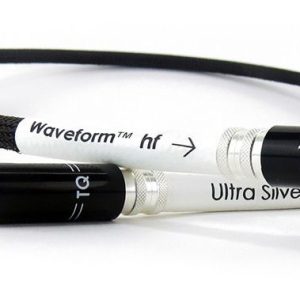
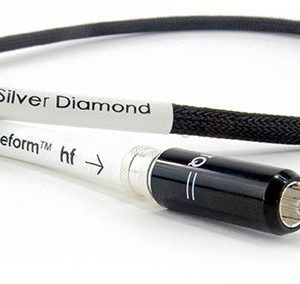
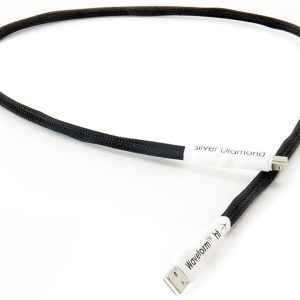
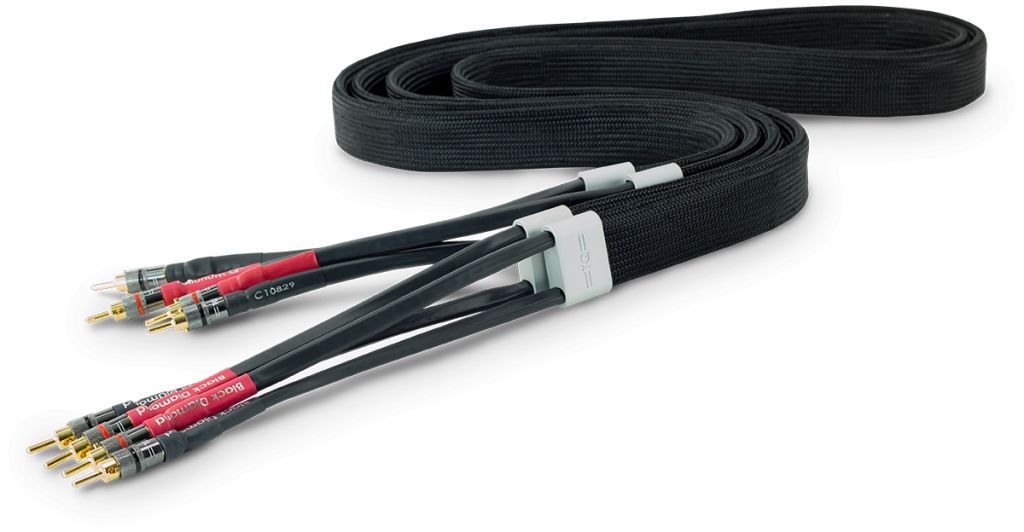
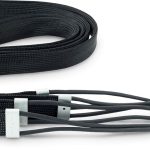
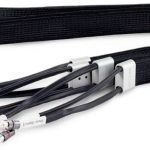
Tellurium Q BD-SC is a one-metre Black Diamond-series speaker cable designed to connect an amplifier to a passive loudspeaker. Its connectors use a special Tellurium Copper blend. The silver-coloured model name helps distinguish this version from the visually identical Graphite cable. The short run is intended for systems with components positioned close together.
Tellurium Q BD-SC (1m) is a one-metre speaker cable from the Black Diamond series. It is designed to connect an amplifier’s speaker output to the terminals of a passive loudspeaker. This length is intended for installations where the audio system components are positioned close together.
The connectors use a special Tellurium Copper blend. This is a specific construction feature of this model. The cable can be distinguished visually from the Graphite-series product by its silver-coloured model name.
Purpose within an audio system
This cable carries the amplifier’s output signal to a passive loudspeaker. It is not an interconnect, a power cable or an RCA subwoofer cable. It must therefore be connected to the dedicated speaker terminals on the amplifier and loudspeaker.
A stereo system requires a separate cable run for each channel. Connect the amplifier’s left channel to the left loudspeaker and its right channel to the right loudspeaker. Wiring both channels consistently helps preserve the correct polarity throughout the system.
In a home cinema system, the cable can be used for an individual passive-speaker channel. Before choosing it for a particular channel, use the measuring guidance below to determine whether a one-metre run is sufficient.
How to assess the one-metre length
Do not measure only the straight-line distance between the two components. Follow the cable’s intended route from one terminal to the other. Allow for the rise to the connections, the edges of furniture and every turn along the route.
The cable should not hang under tension or pull on the connections. Leave a small amount of slack beside both components. This makes it easier to move the equipment slightly and reduces mechanical strain on the terminals.
A short cable run can provide a neat connection between closely positioned components. It is especially relevant to a compact stereo system or a short home cinema channel. If the chosen route is longer, do not stretch this cable diagonally across a walkway to make it reach.
Connection and polarity
Switch off the amplifier before making any connections. Connect the positive amplifier terminal for one channel to the positive terminal on the corresponding loudspeaker. Connect the negative terminals in the same way.
Maintain the same polarity on both sides of a stereo system. Reversing the polarity of one loudspeaker can alter how the two loudspeakers work together. Once installation is complete, check that every connection is secure and that the connectors or exposed conductive parts do not touch one another.
Do not connect this cable to a line-level RCA or XLR socket. It is suitable for an active loudspeaker only if that loudspeaker has a separate passive-speaker input. A conventional line-level input on an active loudspeaker requires a different type of cable.
Cable routing
Plan a route that avoids sharp furniture edges and fittings that could place heavy pressure on the cable. Do not make very tight bends beside the connectors. The cable ends should approach and reach the terminals in a natural direction.
Do not route the cable through a doorway or across an area where people may step on it. If the equipment is installed on a shelf, leave enough room for the cable behind the amplifier. This allows the component to sit in position without trapping the cable against the wall.
For a multichannel system, apply the measuring method described under “How to assess the one-metre length” to every cable run. Before ordering, also check whether the product is supplied as one cable or as a pair, and whether the stated 1m length applies to each cable or to the complete set.
Construction and identification
BD-SC belongs to the Black Diamond cable series. Its connectors use a special Tellurium Copper blend. The available information identifies this material specifically in relation to the connectors, so it should not be assumed to describe the cable’s entire conductor or its insulation.
Black Diamond and Graphite cables look identical externally. The identifying feature of the BD-SC is its silver-coloured model name. This marking can be useful when checking the cable after it has already been installed in a system.
Technical specifications
| Manufacturer | Tellurium Q |
|---|---|
| Model | BD-SC |
| Series | Black Diamond |
| Product type | Speaker cable |
| Cable length | 1m |
| Connector material feature | Special Tellurium Copper blend |
| Identifying feature | Silver-coloured model name |
FAQ
What is this cable designed for?
It is designed to carry the power signal between an amplifier’s speaker output and the terminals of a passive loudspeaker. It is not a line-level interconnect or a mains power cable.
Is the connector type specified?
No. The available information does not state the connector type or termination configuration, so this must be checked before ordering.
Can the cable be used in a home cinema system?
Yes. It can connect an individual passive-speaker channel. The route to the specific loudspeaker must be suitable for the length of the selected cable run.
Is it suitable for an active subwoofer?
Not for a conventional RCA or LFE input. This product is intended for speaker terminals, while a line-level subwoofer signal requires a different type of cable.
How do I maintain the correct polarity?
Connect the positive terminals on the amplifier and loudspeaker to each other. Do the same with the negative terminals. Follow the same arrangement for both stereo channels.
How can I distinguish the Black Diamond version from Graphite?
The cables from the two series are visually identical. The Black Diamond version is identified by its silver-coloured model name.
What should I consider for a system with several loudspeakers?
Each passive loudspeaker requires its own cable run to the corresponding amplifier channel. Determine the necessary length for every run by following the measuring guidance provided above.