Tellurium Q US-SC Speaker Cable
581,00 €
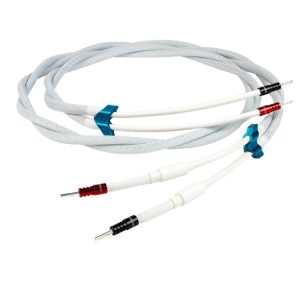
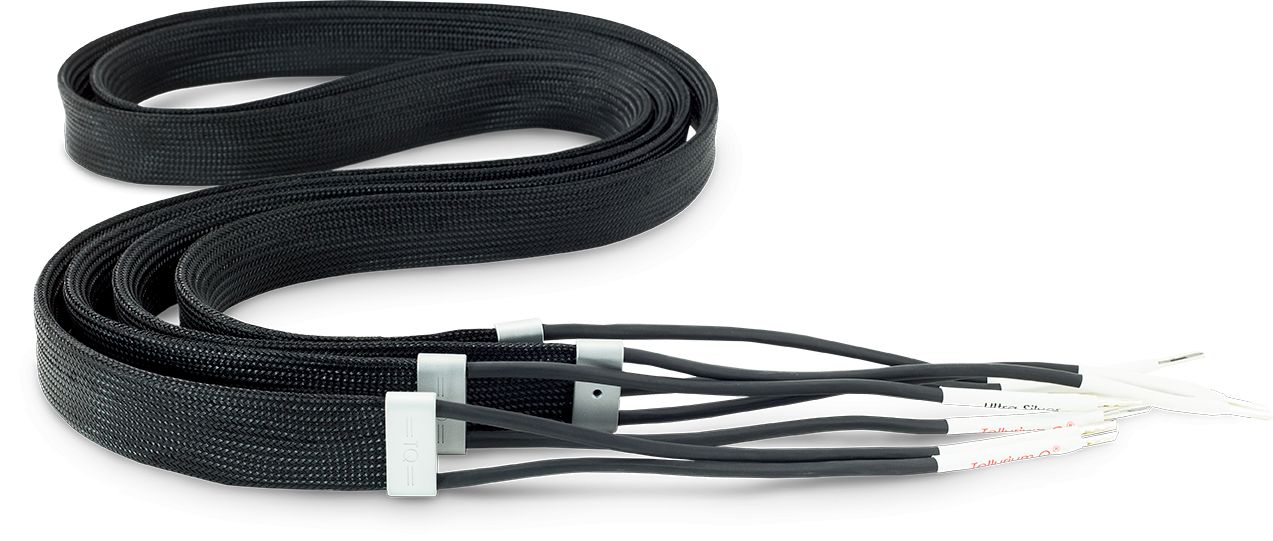
Tellurium Q US-SC is a 1 m speaker cable designed to connect an amplifier to a passive speaker. It belongs to the Ultra Silver series. The one-metre length suits a short cable route when the components are positioned close together. Before choosing it, consider bends, terminal positions and a little slack for moving the equipment.
Tellurium Q US-SC speaker cable is a 1 m connection between an amplifier and a passive speaker. The model belongs to the Ultra Silver series. This length is intended for systems in which the components are positioned close together.
Purpose of the cable
The cable carries the amplifier’s output signal to a passive speaker. It connects the amplifier’s speaker output to the corresponding terminals on the speaker. It is not an interconnect intended for RCA or XLR connections, or for the audio input of an active speaker.
US-SC is suitable for a short, single-channel connection. One cable run is used for one speaker. A stereo system requires separate connections for the left and right channels.
When the 1 m length matters
Choose the 1 m length when the amplifier and speaker are only a short distance apart. Measure the complete cable route rather than the straight-line distance between the components. Furniture edges, equipment stands and the position of rear-panel terminals can all make the actual route longer.
The cable should not be stretched tightly between the terminals. Leave a little slack so that the equipment can be moved and the connections are not placed under strain. Too much spare cable can also be inconvenient on a short route, as coiled excess is harder to arrange neatly behind the equipment.
Before selecting the length, trace the planned route with a flexible measuring tape. Include the rise to the speaker terminals and the drop from the amplifier. This lets you judge the 1 m version against the real installation route.
Connection and polarity
Switch off the amplifier before connecting the cable. Maintain the same polarity at both ends. Connect the positive amplifier terminal to the positive speaker terminal, then connect the negative terminals in the same way.
Reversed polarity on one speaker in a stereo system can weaken the central sound image and affect bass integration. Once the cables are connected, compare the markings for both channels again. Only then should you switch on the amplifier and test the system at a low volume.
The cable termination must match the terminals on both the amplifier and the speaker. Each connection should be secure, but it should not be tightened with excessive force. The cable must not pull the terminal downward or press against the wall.
Controls and initial setup
The cable itself has no adjustable controls. Before the first test, lower the amplifier volume, switch off the equipment and connect both ends of the cable. If the amplifier provides selectable A and B speaker-output groups, select the group to which the speaker is actually connected after switching the system on, and follow the amplifier’s instructions.
Adjust tone, balance, channel levels or home cinema calibration through the system components, not according to the cable’s series name. First confirm that the correct channel is working and that the connections are secure. You can then restore the normal listening volume or run the speaker setup offered by the receiver.
Choosing the connections
Inspect the terminals on both components before buying. The available information does not identify the specific termination supplied with this US-SC, so the included connections cannot be determined from the model or series name alone. Check the actual configuration of the offered cable and make sure both ends suit your amplifier and speaker.
This type of cable can be used with an integrated amplifier, power amplifier or AV receiver only when connecting a speaker-level output to a passive speaker. For line-level audio outputs, active-speaker inputs and the usual signal input of an active subwoofer, choose a signal cable that matches the relevant connections.
Its place in stereo and home cinema systems
In a stereo system, using the same cable length for both channels is practical. It makes symmetrical equipment placement easier and helps keep the left and right channels clearly organised. The 1 m version is best suited to a compact component layout.
In a home cinema system, every passive speaker needs its own connection. This length may suit a channel located close to the amplifier or receiver. Cable routes to more distant surround speakers will generally be longer.
An active subwoofer’s line-level input requires a different type of cable. The US-SC should be considered only as a speaker-level connection and should not be confused with a subwoofer signal cable.
Room placement
Route the cable where it will not be trapped beneath furniture legs or pressed against sharp edges. Avoid running it closely and parallel to power cables. Where the routes must cross, it is practical to cross them at as close to a right angle as possible.
For a short route, the amplifier can conveniently be placed in the same equipment unit or near the speaker. However, leave the clearance around each component required by its instructions. The cable should not cover ventilation openings, hang across a walkway or be crushed against a wall. Leave enough space behind the furniture for a natural cable bend and for the equipment to be moved slightly.
In a multi-speaker system, measure every route separately and label the channel at both ends of each cable. This helps prevent confusion between the left, right, centre and surround channels during maintenance. Do not connect two amplifier channels or multiple speakers to one cable run unless the equipment instructions expressly support that arrangement.
Technical specifications
| Manufacturer | Tellurium Q |
|---|---|
| Model | US-SC |
| Series | Ultra Silver |
| Type | Speaker cable |
| Length | 1 m |
| Purpose | Connection between an amplifier and a passive speaker |
FAQ
How can I tell whether one metre will be enough?
Measure the complete route from the amplifier terminals to the speaker terminals. Include bends and a little slack for moving the equipment. If the cable would be under tension, choose a longer version suited to the route.
Does a stereo system require two cables?
The left and right channels require separate connections. Plan on one cable of the appropriate length for each passive speaker.
How do I choose the correct cable ends?
The termination must fit the terminals on both components. As the specific configuration of this offer is not stated, check it before buying and consider the amplifier and speaker connections together as one complete signal path.
Why is correct polarity important?
The polarity of both channels must match. If the positive and negative connections are reversed on one speaker, the channels may operate out of phase with each other.
Is this cable suitable for an active speaker?
It is not intended for the normal line-level input of an active speaker. That type of input requires a signal cable that matches the specific connections.
Can it be used in a home cinema system?
Yes, for a passive channel located at a suitable distance from the amplifier or receiver. Measure each speaker route separately and label the channel at both ends of every cable.
Does “Ultra Silver” identify the conductor material?
Ultra Silver is the name of this model’s series. The series name alone does not define the composition of the cable’s conductor.
How can I protect the connections from mechanical strain?
Leave a little cable slack beside both components. Do not allow the cable’s weight to pull the terminals or connections sideways, and do not route it beneath furniture legs.