Nathan Milstein Album – Masterpieces for Violin and Orchestra
38,00 €
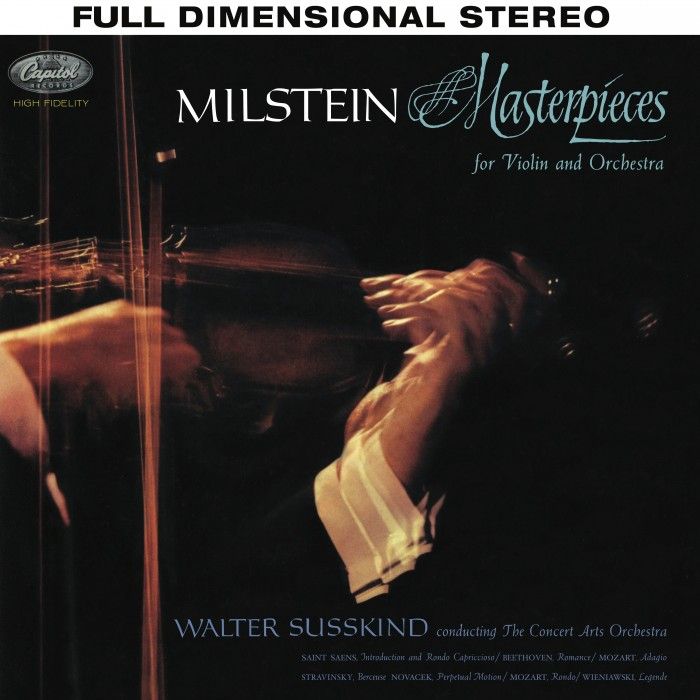
Nathan Milstein – Masterpieces for Violin and Orchestra is a classical album for listeners interested in violin-and-orchestra repertoire. Its programme contains seven works by six composers, ranging from Mozart and Beethoven to Romantic pieces by Wieniawski and Nováček and Stravinsky’s Berceuse. The collection concludes with Saint-Saëns’s Introduction and Rondo capriccioso. The physical medium and exact edition have not been confirmed.
Nathan Milstein – Masterpieces for Violin and Orchestra is a classical music album for listeners interested in repertoire for violin and orchestra. This Nathan Milstein album presents seven works by Mozart, Beethoven, Wieniawski, Nováček, Stravinsky and Saint-Saëns.
The collection spans several musical periods and compositional forms. Two works by Mozart appear alongside Romantic miniatures, a virtuosic perpetuum mobile and an excerpt from a Stravinsky ballet. The programme concludes with Saint-Saëns’s introduction and capricious rondo.
Scope of the programme
The album opens with Wolfgang Amadeus Mozart’s Adagio, K. 261. This lyrical work moves at a slow pace, allowing the listener to concentrate on the melodic violin line and its measured development. It is followed by Rondo, K. 373, whose structure is shaped by the return of its principal theme. Placing these two Mozart works together highlights two different approaches: sustained lyrical expression and a form built around a recurring musical idea.
Ludwig van Beethoven’s Romance in F, Op. 50 continues the programme’s lyrical direction. It is an independent work for violin and orchestra rather than a movement taken from a concerto. Its concise form makes it suitable for listeners who want to explore a self-contained example of early Romantic violin repertoire without committing to a large-scale concerto.
Henryk Wieniawski’s Légende brings a distinctly Romantic contribution to the selection. It is followed by Ottokar Nováček’s Perpetuum mobile, which changes both the pace and the character of the programme. Its principle of continuous motion introduces a clear virtuosic accent and provides a strong contrast with the more lyrical works heard earlier.
Igor Stravinsky’s Berceuse from the ballet The Firebird represents twentieth-century repertoire. The album contains this particular ballet excerpt, not the complete work. Camille Saint-Saëns’s Introduction and Rondo capriccioso then brings together a slow introduction and a more animated rondo section, giving the programme a varied and energetic conclusion.
Programme order and listening
When heard in sequence, the album allows the listener to follow the changing character of the violin part. The progression moves from a calm melodic line and the recurring theme of a rondo through Romantic lyricism and uninterrupted virtuoso motion. It then reaches the colour of a twentieth-century ballet excerpt before finishing with Saint-Saëns’s capricious final work.
The album can be heard from beginning to end as a varied survey, but its individual pieces can also be selected according to mood or interest in a particular form. Hearing the two Mozart works side by side makes it easier to compare the flowing pace of the Adagio with the returning theme and contrasting structure of the Rondo. A different kind of contrast can be found between the Romantic character of Légende and the continuous movement of Perpetuum mobile.
Listeners seeking a gentler entry point can begin with Mozart or Beethoven. Those interested in a more pronounced change of pace can turn to Nováček, while the Stravinsky excerpt introduces a different period and musical atmosphere. Saint-Saëns offers both a measured opening and a more animated continuation within a single independent work.
Who is this album for?
This collection is suitable for listeners who want to encounter violin music from several periods on one album. It is not limited to a single composer or to one large-scale concerto. Because the programme consists of separate works, listeners can choose a shorter listening session or explore selected pieces individually instead of playing the entire collection.
The supplied album title and programme do not establish the physical medium, label, catalogue number, pressing or exact edition variant. These details have not been confirmed. They must therefore be identified before the final store page is published and checked before purchase. The complete running order should also be verified against the physical copy or a reliable record for the specific edition.
For listeners exploring Nathan Milstein’s recorded legacy, the collection offers a concentrated overview of this violin-and-orchestra programme. However, the performer’s name, album title and list of works are not enough to distinguish one particular release from another. The exact recording variant should only be assessed after the missing publication details have been obtained.
Technical specifications
| Performer | Nathan Milstein |
|---|---|
| Album title | Masterpieces for Violin and Orchestra |
| Album type | Classical music album |
| Primary repertoire | Violin and orchestra |
| Work 1 | Wolfgang Amadeus Mozart – Adagio, K. 261 |
| Work 2 | Wolfgang Amadeus Mozart – Rondo, K. 373 |
| Work 3 | Ludwig van Beethoven – Romance in F, Op. 50 |
| Work 4 | Henryk Wieniawski – Légende |
| Work 5 | Ottokar Nováček – Perpetuum mobile |
| Work 6 | Igor Stravinsky – Berceuse from The Firebird |
| Work 7 | Camille Saint-Saëns – Introduction and Rondo capriccioso |
FAQ
Are the physical format and exact edition known?
No. The physical medium, label, catalogue number, pressing and edition variant have not been confirmed. These details should be checked before purchase.
Does the album contain music by only one composer?
No. The programme contains two works by Mozart and one work by each of the other five composers.
How do the two Mozart works differ?
Adagio, K. 261 is a slow, lyrical work that places emphasis on the melodic violin line. Rondo, K. 373 is based on a recurring principal theme and follows a different formal structure.
Does the album include Stravinsky’s complete ballet The Firebird?
No. The programme includes Berceuse, a single excerpt from the ballet. This distinction is important for anyone specifically looking for a recording of the complete work.
Is the full running order of a specific edition provided?
This cannot be confirmed until the edition has been identified. The supplied list contains seven works, but the complete running order must be checked against the physical copy or a reliable record for the relevant edition.
Is this a single violin concerto?
No. It is a programme of seven separate works. The collection is suitable for listeners seeking a selection of shorter compositions for violin and orchestra rather than one complete concerto.
Which work is a good starting point for exploring the programme?
For sequential listening, Mozart’s Adagio is a natural place to begin. For a more pronounced contrast, listeners can choose either Nováček’s continuously moving work or the Saint-Saëns selection.