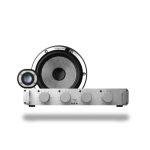
Focal 165 W-RC PASSIVE Car Speaker System
1 099,00 €
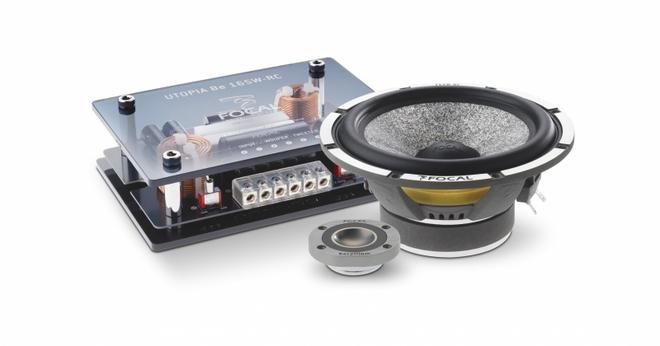
Focal 165 W-RC PASSIVE is a passive two-way car speaker system. Its TB 872 tweeter has a pure beryllium inverted dome, and a passive crossover divides the signal between the two frequency bands. When choosing an amplifier, the 80 W nominal power rating is a more useful reference than the 160 W maximum power rating. Plan the tweeter and crossover locations before installation.
Focal 165 W-RC PASSIVE is a passive two-way speaker system for car audio. It connects to an amplified speaker output, while a passive crossover distributes the signal between drivers intended for different frequency ranges. When choosing this model, consider how it will connect to your system, where its components will fit and what your amplifier can drive.
Construction and sound
The system uses a TB 872 tweeter with a pure beryllium inverted dome. Where you place the tweeter affects the direction from which high frequencies appear to come. Plan the positions on both sides of the car together so you can assess how evenly they sound from your usual seat.
The construction also includes a coated ZAMAK alloy frame. A passive crossover divides the signal between the two frequency bands. Its stated slope is 12-18 dB per octave, but that figure does not identify the slope applied to each driver. Do not use it alone to plan separate adjustments for each band.
Before settling on mounting locations, check the space behind the trim and make sure window mechanisms and other moving parts will not interfere with the speakers or wiring. Assess tweeter direction from your normal listening position. If you have a choice of locations, listen to a familiar recording with the tweeters in a few positions before fixing them in place. This can help you judge whether voices and high frequencies sound balanced and whether the chosen locations leave the car’s equipment easy to use.
Connecting to the car audio system
A passive speaker system needs an amplified signal. It cannot connect directly to a head unit’s line output. Choose an amplifier with attention to the purpose of its channels and the speaker load each channel permits; a power figure alone is not enough. If you plan to use a head unit’s built-in amplifier, assess its speaker outputs in the same way.
With a separate amplifier, send the head unit’s line signal to that amplifier, then connect the speaker system to a suitable amplified output. If you use the head unit’s speaker outputs instead, check their permitted load first. Follow the crossover’s terminal labels and keep the left and right wiring correctly polarized. Before concealing the cables, play the system quietly to confirm that both sides work and that no wire can touch a moving part.
80 W nominal power is the more useful reference for assessing sustained use. The 160 W maximum power rating does not mean that this level should be supplied continuously. Listen for distortion when setting up the amplifier: excessive volume or an unsuitable gain setting can make the sound worse regardless of the maximum power figure.
Start with a restrained amplifier gain setting and raise it gradually while listening for clean sound. Leave the head unit’s tone controls and equalizer neutral at first, then make small changes if needed. Use the balance control to check each side separately, and return it to your usual listening position afterward. If your system includes a subwoofer and the amplifier or head unit lets you adjust frequency limits, listen to the transition between the two systems as you set them. The available controls depend on your equipment, so check what your head unit and amplifier allow before changing these settings.
Frequency range and installation planning
The stated 60 Hz-30 kHz frequency range indicates the part of the audio spectrum this model is intended to cover. Its lower limit does not, by itself, mean it will replace a separate subwoofer. If your car already has one, adjust the two systems by ear. Listen for a noticeable dip or excess where their output meets.
The 93 dB sensitivity figure is useful when comparing how much sound to expect from an amplifier signal. Actual volume in the car will also depend on mounting location, the amplifier and its settings. The figure does not promise identical loudness in every vehicle.
Plan locations for the drivers and crossover before installation. Choose the tweeter positions as a pair to help the left and right sides sound similar. Mount the passive crossover where you can reach its connections and where it will not have to be squeezed behind trim.
In a car stereo system, first match the left and right levels. If rear speakers also play, use the head unit’s front-to-rear balance to check that they do not overwhelm the front. With multiple speaker systems, give each amplifier channel only a load it can handle; do not connect extra systems in parallel based solely on their power ratings. Plan which area of the car each channel will serve, and how you will reach the crossovers and connections later.
Technical specifications
| Type | Passive car speaker system |
|---|---|
| Number of ways | 2 |
| Tweeter | TB 872 |
| Tweeter dome | Pure beryllium inverted dome |
| Frame | Coated ZAMAK alloy |
| Crossover slope | 12-18 dB/octave |
| Nominal power | 80 W |
| Maximum power | 160 W |
| Sensitivity | 93 dB |
| Frequency range | 60 Hz-30 kHz |
FAQ
Can I connect the system to a head unit’s line output?
No. This is a passive system and needs an amplified signal. A head unit’s line output sends a signal to an amplifier; it does not drive speakers directly.
Does the amplifier need to supply the stated maximum power continuously?
No. Assess the amplifier and its settings for normal listening with the nominal power rating in mind. If you hear distortion, lower the level rather than relying on the maximum power figure.
What should I check when choosing a location for the crossover?
Make sure you can secure it safely, the wires can reach its terminals without being strained and moisture will not reach it. Leave enough room to inspect the connections if you need to trace a sound problem later.
Does this system replace a subwoofer?
Its stated frequency range begins at 60 Hz. Decide whether you need a separate subwoofer based on the lowest frequencies you want to hear. If you use one, adjust the levels of both parts of the system by listening.
What does the passive crossover do?
It divides the amplified signal between the two frequency bands so each driver receives the appropriate part. Follow the crossover’s terminal labels when connecting the system.
Can I use this model with a home stereo or home cinema amplifier?
This model is intended for car audio. Power and sensitivity figures alone cannot establish whether it can connect to a particular home amplifier; the speaker load matters too.