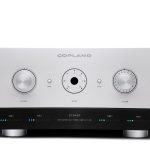
Copland CSA 150 Integrated Amplifier
5 400,00 €
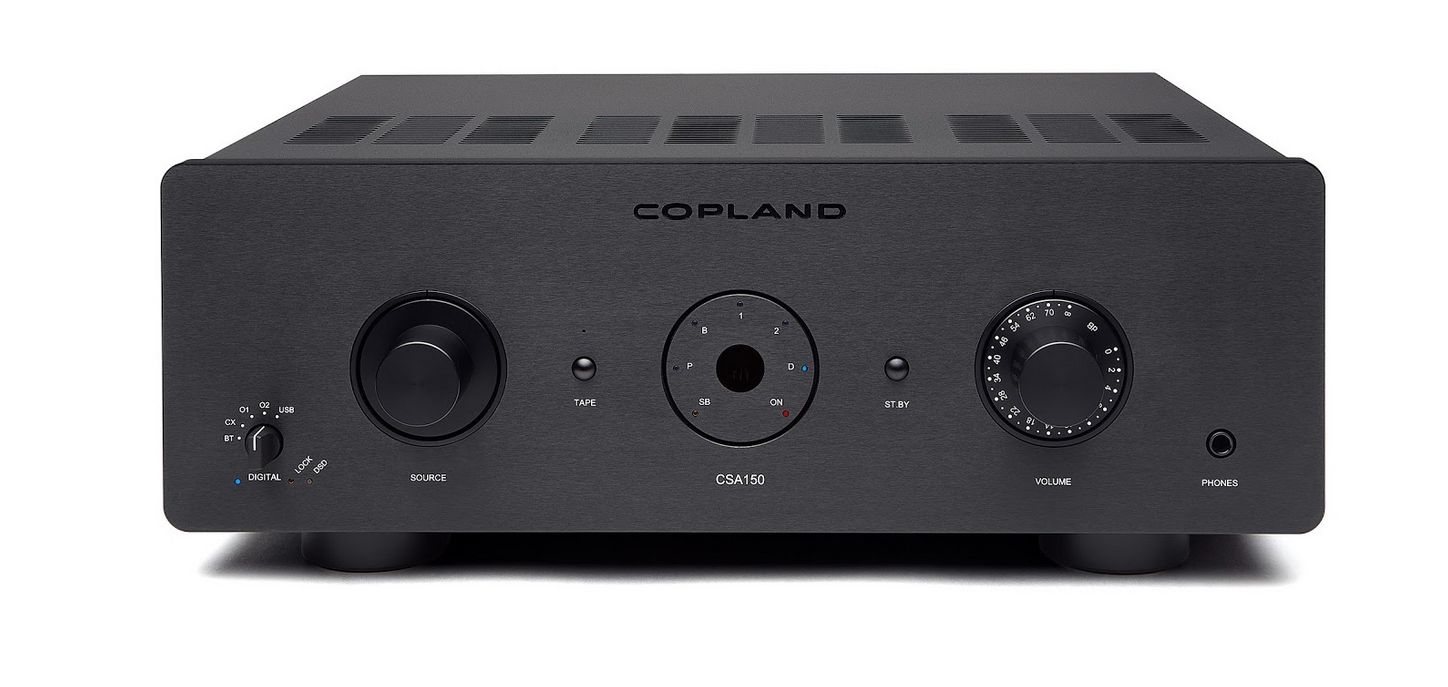
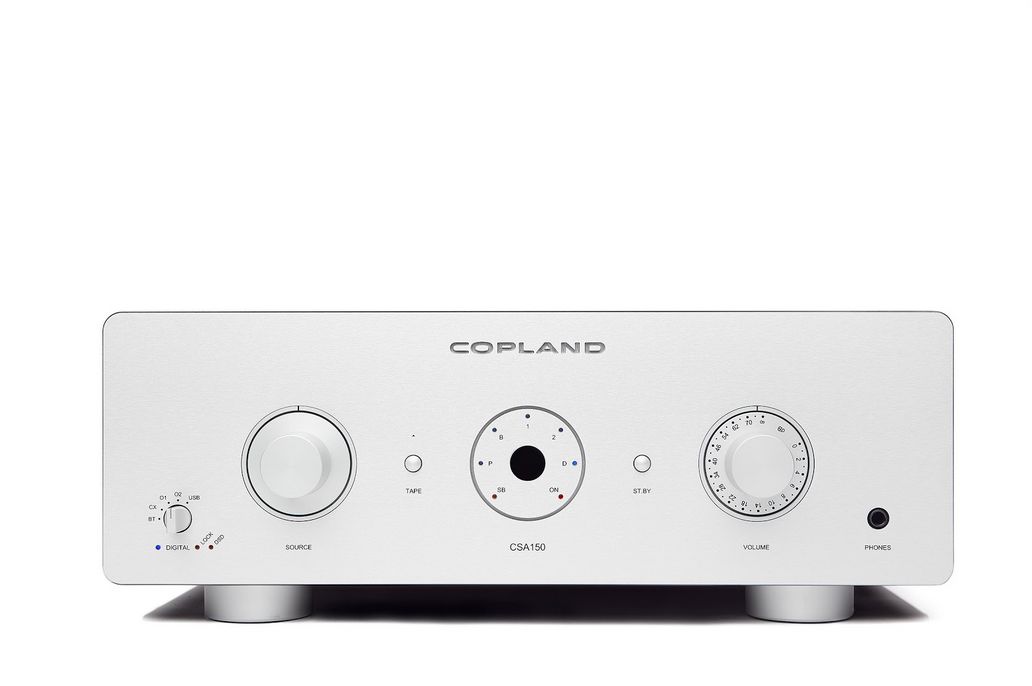
The Copland CSA 150 is a hybrid integrated amplifier for a stereo system with analogue and digital sources. Its stated output is 2 × 150 W into 8 Ω, and its MM phono input accepts a turntable with an MM cartridge. XLR, RCA, USB and S/PDIF connections offer options for different sources. An aptX HD Bluetooth module is optional equipment.
Copland CSA 150 is a hybrid integrated amplifier for a stereo system. It combines a valve amplification stage with transistor circuitry and has a stated output of 2 × 150 W into 8 Ω. Five analogue inputs and four wired digital inputs give you room to connect a turntable, line-level components and digital sources to one amplifier.
Amplifier design
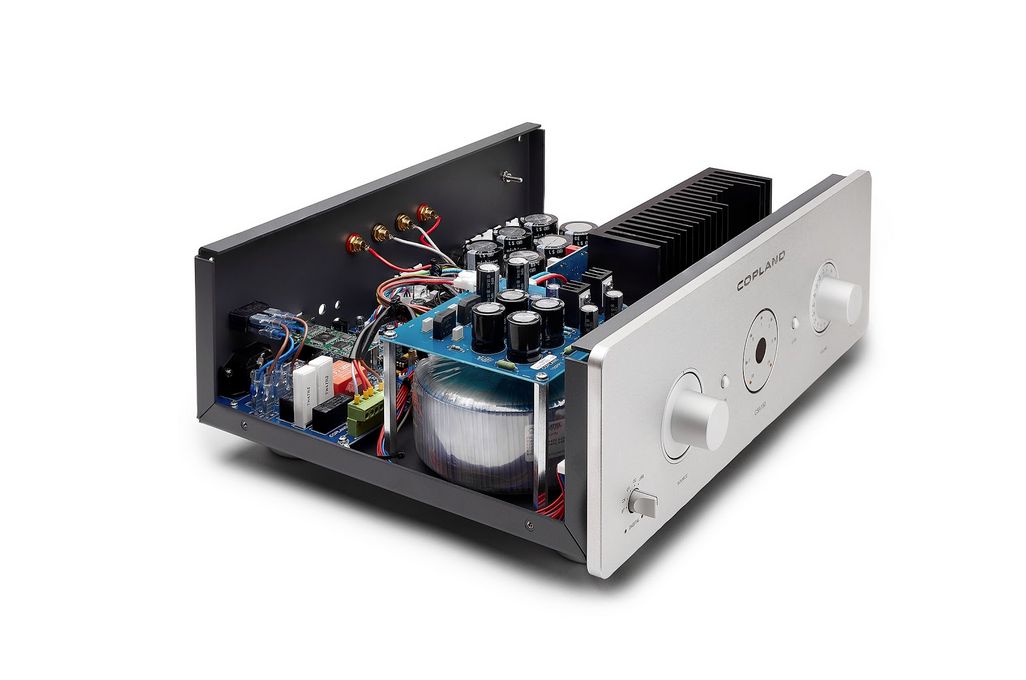
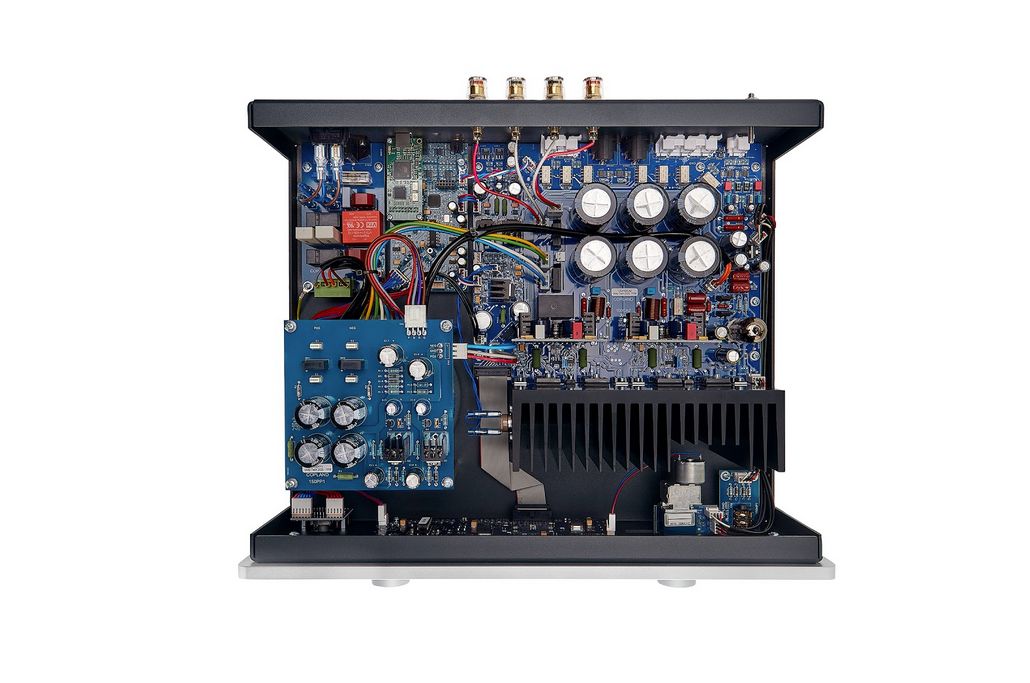
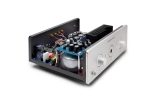
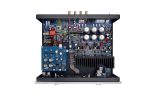
The CSA 150 uses a current-feedback circuit. Its amplification stage contains one 6922 dual-triode valve with a MOSFET buffer, bringing the valve stage together with the transistor section of the amplifier.
The circuit is based on the CSA100, with changes to accommodate the CSA 150 design. These include a larger toroidal transformer, a separately regulated supply for the power amplifier driver stages, a greater heatsink area and revised case dimensions to make room for the additional components. Wide-bandwidth power regulation serves the low-signal and power amplifier driver stages.
When choosing speakers, note the specified minimum speaker load of 2 Ω. The stated 2 × 150 W output applies to an 8 Ω load; it does not establish the amplifier’s output at other loads. A measurement condition for continuous power has not been specified.
Connecting analogue sources
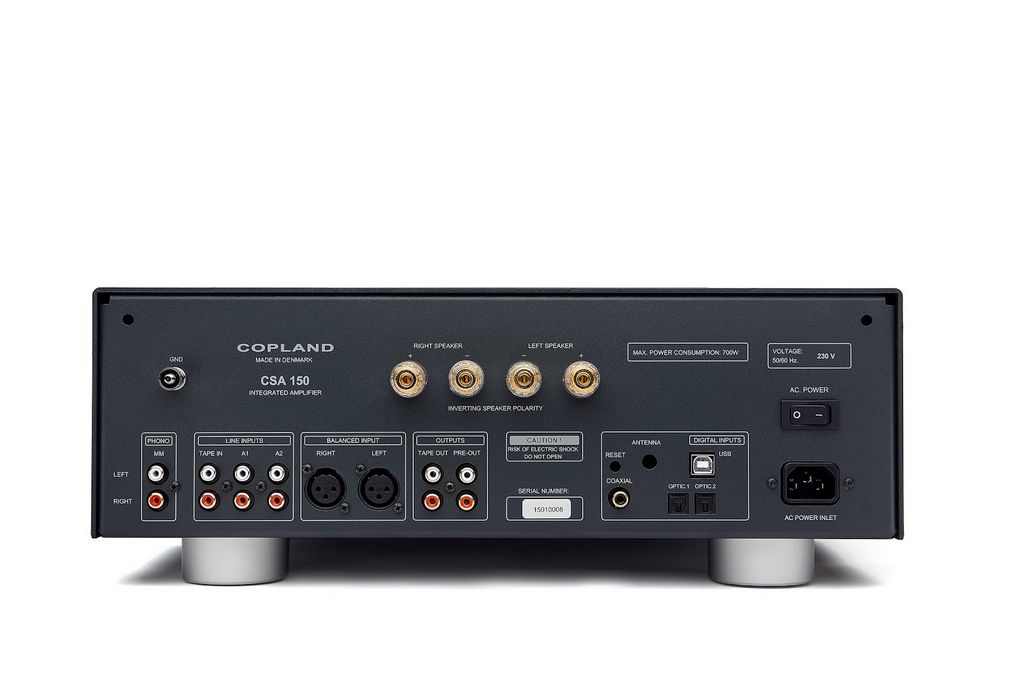
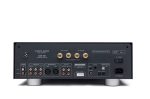
The balanced XLR input is available for a source with a matching output. Three RCA line inputs accommodate other analogue components. Choose XLR or RCA according to the output fitted to your source and the connection you intend to use.
A turntable with an MM cartridge can connect to the dedicated MM phono input. This input has a specified impedance of 47 kΩ, capacitance of 200 pF and sensitivity of 2.6 mV. To use the amplifier’s built-in MM stage, connect the turntable to this phono input rather than an ordinary line input.
Separate recorder input and output connections form a recording loop. There is also a fixed-level RCA line output and a variable-level RCA preamplifier output. The latter lets you send a signal to a separate power amplifier while controlling its level with the CSA 150 volume knob. Choose the fixed-level output when the receiving component needs a signal that does not follow that knob.
Digital sources and everyday use
The four wired digital inputs comprise one coaxial S/PDIF connection, two optical S/PDIF connections and one USB connection. You can leave several compatible sources connected and select the input you need. The built-in digital-to-analogue converter uses a 32-bit ES9018 Reference chip with eight DAC channels, four assigned to each stereo channel. It is intended for PCM and DSD signals.
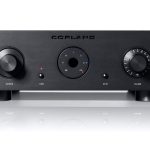
aptX HD Bluetooth is optional equipment. Wireless playback is available only if the particular amplifier has that module installed; it is separate from the four wired digital inputs. Volume is controlled by an Alps Blue Velvet control. A 6.3 mm headphone output on the front panel provides a convenient place to connect headphones without reaching behind the amplifier.
Placing it in a stereo system
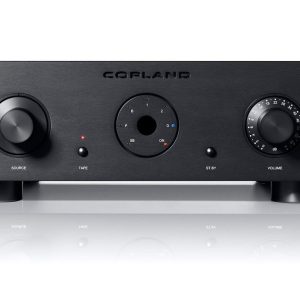
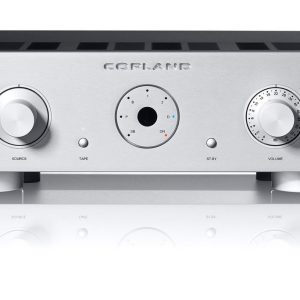
The case measures 435 mm wide, 165 mm high and 370 mm deep. Allow enough shelf space for those dimensions, room behind the amplifier for plugs and cables, and space above it for heat to escape. The listed 15 kg figure is its shipping weight, not a stated weight for the amplifier itself. Black and silver versions are available.
Technical specifications
| Type | Hybrid integrated stereo amplifier |
|---|---|
| Stated output power | 2 × 150 W into 8 Ω; continuous-power measurement condition not specified |
| Minimum speaker load | 2 Ω |
| Amplifier circuit | Current feedback; one 6922 dual-triode valve with MOSFET buffer |
| Design basis | CSA100 circuit; larger toroidal transformer, separately regulated driver-stage supply, increased heatsink area and revised case dimensions |
| Power regulation | Wide-bandwidth regulation for the low-signal and power amplifier driver stages |
| Analogue inputs | 1 balanced XLR line, 3 unbalanced RCA line, 1 MM phono |
| Line-input impedance and sensitivity | 50 kΩ; 270 mV |
| MM-input impedance, capacitance and sensitivity | 47 kΩ; 200 pF; 2.6 mV |
| Wired digital inputs | 1 coaxial S/PDIF, 2 optical S/PDIF, 1 USB |
| Digital-to-analogue converter | 32-bit ES9018 Reference; eight DAC channels, four per stereo channel |
| Digital signal types | PCM and DSD |
| Wireless connection | aptX HD Bluetooth module, optional equipment |
| Recording loop | Recorder input and output connections |
| Line output | 1 unbalanced RCA, fixed level |
| Preamplifier output | 1 unbalanced RCA, variable level |
| Headphone output | 6.3 mm, front panel |
| Volume control | Alps Blue Velvet |
| Amplifier frequency response | 10 Hz-150 kHz at -3 dB |
| Amplifier harmonic distortion | Less than 0.04%; measurement condition not specified |
| Signal-to-noise ratio | Greater than 90 dB, IHF-A |
| Phase | Inverting |
| Headphone amplifier gain | 22 dB into a 100 Ω load |
| Headphone output impedance | 40 Ω |
| Headphone amplifier harmonic distortion | Less than 0.05%; measurement condition not specified |
| Headphone amplifier frequency response | 10 Hz-150 kHz at -3 dB |
| Maximum power consumption | 700 W |
| Dimensions | 435 × 165 × 370 mm (width × height × depth) |
| Colour options | Black and silver |
| Shipping weight | 15 kg |
FAQ
Can I connect a turntable directly to the amplifier?
Yes, if the turntable uses an MM cartridge. Connect it to the MM phono input and use the XLR or RCA line inputs for other analogue sources.
Which digital input should I choose?
Choose the input that matches your source’s output: USB, coaxial S/PDIF or optical S/PDIF. The two optical inputs allow two sources of that type to remain connected at once.
Can I stream music over Bluetooth?
Only if the particular amplifier has the optional aptX HD Bluetooth module installed. The module is not included in the count of four wired digital inputs.
Which RCA output should I use?
Use the RCA line output when the connected component needs a fixed-level signal. Use the variable-level RCA preamplifier output when you want the CSA 150 volume knob to control the signal level.
Can I use the amplifier with a home cinema receiver?
You can connect the receiver’s line-level front-channel output to a CSA 150 line input. Set up the system with the volume levels of both devices in mind. Do not connect a speaker output to a line input.
Is 15 kg the weight of the amplifier itself?
No. It is the shipping weight; the weight of the amplifier itself is not specified. Do not treat 15 kg as its stated unit weight when choosing a shelf.
Related products and categories
Related products
Denon DRA-900H Stereo Receiver
Original price was: 900,00 €.540,00 €Current price is: 540,00 €.