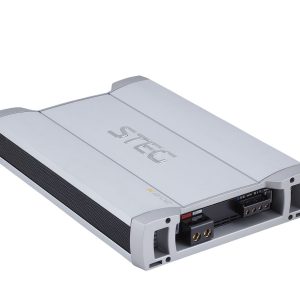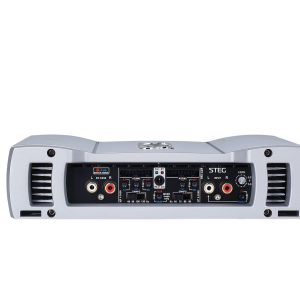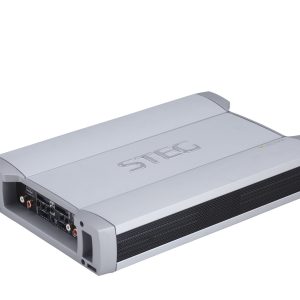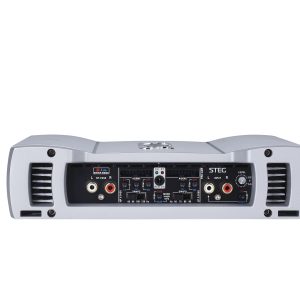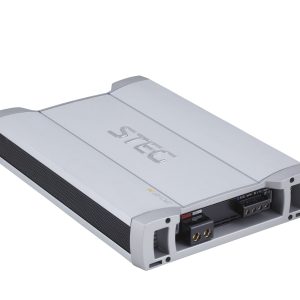

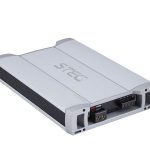
Steg DSP Audio Processor
340,00 €
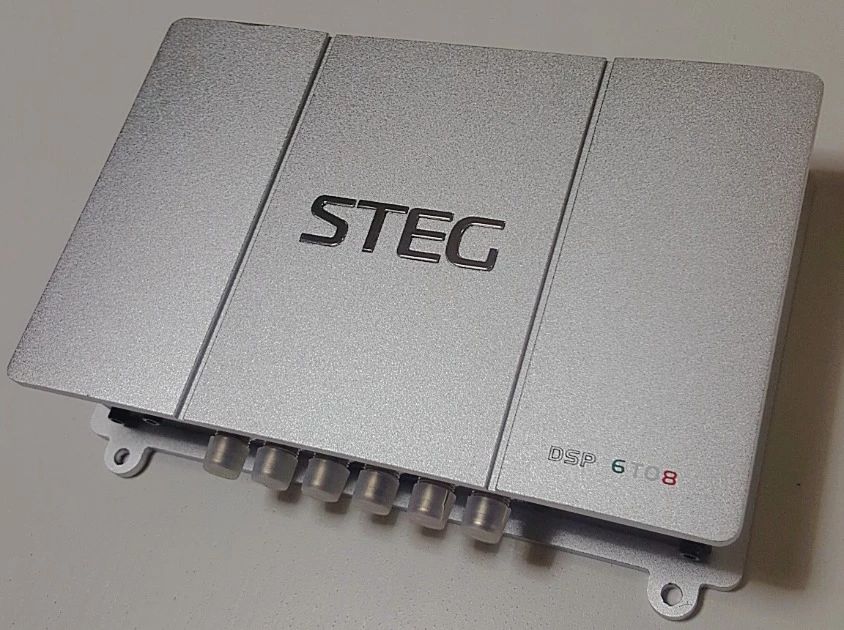
Steg DSP Audio Processor is an automotive unit for tuning a factory or multi-amplifier audio system. Six inputs and eight outputs provide flexible channel routing. The SUM function helps integrate an active OEM system, while the 0.02 ms delay step allows precise soundstage adjustment. Low-level and high-level inputs accommodate different in-car audio sources.
Steg DSP Audio Processor is a digital signal processor designed for tuning more complex in-car audio systems. It accepts six input channels and controls eight output channels. This configuration is suitable for integrating a factory active system or distributing signals between multiple amplifier channels.
Digital processing is performed at 32-bit/192 kHz. Settings can be adjusted in real time, allowing you to evaluate changes without saving every individual test. Five presets let you prepare different system configurations.
Input Selection and Factory System Integration
The processor accepts both low-level and high-level signals. Choose the low-level input for a source equipped with line outputs. The specified sensitivity range is 2-8 Vrms, while the input impedance is greater than 15 kΩ.
The high-level inputs are intended for signals from a factory head unit or the speaker outputs of an existing system. Their sensitivity range is 2-15 Vrms, and the specified input impedance is 47 Ω. Automatic turn-on detection (Auto-Sense) operates only when the high-level inputs are used. Two operating modes are available for this function.
The SUM function combines input signals. It is useful in active OEM systems that send separate frequency ranges through different channels. These signals can therefore be combined into a full signal for further processing.
The auxiliary input includes an automatic muting function. It is intended for stereo audio, hands-free equipment and navigation signals. The specific connector type and signal-priority order are not stated.
Channel Routing and System Control
Eight outputs allow signals to be sent separately to several amplifier channels. The Matrix Mixer provides flexible linking and mixing of input and output channels. This is important when the purposes of the factory channels do not match the structure of the upgraded system.
The maximum output signal level is 8 Vrms. This is not an amplifier power rating in watts. It describes the voltage of the processor’s output signal supplied to external amplifiers.
The USB connection is used to tune the processor with a computer. Changes can be heard in real time, making it easier to compare channel-routing choices and time-delay adjustments. Connectivity options also include Wi-Fi and remote control.
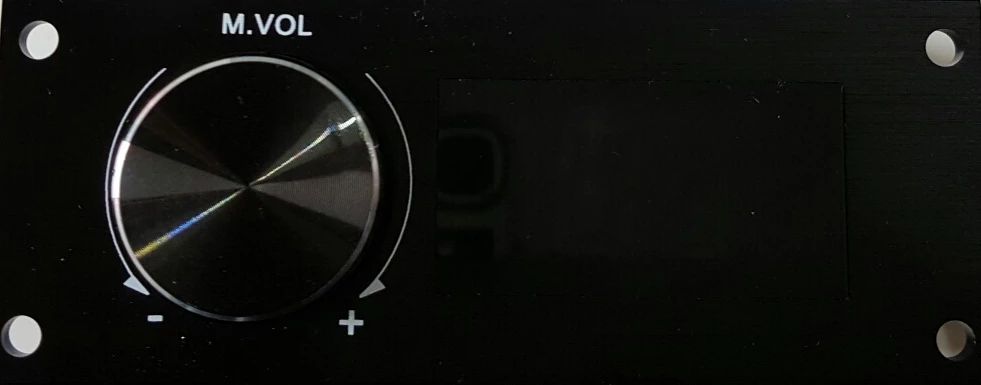
Support is provided for an external controller with a display. It is intended for selecting presets and controlling essential functions. The external display, remote controller, Wi-Fi equipment and optical board are not identified as standard items supplied with the processor.
Time-Delay Adjustment
Time delay can be adjusted in 0.02 ms increments. Values may be entered in centimetres or milliseconds. The centimetre mode is convenient for making an initial correction based on the distance between the listening position and each speaker.
Begin by measuring the distances from the driver’s position. Enter the corresponding values, then listen to a centrally recorded vocal. The fine 0.02 ms adjustment step allows the position of the soundstage to be aligned more precisely.
Five presets can store different tuning configurations. They may be used for different listening positions or different system-balance preferences. The external display provides direct access to these selections.
Installation in a Vehicle
The supply-voltage range is 11-15 V. At 12 V, the specified current consumption is 0.4 A. This unit is designed for an automotive electrical system and is not a domestic audio component.
The remote turn-on output can supply up to 50 mA. It is intended to control the activation of connected equipment, not to power that equipment. An isolation resistance of 1 kΩ is specified between signal ground and the vehicle chassis.
Support for an S/PDIF optical board is specified, but compatibility and inclusion in the package must be confirmed for the particular version. The name “Steg DSP” does not identify a model suffix, hardware revision or regional variant.
Technical Specifications
| Product type | Automotive digital signal processor |
|---|---|
| Digital processing format | 32-bit/192 kHz |
| Input channels | 6 |
| Output channels | 8 |
| Input modes | Low level and high level |
| Low-level input impedance | Greater than 15 kΩ |
| High-level input impedance | 47 Ω |
| Low-level input sensitivity | 2-8 Vrms |
| High-level input sensitivity | 2-15 Vrms |
| Maximum output signal | 8 Vrms |
| Total harmonic distortion | Less than 0.002% at 1 Vrms |
| Frequency response | 10 Hz-22 kHz, within -0.3 dB |
| Channel separation | Greater than 88 dB at 1 kHz |
| Time-delay adjustment step | 0.02 ms |
| Delay entry | Centimetres or milliseconds |
| Channel control | Input and output Matrix Mixer |
| Input summing | SUM function for active OEM systems and sources |
| Auxiliary input | Automatic muting for stereo, hands-free and navigation signals |
| Automatic turn-on detection | Two modes, available only with high-level inputs |
| Computer connection | USB |
| External control | Display for presets and essential functions |
| Connectivity options | Wi-Fi and remote control |
| Optical board | S/PDIF |
| Supply voltage | 11-15 V |
| Current consumption | 0.4 A at 12 V |
| Remote turn-on output | Up to 50 mA |
| Isolation resistance | 1 kΩ between signal ground and vehicle chassis |
FAQ
Which input should I use with a factory head unit?
Use the high-level input if the head unit provides a speaker-level signal. Automatic turn-on detection is also available in this mode.
When is the SUM function needed?
It is useful in an active OEM system where different frequency ranges are carried by separate channels. The function allows those channels to be combined before further processing.
How should I begin adjusting the time delay?
Measure the distance from the driver’s position to each speaker. Enter the measurements in centimetres, then make fine adjustments while listening to the centre of the soundstage.
Does 8 Vrms indicate amplifier power?
No. It is the processor’s maximum output-signal voltage. A separate power amplifier is still required to drive the speakers.
Are the external display and Wi-Fi equipment included?
These options are supported, but their inclusion in the package is not specified. Confirm the contents of the selected version before purchasing.
Can the processor be used in a home stereo or cinema system?
It is designed for an 11-15 V automotive electrical system. Direct use in a home stereo or cinema system is not intended.
Why is the exact model version important?
The product name does not specify a suffix or hardware revision. This matters when choosing a remote controller, Wi-Fi equipment or an S/PDIF board.