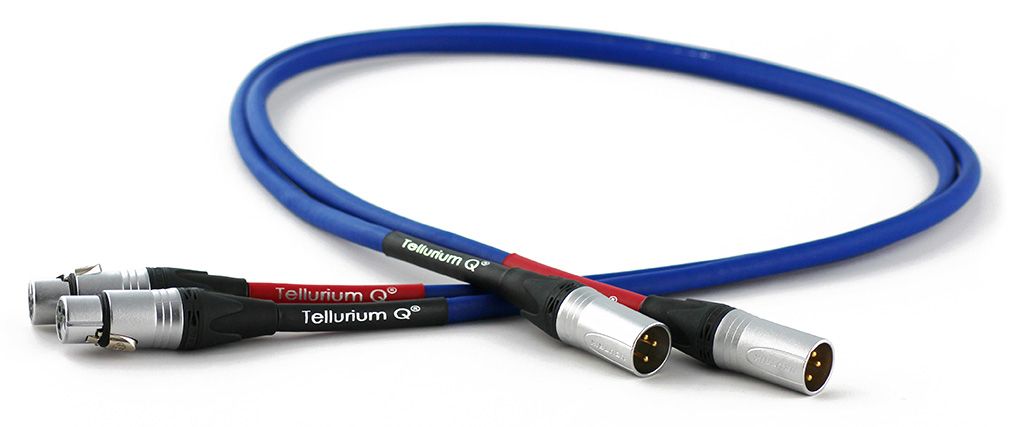
Tellurium Q BU-XLR XLR Cable
273,00 €
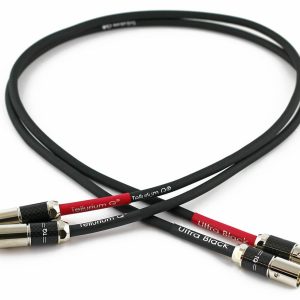
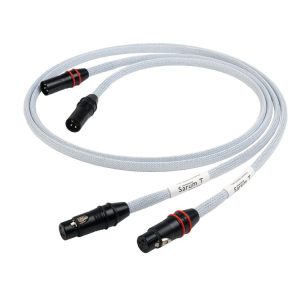
Tellurium Q BU-XLR is a balanced analogue audio XLR interconnect cable for components with matching XLR inputs and outputs. The Blue model occupies the entry-level position in the manufacturer’s XLR range. Choose it for an analogue connection between a source, amplifier, or another component when both sides of the signal path support balanced operation. In a stereo system, the left and right channels are normally carried through separate signal lines.
Tellurium Q BU-XLR is a balanced analogue audio XLR interconnect cable for audio components equipped with suitable XLR connections. It is the entry-level Blue XLR model in the Tellurium Q cable range.
Purpose and selection
This cable carries an analogue audio signal between a separate source, amplifier, or another compatible component. Both devices must have XLR connections that are suitable for the intended signal and connection direction.
The presence and shape of an XLR socket alone do not guarantee that the equipment uses a balanced circuit. The complete connection remains balanced only when both the output and the input support balanced operation. The cable itself cannot convert an unbalanced output into a balanced one, so the specifications or documentation for both connected components should be checked before purchase.
How a balanced connection works
A balanced connection uses two signal lines together with a reference contact. When compatible equipment is connected, it can reject interference that appears equally on both signal lines. This operating principle is particularly relevant when the interconnect must be routed near other cables in an audio system.
Balanced operation depends on the circuitry at both ends of the connection rather than on the connector alone. An XLR output must therefore feed a corresponding analogue XLR input, and both sides must support the same balanced connection method. BU-XLR provides the physical signal path between those compatible components; it does not change how either device is designed to operate.
This model is not an adapter between XLR and RCA connectors. It is also not a substitute for a speaker cable or a mains power cable. Choose it specifically for an analogue XLR connection between suitable audio components.
Connection and cable routing
Before connecting the cable, turn down the amplifier volume or mute the system. This helps prevent any sound produced during connection from reaching the loudspeakers. Insert each plug straight into the appropriate socket and make sure that it is fully seated.
If the equipment connector has a locking mechanism, press the release before disconnecting the plug. Hold the connector itself rather than pulling on the cable. This method avoids placing unnecessary strain on either the plug or the socket fitted to the equipment.
Do not trap the cable under furniture, and do not leave it under tension where it enters a connector. Avoid sharp bends that force the cable into an unnatural route. If the analogue audio cable needs to cross a power cable, it is preferable to route the two cables at a different angle rather than running them together along the same path.
Plan the route before making the final connection so that both ends reach their sockets without being stretched. The cable should lie naturally between the components, with enough freedom around each connector to avoid sideways pressure. These straightforward precautions help keep the installation tidy and reduce mechanical stress on the connected equipment.
Use in an audio system
In a stereo system, the left and right channels are normally carried through separate signal lines. Check the channel markings on the source and receiving component when connecting the system so that the left output reaches the left input and the right output reaches the right input.
In a home cinema system, the cable may be used between a processor and a power amplifier. Both components must provide analogue balanced XLR connections. The same principle can be used when connecting an active loudspeaker to a balanced source or preamplifier: the source output and loudspeaker input must both be appropriate for balanced analogue audio.
For a digital AES/EBU signal, select a cable whose digital purpose and required impedance are explicitly specified. BU-XLR is intended for balanced analogue audio and should be selected on that basis. An XLR connector can be used for different applications, so identifying the signal type is just as important as confirming that the plug fits the socket.
Technical specifications
| Manufacturer | Tellurium Q |
|---|---|
| Model | BU-XLR |
| Type | Balanced analogue audio XLR interconnect cable |
| Connector | XLR |
| Signal carried | Analogue audio |
| Position in the range | Entry-level Blue XLR model |
FAQ
Which devices can be connected with this cable?
It connects the analogue XLR output of one audio component to the corresponding XLR input of another component. The connector direction and intended function must match at both ends. Suitable examples can include a source and amplifier, a processor and power amplifier, or a balanced source or preamplifier and an active loudspeaker.
Can this cable replace an RCA cable?
Only when both components being connected have suitable analogue XLR connections. BU-XLR is not an XLR-to-RCA adapter, so it cannot be used to join an XLR socket directly to an RCA socket. Confirm the available inputs and outputs on both components before choosing the cable.
How can I check equipment compatibility before buying?
Consult the documentation for both devices. Confirm that one component has an analogue XLR output and that the other has the corresponding analogue XLR input. You should also verify that both sides support balanced operation, because the presence of XLR sockets by itself does not establish that the complete signal path is balanced.
Does the cable convert an unbalanced output into a balanced one?
No. Balanced operation must be supported by the output of the first device and the input of the second device. The cable connects compatible circuits but cannot alter an unbalanced circuit or turn it into a balanced one.
Is the cable intended for a digital AES/EBU connection?
BU-XLR is described as an analogue audio cable. For AES/EBU use, choose a cable whose digital application and required impedance are clearly stated. Do not select a cable for that purpose solely because it uses XLR connectors.