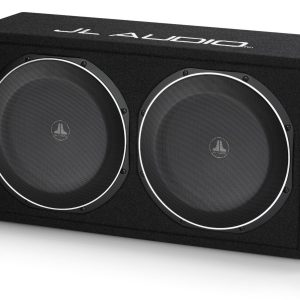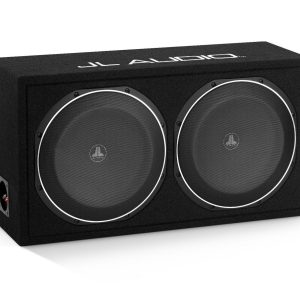
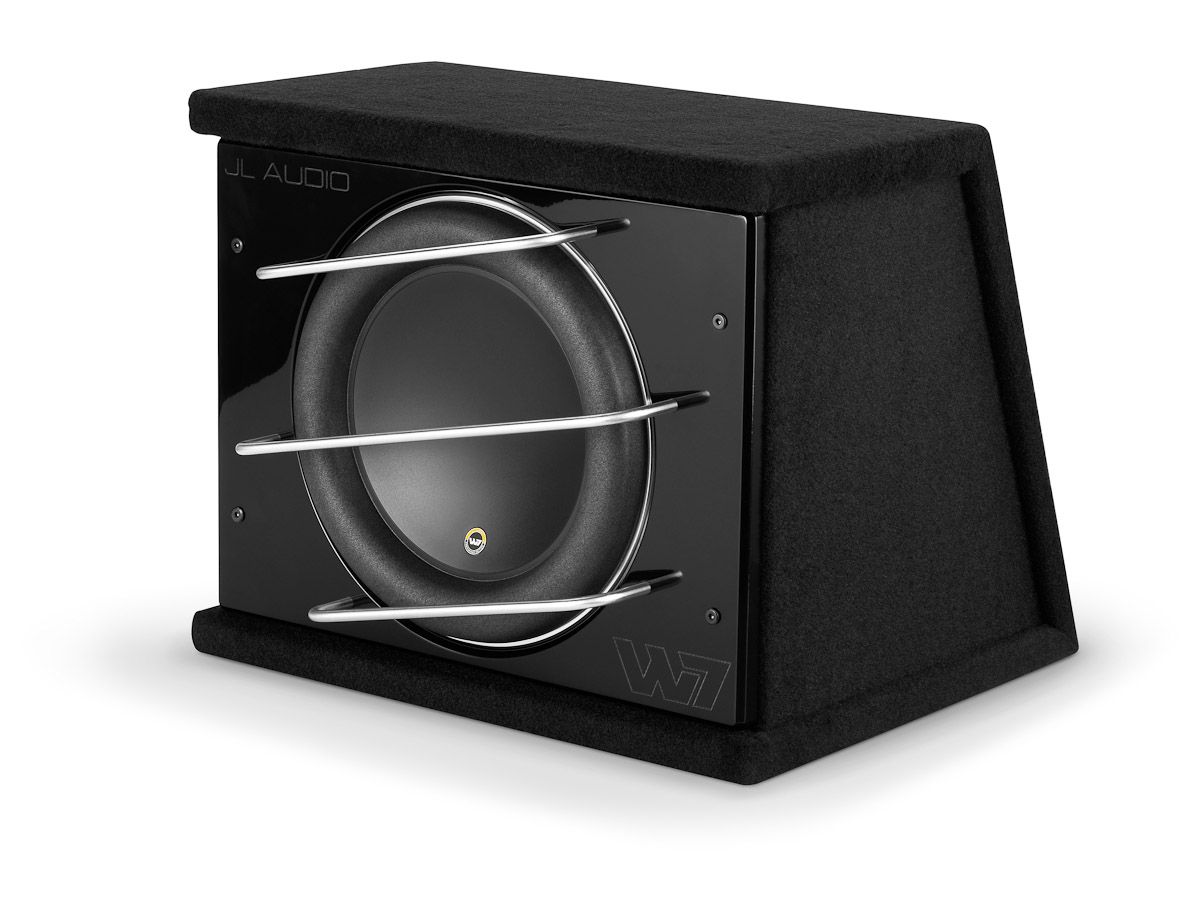
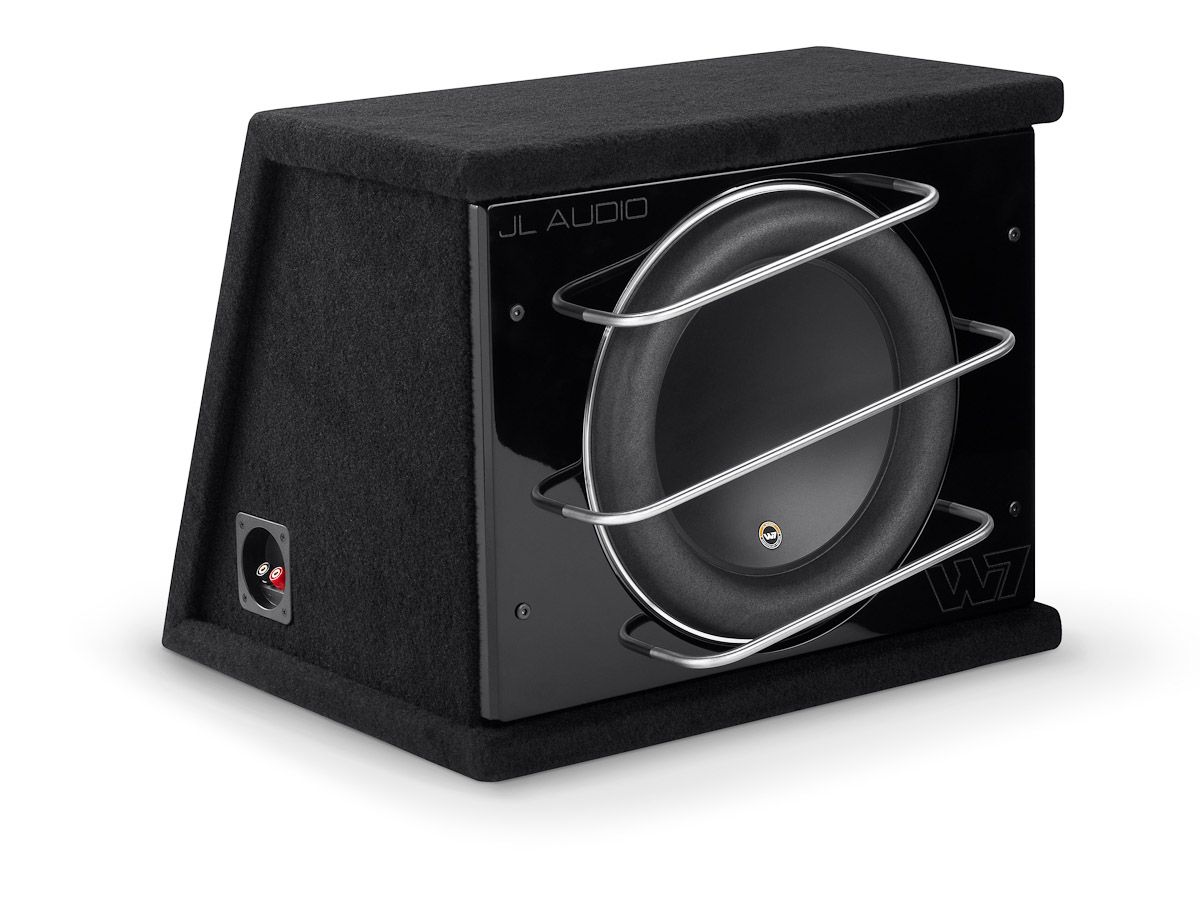
JL Audio CLS113RG-W7AE Car Subwoofer Enclosure
2 050,00 €
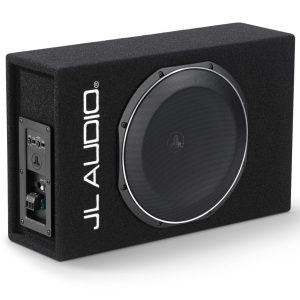
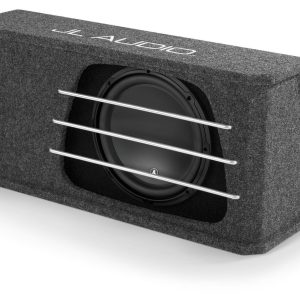
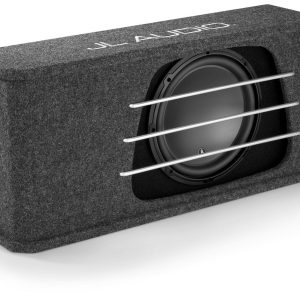
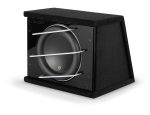
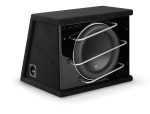
JL Audio CLS113RG-W7AE is a sealed car subwoofer enclosure designed for a high-power audio system. It handles 1500 W of continuous power and presents a nominal 3 Ω load, so the amplifier must be selected with both figures in mind. Clear space must be left in front of the rear-facing subwoofer. The included aluminium rod grille provides a physical barrier in front of the driver.
JL Audio CLS113RG-W7AE is a car subwoofer enclosure designed for a high-power audio system. Its continuous power handling is 1500 W RMS, while the nominal system impedance is 3 Ω. These are the key figures to consider when choosing a suitable car power amplifier.
The subwoofer is already installed in a finished enclosure, so there is no need to design and build a separate box. This helps avoid problems caused by selecting an unsuitable enclosure volume or construction.
Enclosure design and purpose
The sealed enclosure has no bass-reflex port. This construction eliminates noise produced by airflow through a port. The final bass character will also depend on the amplifier, filter settings and the enclosure’s position inside the vehicle.
The rear-firing design requires clear space in front of the subwoofer. It must not be pressed against a seat, luggage-compartment trim or transported items. Leaving adequate clearance allows the cone to operate without mechanical obstruction.
Amplifier selection and system tuning
Choose the amplifier according to the enclosure’s nominal load and continuous power rating. What matters is the amplifier’s output at the relevant impedance, not simply its highest advertised power figure. Operating an amplifier with an unsuitable load may cause it to overheat or enter protection mode.
The 1500 W figure describes continuous power handling, not short-term peak power. Adjust the amplifier gain to match the output level of the source unit. Gain is not a volume control and should not automatically be set to its maximum position.
If the amplifier has a low-pass filter, adjust its cutoff to suit the other speakers in the vehicle. The objective is a smooth transition without placing excessive emphasis on a single frequency range. Compare the available phase or polarity settings while listening from the driver’s seat.
Initial control settings
Begin the tuning process with any additional bass boost on the amplifier or processor switched off. Set the source unit to a normal listening volume and then raise the amplifier gain gradually. Stop before audible distortion appears and compare the bass level with the rest of the system. This procedure matches the gain to the signal source instead of treating it as a separate volume control.
Start with a low cutoff setting for the low-pass filter and increase it until there is no obvious frequency gap between the subwoofer and the other speakers. If phase adjustment or polarity selection is available, assess every option from the same driver’s-seat position without changing the other settings. Choose the option that produces the smoothest transition, rather than simply the highest momentary output.
Connecting the enclosure
This passive car subwoofer enclosure must be connected to the speaker output of a suitable power amplifier. It must not be connected to a line-level RCA output or treated as an active enclosure with a built-in amplifier. Before selecting the cable, check the connection types used by the amplifier and the terminal fitted to the enclosure. Maintain consistent polarity and secure all wiring properly.
If the head unit has line-level RCA outputs, its signal can be sent to the appropriate line input on the power amplifier. In a factory system without such an output, an amplifier with a suitable high-level input or a separate signal converter is required. These options concern signal transmission to the amplifier; the subwoofer enclosure itself must always be powered from the amplifier’s speaker output.
Planning the installation location
The enclosure requires 572 mm of width and 464 mm of height. Its maximum external depth is 464 mm. The upper section is 292 mm deep, so both depth measurements must be considered when checking the available space.
The enclosure weighs 46.79 kg. Its mounting location must support this weight and prevent the enclosure from moving while the vehicle is in motion. Check the dimensions of the luggage-compartment opening before installation, as the opening may be smaller than the space available inside.
The performance of a sealed enclosure changes with its distance from the luggage-compartment walls and seats. Choose an initial position that leaves the subwoofer side unobstructed. Then compare several positions without changing the amplifier settings. Use the same listening material and volume level for every test so that you can judge the effect of placement itself.
Use in different systems
In a car stereo system, one enclosure can be integrated with front and rear full-range speakers by using the amplifier’s or processor’s filters to divide the bass range appropriately. It should not be selected for a home stereo or home-cinema system purely because of its power rating. This model is intended for car audio, and domestic amplifiers may use different power arrangements and permitted loads.
When planning a system with multiple subwoofer enclosures, first determine the total nominal load created by the chosen wiring method. Series and parallel wiring present different final loads to the amplifier, so select the wiring arrangement only after checking the amplifier’s stable operating limits. Secure every enclosure separately and retain an unobstructed operating area in front of every rear-facing subwoofer.
Finish and protection
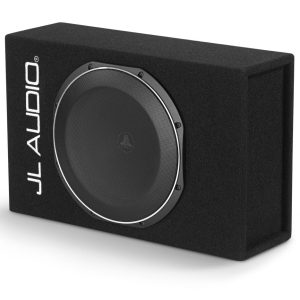
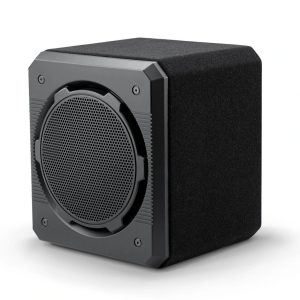
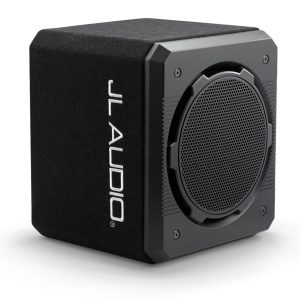
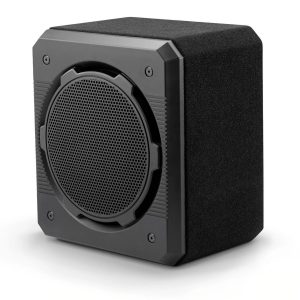
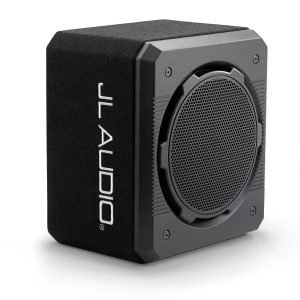
The enclosure is finished in black carpet and laminate. Its dark finish complements the trim commonly found in vehicle luggage compartments and makes the outline of the enclosure less prominent.
An aluminium rod grille is included. It creates a physical barrier in front of the subwoofer, but a clear operating area must still be maintained around it in the luggage compartment.
Technical specifications
| Model | JL Audio CLS113RG-W7AE |
|---|---|
| Product type | Enclosed car subwoofer |
| Enclosure type | Sealed, rear-firing |
| Continuous power handling | 1500 W RMS |
| Nominal system impedance | 3 Ω |
| Finish | Black carpet and laminate |
| Grille | Aluminium rod grille, included |
| External width | 572 mm |
| External height | 464 mm |
| Maximum external depth | 464 mm |
| Upper-section depth | 292 mm |
| Net weight | 46.79 kg |
FAQ
What type of system is this enclosure designed for?
It is designed for a car audio system with a separate power amplifier. It is not an active home-audio speaker with an integrated amplifier.
How should I choose a power amplifier?
Check that the amplifier can operate reliably with a 3 Ω load. Assess its RMS output at 3 Ω against the enclosure’s 1500 W RMS continuous power rating, rather than relying on its highest advertised power figure.
Can the enclosure be connected directly to a car head unit?
A separate car power amplifier is required for this level of power demand. A head unit’s speaker output is not intended to drive a subwoofer system of this power.
How should I begin adjusting the low-pass filter?
Start with a low cutoff frequency and increase it gradually until the transition between the subwoofer and the other speakers sounds smooth.
Where should it be installed in the luggage compartment?
Choose a strong, secure location where the enclosure cannot move. Keep the subwoofer side unobstructed and compare several positions before fastening the enclosure permanently.
Can two of these enclosures be used in one system?
Yes, but only after calculating the total load created by the chosen wiring method. The amplifier must be able to operate reliably with the resulting final impedance.
Is it suitable for a home stereo or home-cinema system?
This model is designed for a car audio system. Domestic equipment uses a different power arrangement and may not be suitable for this load.