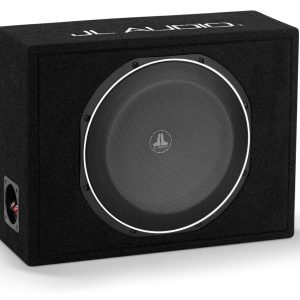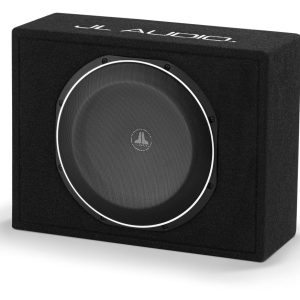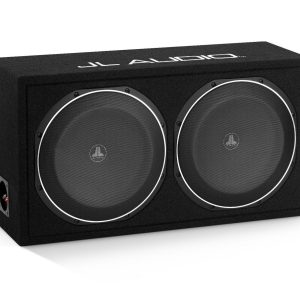
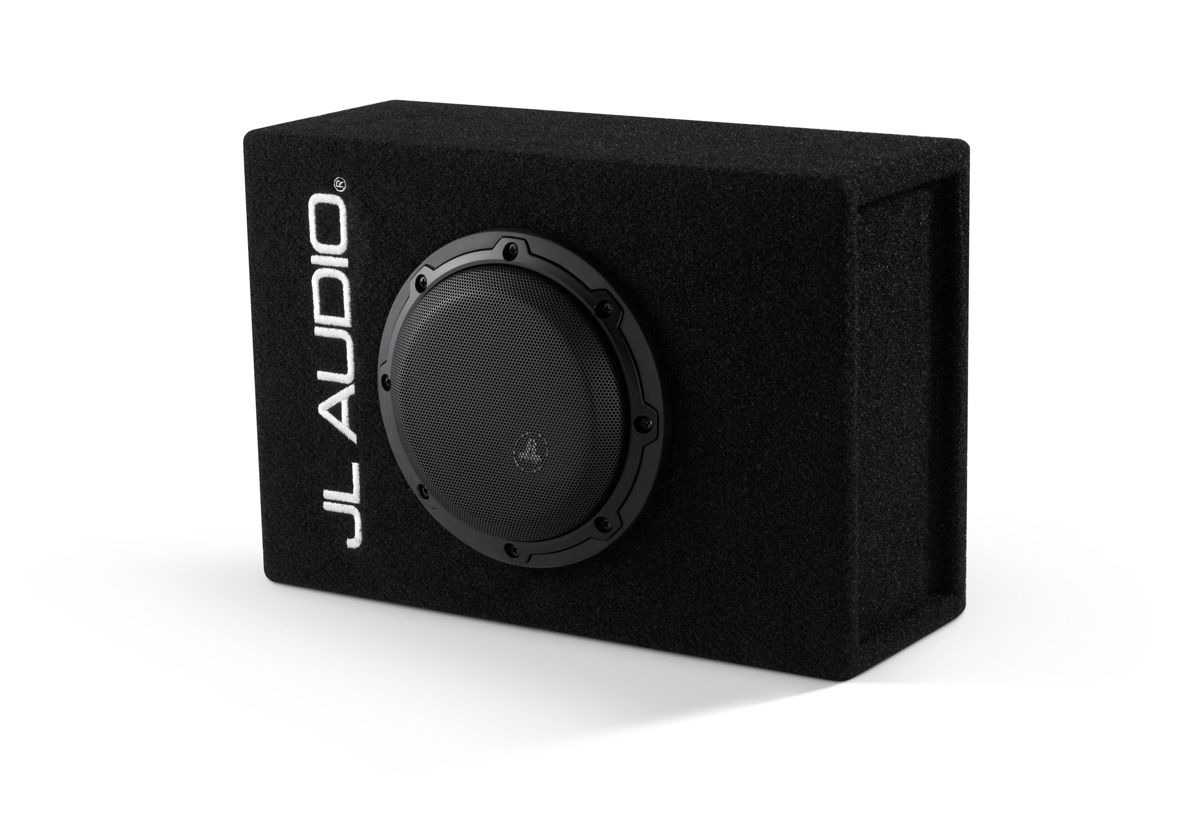
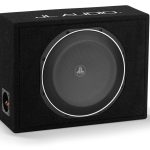
JL Audio CP106LG-W3V3 Low-Profile Car Subwoofer Enclosure
320,00 €
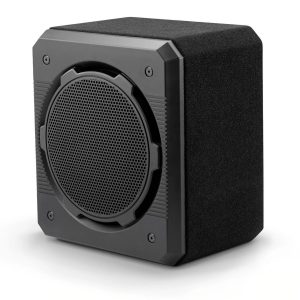
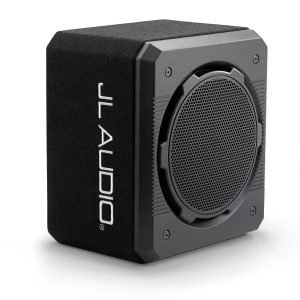
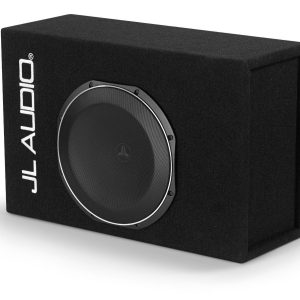
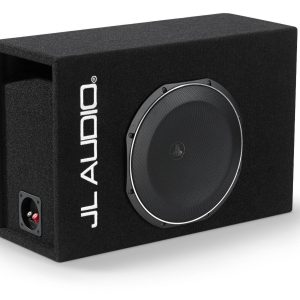
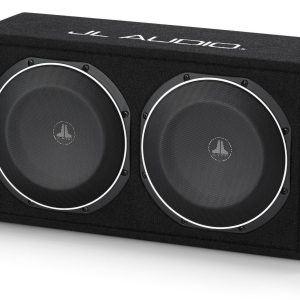
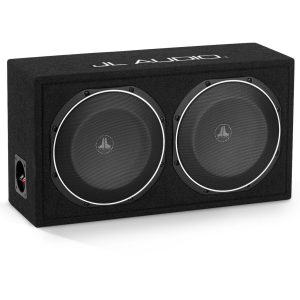
JL Audio CP106LG-W3V3 is a low-profile car subwoofer enclosure designed for a system with a separate amplifier. It handles 150 W RMS of continuous power, while its nominal 4 Ω impedance helps you select a suitable amplifier channel. The slot-ported enclosure is 130 mm deep. Its black carpet finish complements the luggage-compartment environment, and steel protective grilles are included.
JL Audio CP106LG-W3V3 is a low-profile car subwoofer enclosure. It is designed for a system in which the bass is powered by a dedicated amplifier channel. The 150 W RMS power-handling rating refers to continuous rather than short-term power. Its nominal 4 Ω impedance helps you select a suitable amplifier.
Who this subwoofer is for
The low-profile enclosure is useful in vehicles where installation depth is limited. Its external depth is 130 mm. Before installation, you must also account for the enclosure’s width and height, along with the space required for wiring.
This enclosure forms the bass section of a system and complements the vehicle’s full-range or component speakers. It does not replace speakers intended to reproduce the full frequency range. Its signal must be limited by a low-pass filter in the amplifier, head unit, or audio processor.
Enclosure and protection
The slot-ported enclosure has a separate air opening. During installation, this port must not be pressed against a seat, interior trim, or luggage. Leaving the opening unobstructed allows the enclosure to operate as intended by its design.
The exterior has a black carpet finish, which visually complements the trim commonly found in vehicle luggage compartments. Black steel protective grilles are included. They reduce the likelihood of direct contact with the speaker area, but they are not a substitute for securely fastening the enclosure inside the vehicle.
Choosing an amplifier
When checking an amplifier’s technical specifications, look for its output into a 4 Ω load. A power figure stated for a different impedance is not directly comparable. The amplifier must also be designed to operate reliably with this load.
The 150 W RMS figure is a continuous power-handling rating. It should not be compared with an amplifier’s peak or short-term power figure. For proper matching, compare RMS ratings specified under equivalent measurement conditions.
An amplifier’s gain control is not a volume control. Begin with a lower gain setting and increase it while listening to the complete system. Stop adjusting if the bass becomes distorted or begins to overpower the other speakers.
Signal connection and tuning
The subwoofer enclosure connects to the speaker output of an external amplifier. If the head unit has a line-level subwoofer output, that output must first be connected to the amplifier. A line-level output cannot power this subwoofer directly.
If the vehicle’s head unit provides only a speaker-level signal, the amplifier must have a compatible input. This compatibility depends on the amplifier’s inputs, not on the subwoofer enclosure.
Begin setting the low-pass filter around the region where the main speakers start to lose bass output. Then refine the setting while listening from the driver’s seat. The aim is a smooth transition that does not make the subwoofer sound like a separate, easily located bass source.
Choosing an installation location
The enclosure measures 359 × 245 × 130 mm. Measure not only the available installation space but also the route used to move the enclosure into position. It must fit through the luggage-compartment opening and past seat structures and interior trim panels.
Leave sufficient clearance for the slot port and the cable route. Do not place objects directly in front of the port, and do not allow luggage to rest against the grilles. The enclosure must be securely fastened inside the vehicle so that it cannot move during braking or changes of direction.
A low-profile design does not automatically guarantee that the enclosure will fit beneath a particular seat. Check the seat rails, the seat’s full range of movement, and any uneven areas of the floor. Allow additional clearance when measuring so that the enclosure cannot come into contact with moving parts.
Technical specifications
| Model | JL Audio CP106LG-W3V3 |
|---|---|
| Product type | Low-profile car subwoofer enclosure |
| Continuous power handling | 150 W RMS |
| Nominal system impedance | 4 Ω |
| Enclosure type | Low-profile slot-ported enclosure |
| Finish | Black carpet |
| Protective grilles | Black steel grilles, included |
| External width | 359 mm |
| External height | 245 mm |
| External depth | 130 mm |
| Net weight | 5.44 kg |
FAQ
Does this subwoofer require a separate amplifier?
Yes. Its power-handling and impedance specifications are provided so that it can be matched with an external amplifier. A head unit’s line-level output cannot power the subwoofer directly.
How do I choose a suitable amplifier?
Check the amplifier’s RMS output into a 4 Ω load. Do not compare the subwoofer’s RMS rating with a peak or short-term power figure. The amplifier must be stable when operating at 4 Ω.
Can the subwoofer be installed under a seat?
That depends on the space available in the specific vehicle. Check the 359 × 245 × 130 mm dimensions, the seat’s range of movement, and the position of its rails. The slot port must remain unobstructed.
How should I set the bass level?
Adjust it through the amplifier or audio processor. Begin with a low setting, then tune it to blend with the main speakers. Avoid settings that produce audible distortion.
How can I protect the subwoofer in the luggage compartment?
The included black steel protective grilles protect the speaker area, but luggage should not rest against them. Secure the enclosure so that it cannot move during braking or changes of direction.
How do I connect it to the car head unit?
The head unit’s subwoofer signal is sent to the amplifier, and the enclosure connects to the amplifier’s speaker output. If a high-level signal is used, the amplifier must be able to accept it.
Is this subwoofer suitable for a home cinema system?
It is designed for a car audio system. A typical home cinema receiver’s line-level subwoofer output cannot power it directly. A separate amplifier suitable for a 4 Ω load would be required.
Can the slot port face an interior panel?
The port must not be pressed against vehicle trim or luggage. Leave unobstructed space around it and compare several enclosure positions while listening from the driver’s seat.