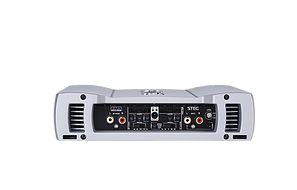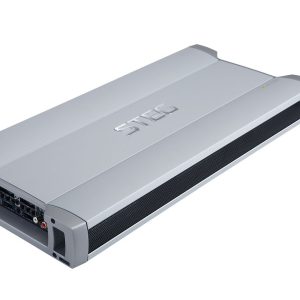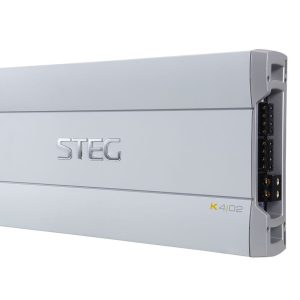
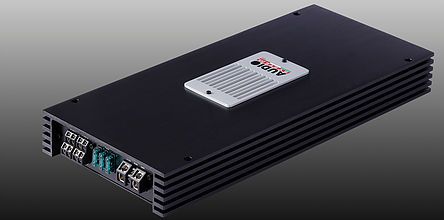
Audio System AS 4120 4-Channel Car Amplifier
270,00 €
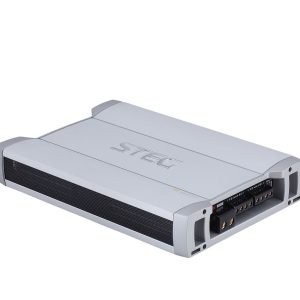
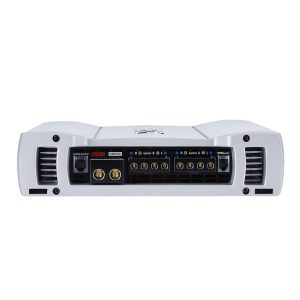
Audio System AS 4120 is a 4-channel car audio power amplifier designed for a multi-speaker vehicle installation. According to the seller-provided specifications, it delivers 4 × 120 W RMS at 4 ohms or 4 × 190 W RMS at 2 ohms. Adjustable high-pass, low-pass and band-pass filters allow frequencies to be distributed according to each speaker’s role. The 0.2-5 V input-sensitivity range helps match the amplifier to the signal level of the audio source.
Audio System AS 4120 is a 4-channel car audio power amplifier designed for a multi-speaker system. According to the specifications supplied by the seller, it delivers 4 × 120 W RMS at 4 ohms and 4 × 190 W RMS at 2 ohms. These power ratings are specified at a 14.4 V supply voltage.
This model is suitable for an installation that requires four amplification channels to be controlled separately. Its adjustable filters help divide the reproduced frequency ranges between different speakers. The description and specification table below contain the seller-provided characteristics for this model; no independent source for the exact model has been provided to verify them.
Planning a four-channel system
Four channels make it possible to power the front and rear speakers in a vehicle from one amplifier. Any alternative channel arrangement should be planned only after checking the impedance and RMS power rating of each speaker, as well as the filter that will be applied to it.
The minimum load impedance is 2 ohms. If several speakers are to be connected to one channel, their combined impedance must be calculated. The resulting load must not fall below this limit.
Speakers or wiring configurations must be selected appropriately for either a 4-ohm or 2-ohm load. A lower combined impedance places a greater demand on the amplifier, so the connected load must remain within the specified minimum impedance. The speakers’ RMS power handling should also be matched to the power available from the amplifier channel.
Understanding the stated power ratings
RMS power is the most important rating when matching an amplifier to speakers. For the Audio System AS 4120, RMS output is specified for four-channel operation with both 4-ohm and 2-ohm loads.
The stated maximum power is not a continuous RMS power rating. It should therefore not be used as the main criterion when choosing speakers according to their long-term power-handling capability.
All power figures are stated at 14.4 V. If the voltage in the vehicle’s electrical system is lower, the available output may differ. The required power-cable size or fuse rating cannot be determined from output power alone.
Matching the signal level
RMS input sensitivity is adjustable from 0.2 to 5 V. This range allows the amplifier to be matched to source units that provide different signal levels.
The sensitivity adjustment is not a volume control. It should be set according to the output level of the head unit or audio processor. Setting the sensitivity too high may cause the signal to distort earlier and can increase background noise.
During the initial setup, leave the bass boost at 0 dB. Set the source volume below the point at which distortion begins, and then gradually increase the amplifier sensitivity until the system produces a clean and sufficient sound level.
Selecting the frequency filters
The low-pass filter can be adjusted from 50 to 4000 Hz. It reduces content above the selected frequency. This mode is useful for a channel that is not intended to reproduce higher frequencies.
The high-pass filter can be adjusted from 15 to 5000 Hz. It limits frequencies below the selected cutoff point, helping to reduce the low-frequency load placed on smaller speakers.
The band-pass filter covers an adjustable range of 15-4000 Hz. It is used when a channel needs to reproduce a defined and limited band of frequencies.
The filters have a slope of 12 dB per octave, so the transition between the reproduced and attenuated ranges is gradual rather than abrupt. The final cutoff setting should be chosen according to the intended role of the speakers and the operating limits specified by their manufacturer.
Setting the bass boost
The bass boost can be adjusted from 0 to 12 dB. Increase it cautiously and only if the bass level remains insufficient after the rest of the system has been set up correctly.
A higher setting emphasizes the selected low-frequency region but also increases power demand. Raise the setting in small steps, and stop if the bass becomes unclear or audible distortion appears.
Choosing an installation location
The amplifier weighs 4.60 kg, so it requires a strong and secure mounting surface. It must not be able to move during braking or when the vehicle is travelling over uneven roads.
Leave enough open space around the amplifier for heat to escape. Avoid locations exposed to moisture, direct water ingress or contact with unsecured luggage that may move while driving.
Where practical, route the power and signal cables along opposite sides of the vehicle. This arrangement helps reduce the likelihood of interference from the electrical system entering the audio signal.
Use in different systems
This model is intended for a car audio system and is not designed for direct connection to a domestic mains supply. It is not a substitute for a home stereo or home cinema amplifier.
In a system with multiple amplifiers, the power supply, grounding and signal distribution must be planned correctly for every unit. The current draw of this model is not specified, so the load placed on the vehicle’s electrical system cannot be calculated from the output-power figures alone.
Technical specifications
| Product type | 4-channel car audio power amplifier |
|---|---|
| RMS power at 4 ohms | 4 × 120 W at 14.4 V |
| RMS power at 2 ohms | 4 × 190 W at 14.4 V |
| Maximum power at 4 ohms | 2 × 380 W at 14.4 V |
| Minimum load impedance | 2 ohms |
| Frequency range | 5-25,500 Hz |
| Low-pass filter | 50-4000 Hz |
| High-pass filter | 15-5000 Hz |
| Band-pass filter | 15-4000 Hz |
| Bass boost | 0-12 dB |
| Filter slope | 12 dB per octave |
| RMS input sensitivity | 0.2-5 V |
| Weight | 4.60 kg |
FAQ
What type of car audio system is this amplifier intended for?
It is intended for a system that requires up to four separately amplified channels. The connected speakers must not create a load below 2 ohms.
Is 2 × 380 W the amplifier’s continuous power output?
No. This is the maximum power rating at 4 ohms and 14.4 V. When matching speakers, use the four-channel RMS power ratings as the primary reference.
How should I choose the correct input sensitivity?
Begin with a lower sensitivity setting and match it to the output level of the source. Increase it gradually until you obtain clean sound without distortion.
Which filter should I use for my speakers?
The high-pass filter reduces the lowest-frequency load. The low-pass filter limits higher frequencies, while the band-pass filter defines a specific frequency range.
Can I connect a load below 2 ohms?
No. The stated minimum load impedance is 2 ohms. This must be taken into account when connecting several speakers to the same channel.
Does the 2 × 380 W rating confirm a bridged wiring configuration?
A power rating alone does not define a particular wiring configuration. Do not plan this type of connection without clearly marked terminals and an appropriate wiring diagram.
Can this amplifier be used in a home stereo or cinema system?
It is designed for a car audio system, and its power ratings are specified at 14.4 V. It is not a model that can be connected directly to a domestic mains supply.