Eversolo DAC-Z6 Digital-to-Analog Converter
Original price was: 460,00 €.300,00 €Current price is: 300,00 €.
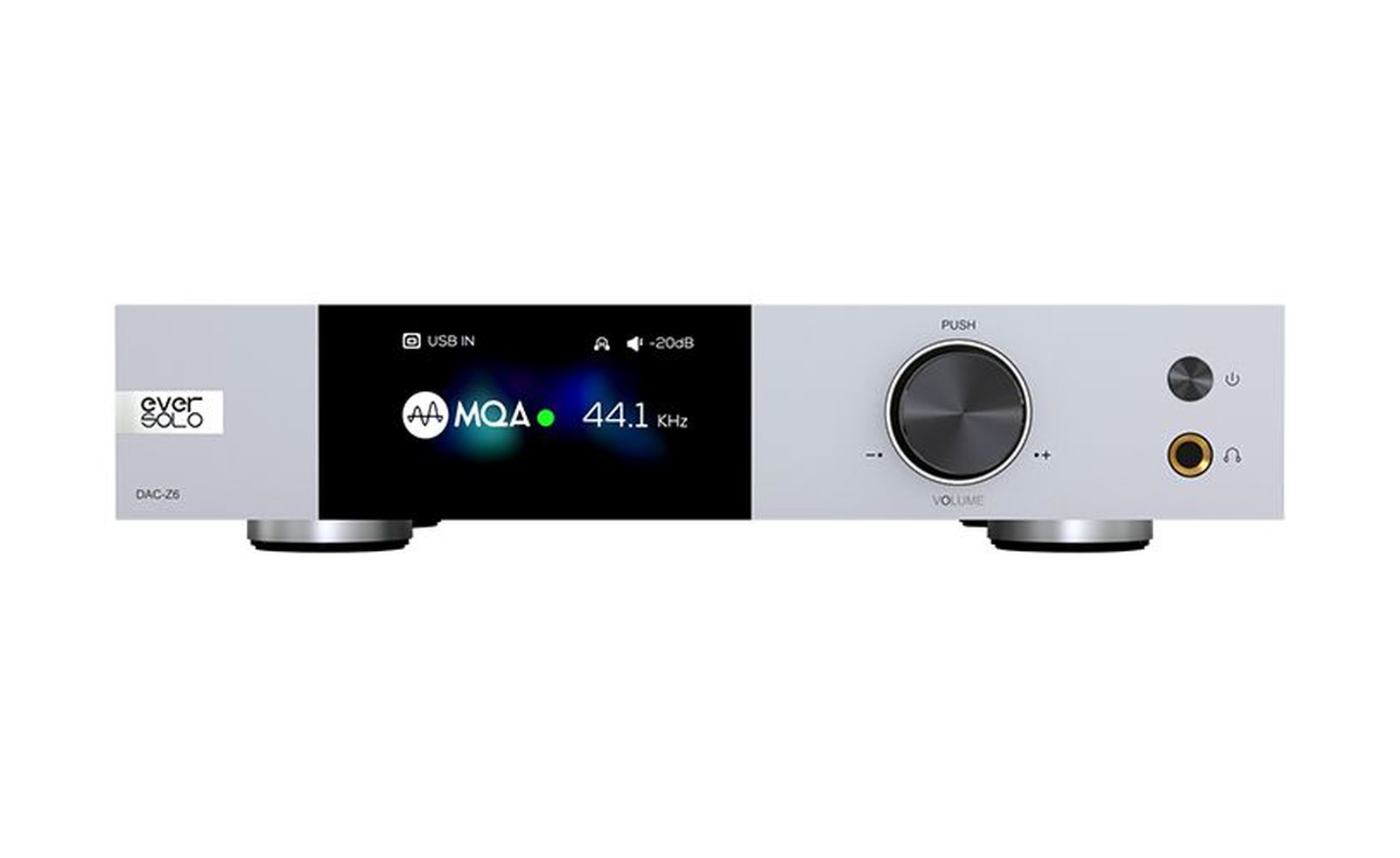
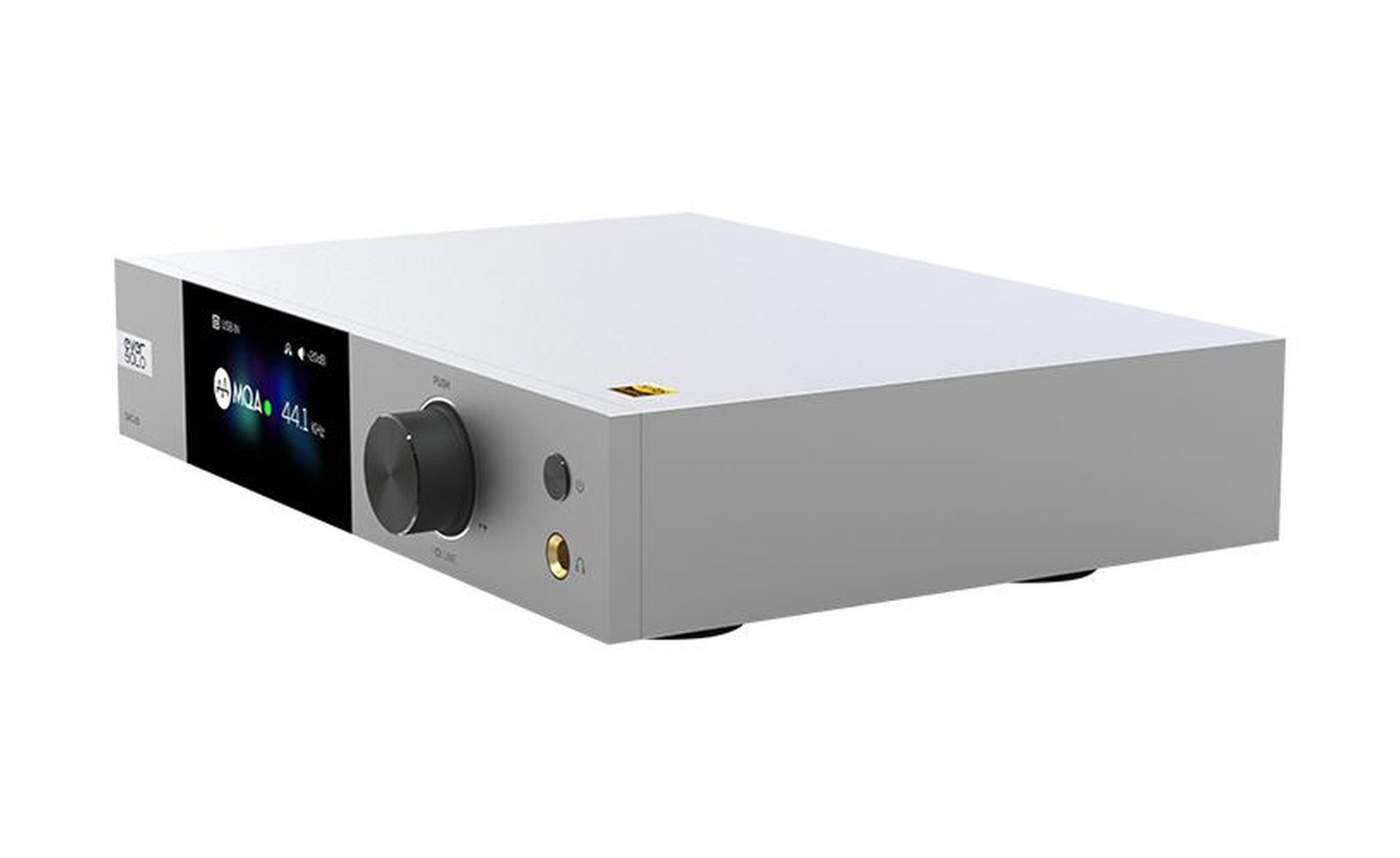
Eversolo DAC-Z6 digital-to-analog converter is designed for digital sources, stereo systems and headphones. It combines a DAC, preamplifier and headphone amplifier in one aluminium-alloy chassis. Its USB inputs decode DSD512 and PCM up to 768 kHz/32-bit, making it suitable for high-resolution audio files. XLR and RCA outputs simplify connection to a power amplifier or active loudspeakers.
Eversolo DAC-Z6 digital-to-analog converter combines a DAC, preamplifier and headphone amplifier in a single chassis. It is designed to connect a computer, phone, digital audio source or Bluetooth device to a stereo system. This is not a network music player, so streaming playback requires a separate source.
Digital architecture
The fully balanced circuit uses two ES9068-series DAC chips. Five RT6563D operational amplifiers serve the analogue output stage, while a third-generation XMOS XU316 processor handles audio received over USB.
USB decoding supports native DSD512 and PCM at up to 768 kHz and 32-bit resolution. The USB, optical and coaxial inputs support full MQA decoding and rendering. The availability of MQA content depends on the source or service being used.
An internal low-noise switch-mode power supply accepts 110-240 V mains power. No separate external power adapter is required.
Chassis and layout
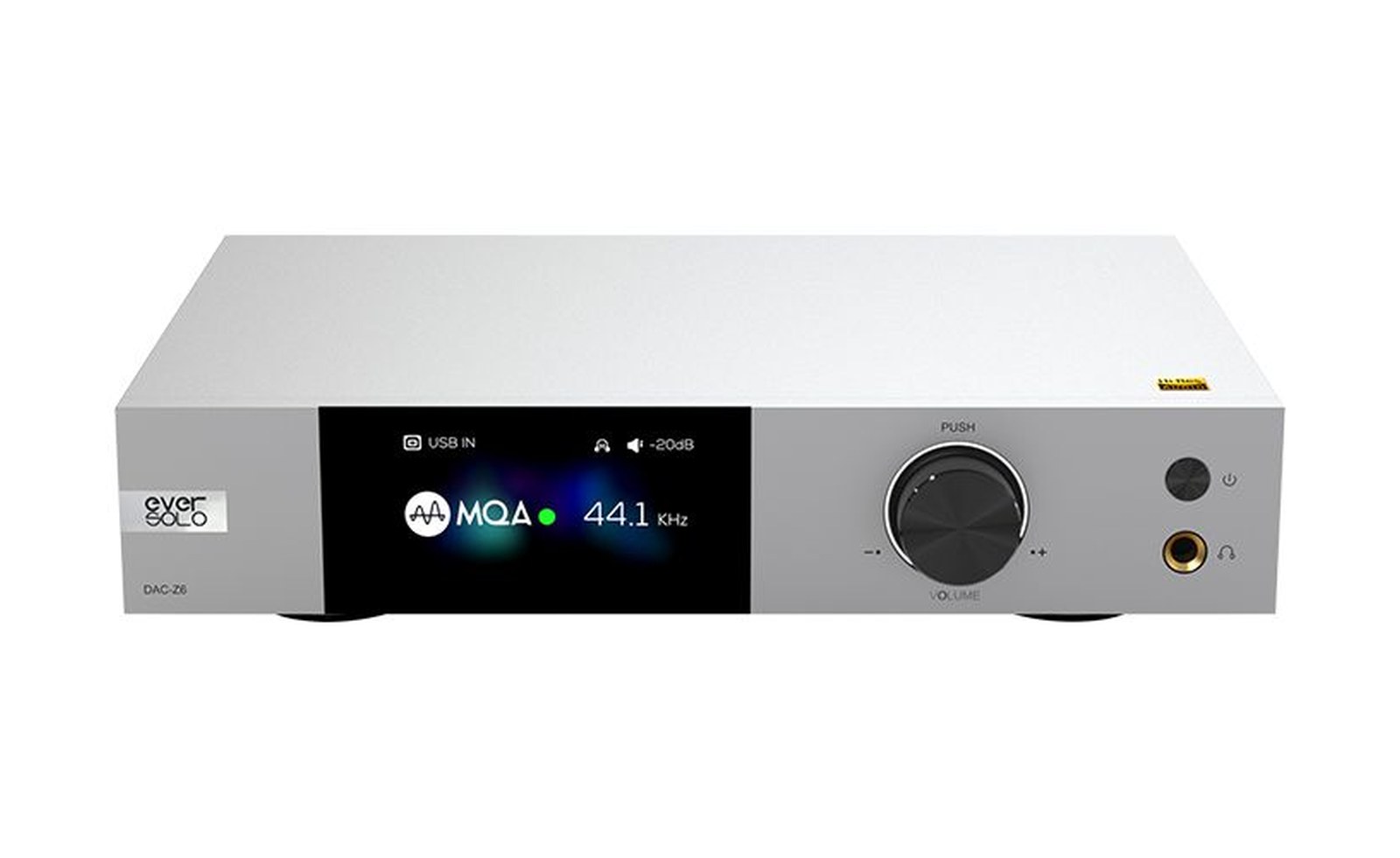
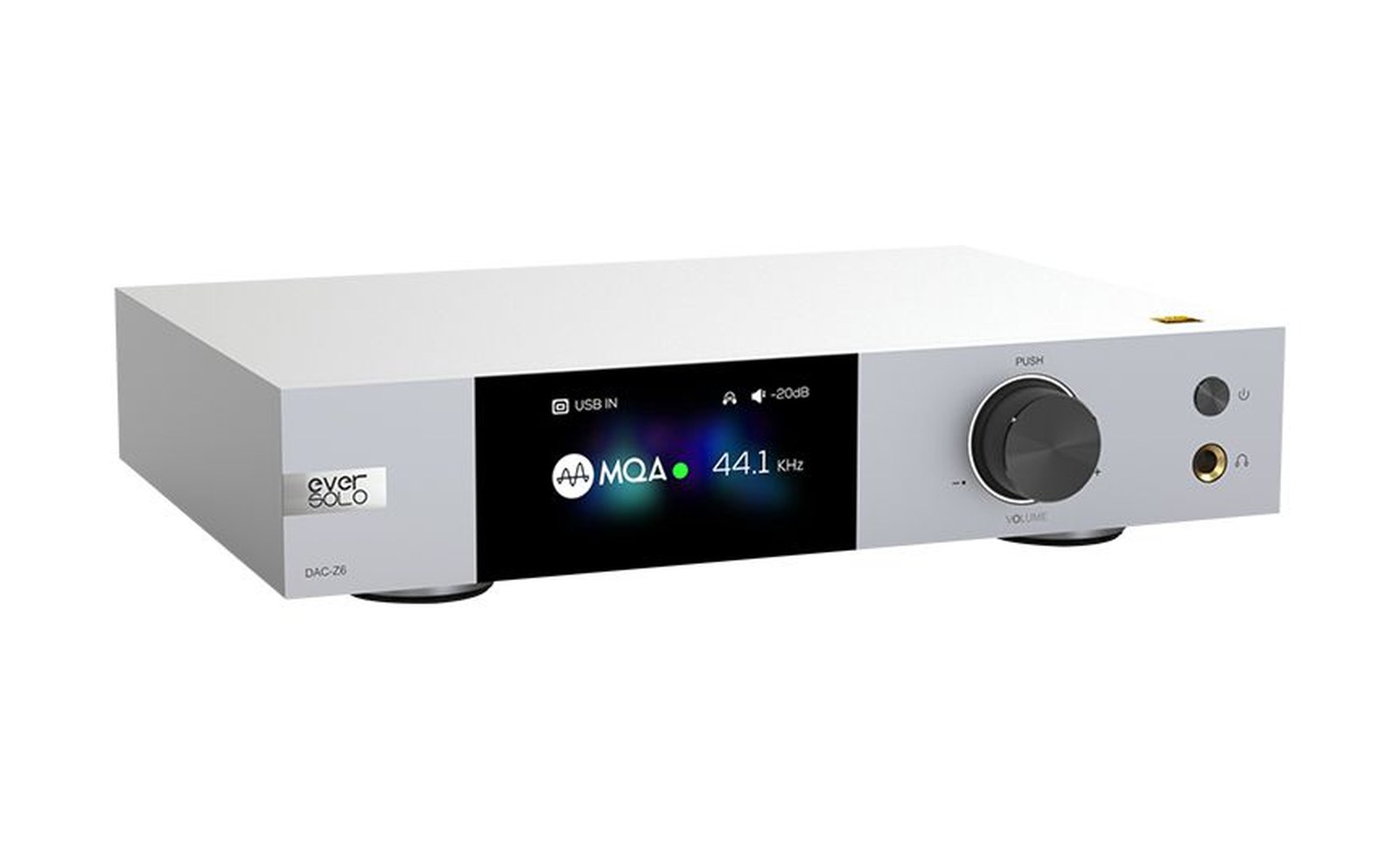
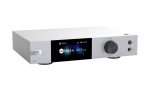
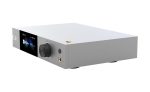
The silver aluminium-alloy chassis measures 270 mm wide, 187 mm deep and 50 mm high.
Allow additional room behind the unit for cables, taking particular care not to bend stiffer XLR and coaxial cables too sharply.
The front panel features a 3-inch LCD with selectable VU-meter display modes.
Connecting digital sources
Computer and mobile device
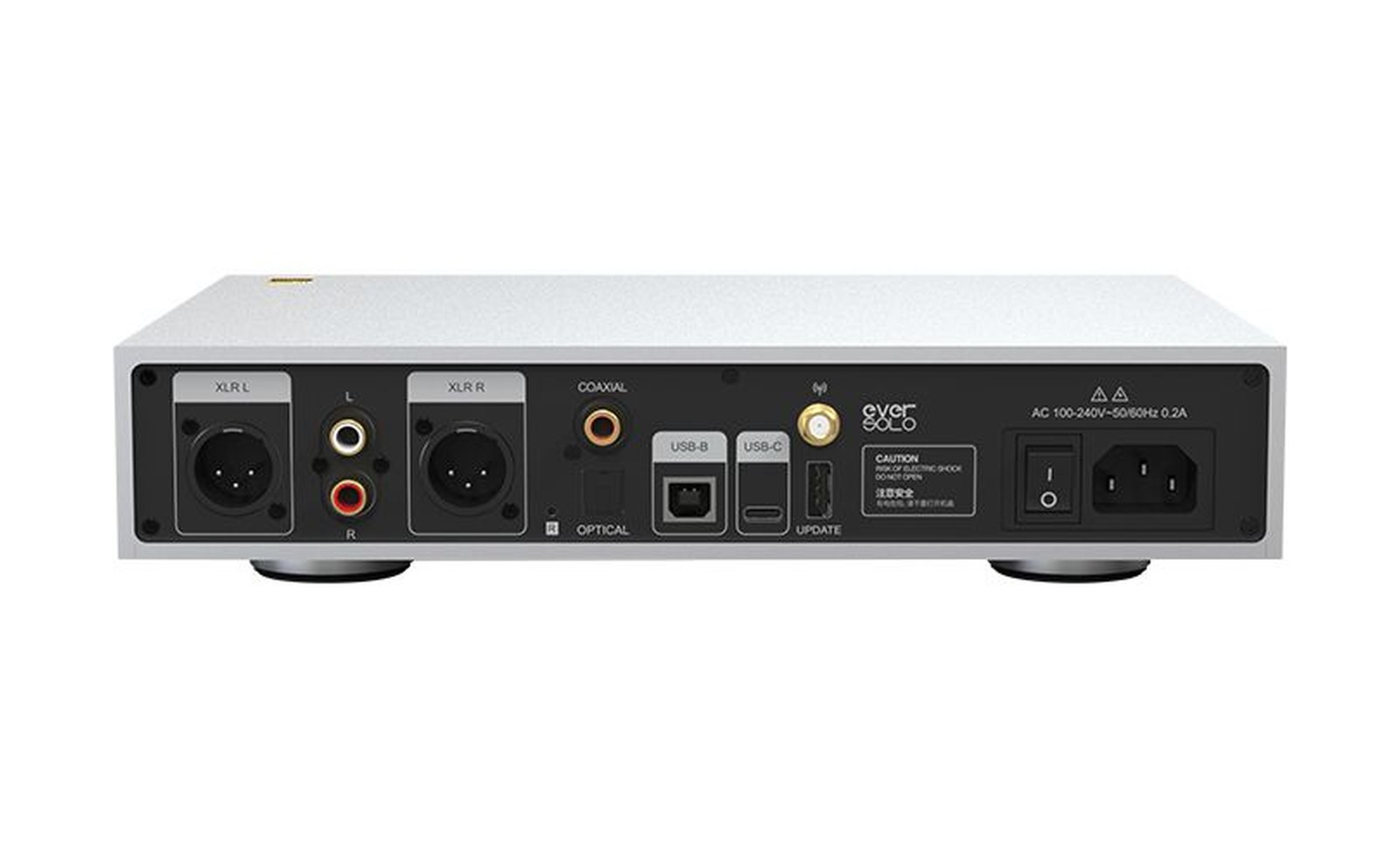
The USB-B connection is intended for a computer, while USB-C provides a convenient option for a compatible phone or tablet. A suitable OTG data cable is required for a mobile device.
Both connections were designed for Windows 7/10, Mac, Android and iOS devices. Windows requires the appropriate Eversolo USB driver. No additional driver is required on a Mac.
The rear USB 2.0 Type-A port is reserved for firmware updates. It is not a standard music-playback input.
Optical and coaxial sources
The optical and coaxial inputs accept stereo PCM at up to 192 kHz and 24-bit resolution. They also support DSD64 via DoP. Choose the connection provided by your digital transport, television or other source.
A television can be connected optically if its output is configured to send a compatible stereo PCM signal. If the source is set to a multichannel format, change its audio output to stereo PCM.
Wireless source
The Qualcomm QCC5125 Bluetooth 5.0 receiver supports SBC, AAC, aptX, aptX Low Latency, aptX HD and LDAC codecs. The transmitting device must also support the selected codec.
Analogue outputs and system matching
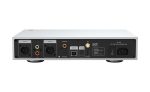
The rear panel provides a balanced XLR output and an unbalanced RCA output. Both operate as preamplifier outputs. The menu lets you enable XLR only, RCA only, or both outputs simultaneously.
Use XLR with balanced inputs and RCA with conventional analogue line inputs. Simultaneous mode sends the same signal to two analogue signal paths.
The DAC-Z6 can control a power amplifier or active loudspeakers. When connecting it to an integrated amplifier, use an available line-level input and arrange the system so that volume is controlled at one point in the signal chain.
In a home cinema system, the DAC-Z6 is suitable for a separate two-channel signal path. It has no HDMI connection and does not decode multichannel audio.
Control and headphone listening
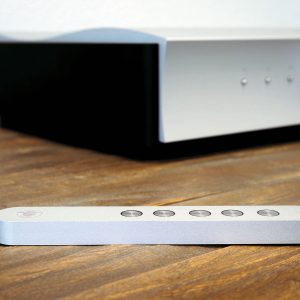
The unit can be operated using the front-panel knob, the supplied remote control or the mobile controller app.
The front 6.35 mm headphone output is unbalanced. A balanced headphone connection is not provided. Inserting a headphone plug automatically mutes the XLR and RCA output signals.
Low-gain mode is intended for headphones with an impedance of 16-32 ohms. High-gain mode covers loads from 32 to 300 ohms. Begin at a low volume before selecting the gain setting appropriate for your headphones.
Headphone power figures depend on the connected load. Low-gain mode delivers 45 mW into 32 ohms. High-gain mode delivers 26 mW into a 300-ohm load.
Placement, power and supplied accessories
Nominal power consumption is 9 W. Position the unit so that the front headphone socket and control knob remain accessible, with enough space to reach the rear connections.
The package includes a remote control, power cable and user manual. USB and OTG data cables must be selected separately to suit the source being connected.
Technical specifications
| Model | Eversolo DAC-Z6 |
| Device type | High-resolution fully balanced DAC, preamplifier and headphone amplifier |
| Chassis | Aluminium alloy, silver |
| Dimensions | 270 × 187 × 50 mm |
| Display | 3-inch LCD with selectable VU-meter modes |
| DAC chips | 2 × ES9068 series |
| USB audio processor | Third-generation XMOS XU316 |
| Operational amplifiers | 5 × RT6563D |
| USB-B and USB-C inputs | Stereo DSD512, PCM up to 768 kHz/32-bit, MQA |
| Documented USB platforms | Windows 7/10, Mac, Android and iOS |
| Optical input | Stereo PCM up to 192 kHz/24-bit, DSD64 via DoP, MQA |
| Coaxial input | Stereo PCM up to 192 kHz/24-bit, DSD64 via DoP, MQA |
| Bluetooth module | Qualcomm QCC5125, Bluetooth 5.0 |
| Bluetooth codecs | SBC, AAC, aptX, aptX Low Latency, aptX HD, LDAC |
| USB Type-A port | USB 2.0, firmware updates only |
| Analogue outputs | Balanced XLR and unbalanced RCA preamplifier outputs |
| Output modes | XLR only, RCA only, or XLR and RCA simultaneously |
| Headphone output | 6.35 mm unbalanced socket |
| Headphone impedance | 16-300 Ω |
| Low-gain mode | 16-32 Ω; 1.2 Vrms at 0 dBFS; 45 mW into 32 Ω |
| Low-gain THD+N | 0.00028% A-weighted; 0.00031% unweighted, at 1 kHz |
| Low-gain noise | Less than 3.5 µVrms, unweighted |
| Low-gain SNR and dynamic range | 114 dB, at 1 kHz |
| Low-gain frequency response | 20 Hz-20 kHz, ±0.15 dB |
| High-gain mode | 32-300 Ω; 2.8 Vrms at 0 dBFS; 26 mW into 300 Ω |
| High-gain THD+N | 0.00014% A-weighted; 0.00016% unweighted, at 1 kHz |
| High-gain noise | Less than 3.5 µVrms, unweighted |
| High-gain SNR and dynamic range | 121 dB, at 1 kHz |
| High-gain frequency response | 20 Hz-20 kHz, ±0.15 dB |
| XLR output level | 4.1 Vrms at 0 dBFS |
| XLR THD+N | 0.000094% A-weighted; 0.000117% unweighted, at 1 kHz |
| XLR noise | Less than 3 µVrms, unweighted |
| XLR SNR and dynamic range | 125 dB, at 1 kHz |
| XLR frequency response | 20 Hz-20 kHz, ±0.15 dB |
| XLR channel separation | -123 dB, at 1 kHz |
| RCA output level | 2.1 Vrms at 0 dBFS |
| RCA THD+N | 0.000116% A-weighted; 0.000138% unweighted, at 1 kHz |
| RCA noise | Less than 2.5 µVrms, unweighted |
| RCA SNR and dynamic range | 121 dB, at 1 kHz |
| RCA frequency response | 20 Hz-20 kHz, ±0.15 dB |
| RCA channel separation | -118 dB, at 1 kHz |
| Control | Front-panel knob, remote control and mobile app |
| Power supply | Internal low-noise switch-mode power supply, 110-240 V, 50/60 Hz |
| Nominal power consumption | 9 W |
| Included accessories | Remote control, power cable and user manual |
FAQ
Is this unit a network music player?
No. Music must be supplied through the USB, optical, coaxial or Bluetooth input. Use a separate compatible source for network streaming.
Can it be connected directly to active loudspeakers?
Yes, provided the loudspeakers have compatible XLR or RCA analogue inputs. Volume can then be controlled by the DAC-Z6 preamplifier section.
How can I add it to a home cinema system?
It can serve a separate stereo signal path and connect to an amplifier’s analogue input. HDMI and multichannel decoding are not provided.
Do the rear outputs continue working when headphones are connected?
No. Inserting a headphone plug mutes the XLR and RCA signals. This prevents the loudspeakers from playing while you listen through headphones.
Which gain mode should I choose for my headphones?
For 16-32-ohm headphones, begin with low-gain mode. High gain can be selected for higher-impedance models, increasing the volume gradually.
Which connection is most suitable for a phone or tablet?
Use USB-C with a suitable OTG data cable. For a wireless connection, use Bluetooth with a codec supported by both devices.
Can the XLR and RCA outputs operate together?
Yes. The menu offers XLR only, RCA only, or both outputs operating simultaneously.