
Tellurium Q UBU-SC Speaker Cable
36,00 €
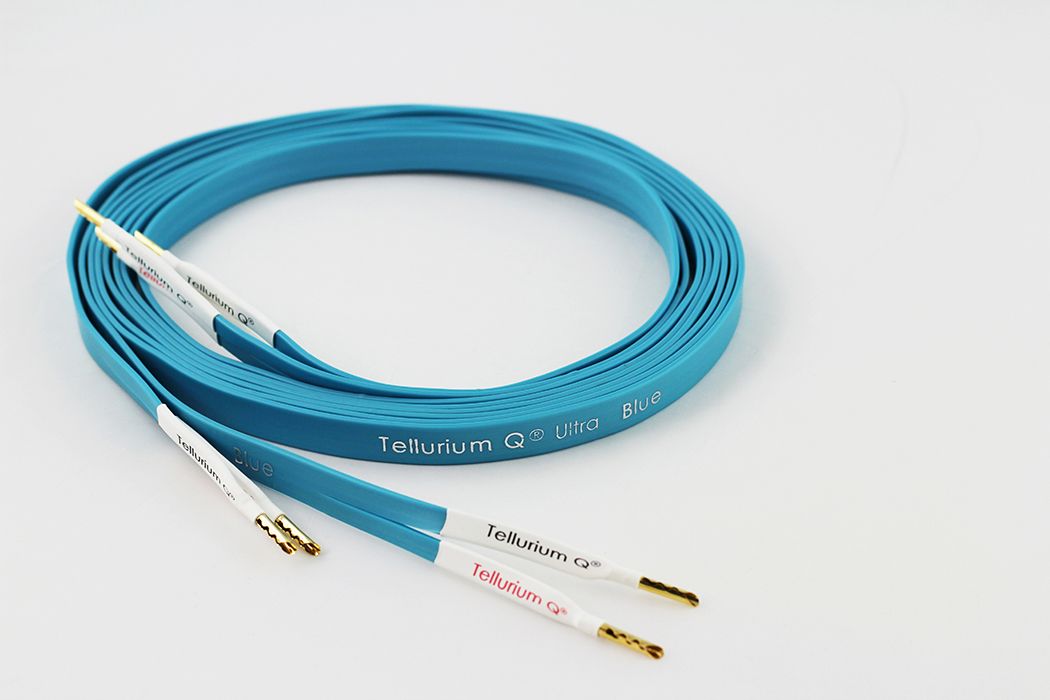
Tellurium Q UBU-SC (1 m) is a speaker cable for home cinema systems, custom-installed audio systems and Hi-Fi systems. The one-metre version is intended for a short connection between an amplifier and a passive speaker. Within the Tellurium Q range, the Ultra Blue series sits between the Blue and Black lines. Its sound is described as full, rich and clear.
Tellurium Q UBU-SC (1 m) is a 1-metre speaker cable designed for home cinema systems, custom-installed audio systems and Hi-Fi systems. Within the Tellurium Q range, this model sits between Tellurium Q Blue and Tellurium Q Black. Its sound is described as full, rich and clear.
What this cable is designed for
This cable carries an amplified audio signal from an amplifier to a passive speaker. It can be used in a stereo system or for an individual channel in a home cinema system. The 1 m length is best suited to equipment positioned only a short distance apart.
Position in the Tellurium Q cable range
The Ultra Blue series is presented as an intermediate option between the Blue and Black ranges. This makes the choice easier for buyers who are already comparing these three Tellurium Q series. Its position indicates where the model sits within the product range, but it does not replace listening to the cable as part of the complete system.
The cable’s sound is described as full, rich and clear. This description can be useful when matching the cable with a familiar audio system. The final sound is also influenced by the amplifier, speakers, speaker placement and room acoustics.
Use in a stereo system
For a stereo system, the cable lengths for both channels are normally selected according to the positions of the speakers. Using a consistent routing arrangement makes installation tidier and can simplify later changes to the system. The one-metre version is useful when the amplifier and speakers are placed close together.
The polarity of the left and right channels must be consistent. The amplifier’s positive terminal should be connected to the corresponding positive terminal on the speaker, with the negative terminals connected in the same way. Reversing the polarity of one channel may weaken the central stereo image and reduce the perceived bass response.
Use in a home cinema system
In a home cinema system, every passive speaker requires its own cable route from the AV amplifier. This 1 m cable can be used for any channel where that length is sufficient. A suitably longer version should be selected whenever the planned route exceeds one metre.
For a custom installation, it is best to plan the cable route before placing the speakers in their final positions. The cable should not be stretched across a walkway or bent sharply where it meets the equipment terminals.
Connection and preparation
The correct connection method depends on the terminals fitted to the amplifier and speakers, as well as on how the ends of the particular cable have been prepared. Switch off the entire system before making any connections. This reduces the likelihood of accidental conductor contact or a short circuit at the amplifier outputs.
After connecting the cable, check carefully that no conductors are touching between the positive and negative terminals. Each connection should be secure, but it does not need to be overtightened. Leaving a small amount of slack in the cable reduces mechanical strain on the terminals.
Choosing the length and planning the installation
A one-metre cable is suitable only when the entire intended route fits within that length. When measuring, include the rise to the terminals and any bends required behind furniture. It is also sensible to leave enough slack to pull out or turn the equipment when access is needed.
Route the cable where it will not be compressed by furniture or repeatedly stepped on. If it must cross a power cable, arranging the crossing at as close to a right angle as practical is a useful approach. Long parallel runs beside power cables are best avoided.
System compatibility
This model is intended to connect the speaker outputs of an amplifier to the inputs of passive speakers. It is not a substitute for a line-level, digital or subwoofer signal cable. Active speakers require a cable appropriate for their own input connections.
When several cables are used in one system, clearly label the channels at both ends. This is particularly helpful in a multichannel installation. Accurate labels make it easier to avoid mixing up channels when replacing an amplifier or rearranging the equipment.
Technical specifications
| Manufacturer | Tellurium Q |
|---|---|
| Model | UBU-SC |
| Series | Ultra Blue |
| Product type | Speaker cable |
| Length option | 1 m |
| Intended use | Home cinema systems, custom-installed audio systems and Hi-Fi systems |
| Position in the range | Between the Tellurium Q Blue and Tellurium Q Black series |
| Described sound | Full, rich and clear |
FAQ
Is the one-metre length sufficient for my system?
Measure the complete cable route for each channel separately. The route must not exceed 1 m, including bends and the slack left near the connections.
Is this cable suitable for a stereo amplifier?
Yes. It is designed to connect an amplifier’s speaker output to a passive speaker. A separate cable route is required for each stereo channel.
Can it be used in a home cinema system?
Yes. The cable is also designed for home cinema systems. Choose the one-metre version for channels whose complete cable route fits within this length.
Is this a subwoofer signal cable?
No. It is a speaker cable that carries an amplified signal to a passive speaker. A different type of cable is required for a line-level subwoofer input.
How do I maintain the correct polarity?
Keep the positive and negative conductor orientation consistent at both ends of the cable. Check both channels of a stereo system especially carefully.
Can the cable be routed beside power cables?
It is best to avoid long parallel runs. Where the cables must cross, arrange them at as close to a right angle as practical.
Related products and categories
Related products