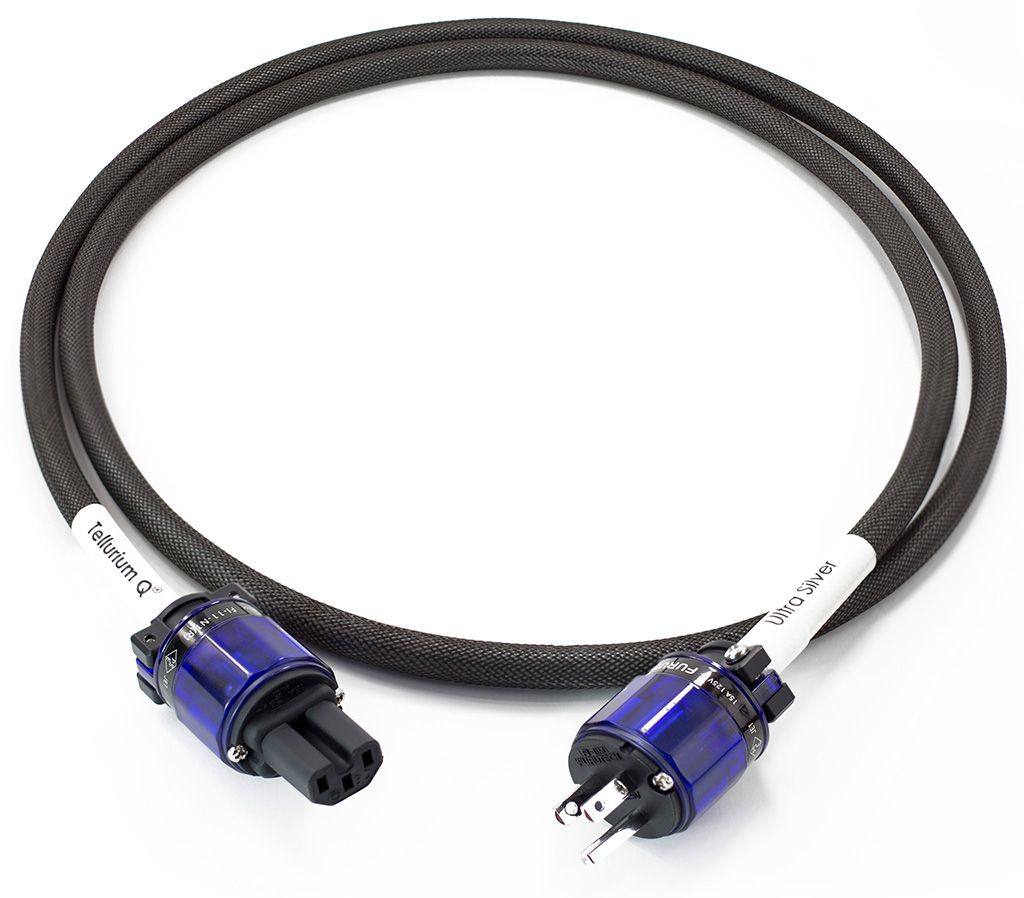
Tellurium Q US-PWR Power Cable
1 628,00 €
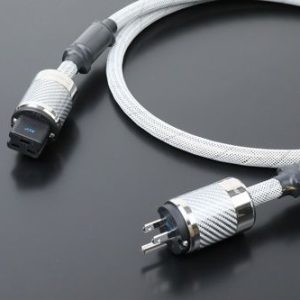
The Tellurium Q US-PWR is a power cable designed for audio equipment. It uses a new cable architecture and improved double-layer screening. The seller describes the sound as cleaner, more focused and more agile, while also highlighting more precise bass definition, clearer high frequencies and a stronger sense of musical energy.
The Tellurium Q US-PWR cable is a power cable designed for audio equipment. It connects a component to a compatible mains power point. It is not an interconnect or speaker cable, so it does not alter the routing of the audio signal.
The seller describes this model as giving the system a cleaner, more precise and more agile sonic character. The description also highlights a stronger sense of musical energy and space. These are subjective listening impressions, and the result will depend on the complete system in which the cable is used.
Construction and screening
The cable uses a new internal architecture and improved double-layer screening. The screening is part of the cable’s construction. It is especially relevant in a densely connected system, where power and signal cables are often routed close to one another.
Double-layer screening does not remove the need for sensible cable management. The power cable should not be coiled together with excess lengths of signal cable. If cables need to cross, arranging them neatly helps to avoid unnecessary loops behind the equipment.
The new architecture and screening describe how this particular model is constructed. They do not confirm the cable length or its rated electrical load.
Sound character
Compared with the Tellurium Q Black power cable, the seller describes the sound as cleaner, more focused and more agile. The difference is associated most strongly with more precise bass definition and clearer high-frequency reproduction.
Greater bass precision does not simply mean a larger quantity of bass. In practice, it should be assessed by listening to the clarity of each note’s initial attack, its duration and its separation from surrounding notes. Changes in the treble are best evaluated through detail, tonal character and comfort during longer listening sessions.
According to the seller’s description, connected equipment may sound as though the music has more dynamic space and energy. This change should be judged through the freer presentation of dynamic accents rather than through loudness alone. The final result will depend on the powered component and the rest of the system.
Choosing and using the cable in a system
Before choosing the cable, check that the connectors at both ends match the power source and the audio component exactly. The electrical requirements of the equipment must also be compatible. The US-PWR designation alone does not identify the plug type, so the actual connector configuration at both ends must be verified before purchase.
In a stereo system, the cable may be used with a compatible amplifier, player or another powered component. The same principle applies in a home cinema system. The cable supplies power to one compatible device and does not replace HDMI, analogue interconnect or speaker connections.
When connecting through a mains conditioner or power distributor, the source end of the cable must match the socket on that unit. A suitable plug configuration is required when connecting the cable directly to a wall outlet.
Connection and comparison
Switch off the audio component before replacing its power cable. Insert the connectors fully without placing them under tension or forcing them into a sharp bend near the equipment casing. Leave enough room behind the system for the cable to follow a natural curve.
To compare changes in sound as accurately as possible, keep the speaker positions, volume and all other system settings unchanged. Use the same familiar recordings for both listening comparisons. It can be useful to concentrate on bass contours, high-frequency texture and dynamic accents.
If the system uses several power cables, change only one at a time. This makes it easier to understand the significance of each individual change. Replacing several components simultaneously prevents the audible result from being attributed reliably to a single cable.
Technical specifications
| Manufacturer | Tellurium Q |
|---|---|
| Model | US-PWR |
| Product type | Power cable |
| Construction | New cable architecture |
| Screening | Improved double-layer screening |
| Sound character | The seller describes the sound as cleaner, more focused and more agile |
| Sonic areas | The seller highlights more precise bass definition and high-frequency reproduction |
FAQ
What is this cable designed for?
It is designed to provide the power connection for a compatible audio component. The cable does not replace an interconnect, speaker cable or digital cable.
Is it suitable for both stereo and home cinema systems?
Yes, provided that the power connector and electrical requirements of the specific component are compatible. The type of audio system is not the primary selection criterion.
Does US-PWR mean that it has a US-style plug?
The plug type cannot be determined from the US-PWR designation alone. Check the actual connector configuration at both ends before buying.
What does double-layer screening mean?
It is a cable-construction feature mentioned by the seller. The precise structure and effect of this screening are not specified.
Can the cable be connected through a mains conditioner?
Yes, when the cable connector matches the output of the conditioner and the other end fits the powered component. The relevant electrical requirements must also be compatible.
How should I assess an audible difference?
Listen to the same recordings at the same volume. Assess bass contours, high-frequency texture, dynamic accents and the overall focus of the music.
How should the cable be arranged behind the equipment?
Leave enough space for a relaxed curve and do not make the connector support the cable’s weight. Do not coil excess cable length together with signal cables.