
Steg K1.5000 Amplifier
910,00 €
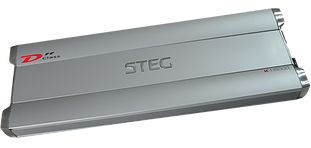
The Steg K1.5000 is a Class D mono car audio amplifier for one system channel. Its RMS power is specified for four loads, from 4 to 0.5 Ω, at 11-14.4 V, so you can select the relevant rating using the final impedance of the connected speakers. The 0.2-5 V RMS input-sensitivity range helps you assess the audio source’s signal level, while the 670 × 56 × 232 mm case dimensions matter when planning installation.
The Steg K1.5000 amplifier is a Class D mono car audio amplifier designed for one audio channel. Its specified RMS output depends on the load connected to it, so the relevant power figure is the one that matches the final speaker load. The listed ratings range from 750 W at 4 Ω to 5,000 W at 0.5 Ω. All four ratings are specified at a supply voltage of 11-14.4 V.
Choosing by load
This model has power ratings for four different load impedances. Start by determining the final impedance of the speaker or combination of speakers you intend to connect. Then use the matching row in the specifications table. A power rating given for one impedance should not be applied to a different load. This matters when comparing amplifiers as well as when choosing a speaker: the largest figure in a table is relevant only under its stated conditions.
The impedance of a complete speaker connection can differ from the impedance marked on an individual speaker. Series and parallel wiring produce different combined loads, and the connection of multiple voice coils also affects the result. It is useful to work out the intended wiring arrangement before choosing the speakers. That gives you a final load to compare with the amplifier’s ratings, instead of relying on a label for just one part of the system.
The 0.5 Ω row is especially relevant when planning a low-impedance system, but a speaker’s nominal impedance alone does not establish the final connected load. Include its voice-coil wiring in the calculation. If you plan to use high power, also consider the load the speaker is rated to handle and how the vehicle’s power supply system will be prepared. These are separate choices that belong alongside the amplifier’s stated output rating.
Audio source and system matching
The specified input sensitivity is 0.2-5 V RMS. This range helps you assess the output signal level of the audio source you plan to use. Input sensitivity describes the signal presented to the amplifier; it is not an output power rating. A higher input signal voltage does not, by itself, change the supply-voltage and load conditions attached to the power figures in the table.
When planning the system, consider the source signal and the speaker load separately. The source’s output level relates to the signal fed into the amplifier. The final connected impedance determines which output-power row applies. Checking both in this order makes it easier to choose components for their roles and avoids treating an input specification as though it described the power available to a speaker.
Components and installation space
The amplifier uses low-tolerance resistors and capacitors. It also uses connection components with low thermal drift and polyester capacitors intended for audio applications. These are the component details specified for this model; the power and installation choices should still be made from the relevant ratings and physical measurements.
The case measures 670 × 56 × 232 mm and weighs 8 kg. Check that the proposed mounting space can accommodate all three dimensions. The published measurements do not identify which number is width, height, or depth, so check the case itself before settling on its position or orientation in the vehicle. Allow additional room for attaching cables and securing the case. The case measurements alone may not describe all the space needed for installation.
Plan the power supply arrangement with the chosen load in mind, particularly if you intend to use the highest listed RMS rating. The voltage shown with each power figure states the conditions for that rating. It should not be taken as a promise that the same output will be obtained in every vehicle. Matching the final load, considering the speaker’s permitted load, and checking the available mounting space are all part of selecting this amplifier for a particular system.
Technical specifications
| Type | Class D mono car audio amplifier |
|---|---|
| RMS power at 4 Ω | 750 W × 1 at 11-14.4 V |
| RMS power at 2 Ω | 1,800 W × 1 at 11-14.4 V |
| RMS power at 1 Ω | 2,800 W × 1 at 11-14.4 V |
| RMS power at 0.5 Ω | 5,000 W × 1 at 11-14.4 V |
| Input sensitivity | 0.2-5 V RMS |
| Dimensions | 670 × 56 × 232 mm; dimension order unspecified |
| Weight | 8 kg |
| Components | Low-tolerance resistors and capacitors, connection components with low thermal drift, and polyester capacitors intended for audio applications |
FAQ
What is this amplifier designed for?
It is designed for one channel of a car audio system. The model is specified as mono. If your system needs separate left and right channels, consider how each channel will be amplified when planning the complete setup.
Which power rating should I use when choosing a speaker?
Use the rating that corresponds to the final connected impedance. For example, do not assess a 2 Ω system using the 0.5 Ω power figure. Also check the load the speaker itself is rated to handle.
Does a multi-voice-coil speaker always have the same impedance as one coil?
No. Once the coils are connected, the combined load depends on how they are wired. Calculate the impedance of the entire intended connection before selecting the applicable amplifier power rating.
What does 0.2-5 V RMS input sensitivity mean?
Before connecting the amplifier, compare the audio source’s output signal level with the specified input-sensitivity range. This figure concerns the signal entering the amplifier, rather than its power output to the speaker.
Do the listed power ratings apply at any supply voltage?
No. All four RMS power ratings are specified at 11-14.4 V. When comparing amplifiers, consider that voltage condition together with the stated load impedance.
How much space should I leave for installation?
Allow enough room for all three stated case dimensions, plus space for cable connections and mounting. The order of the dimensions is unspecified, so measure the case before making a final choice of mounting location.