Steinway the Beautiful – Classical Music Recording
45,00 €
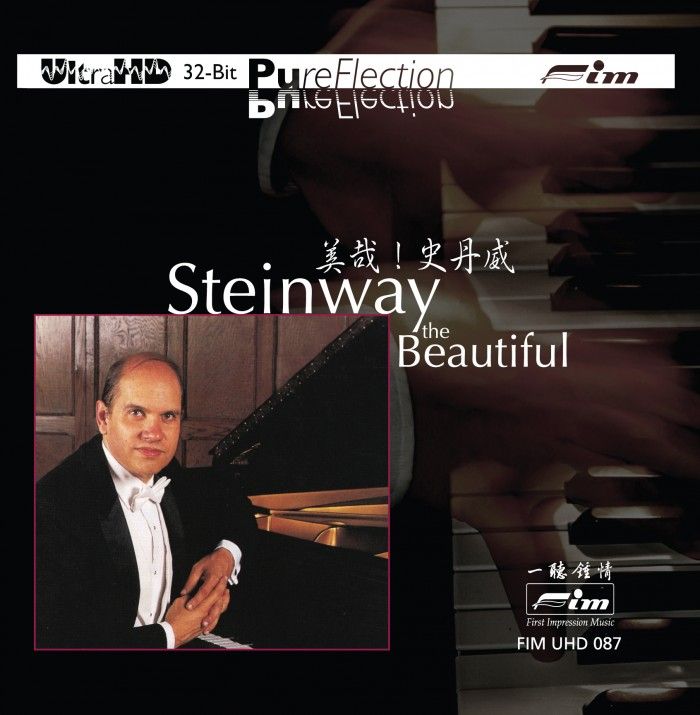
Steinway the Beautiful brings a range of classical pieces together in one programme. Its 17 tracks include a nocturne, three waltzes, two impromptus and selections from operas and larger concert works. The numbered list makes it easy to find “Moonlight”, the “Minute Waltz” or another piece you are seeking.
Steinway the Beautiful is a classical music collection for listeners who want a varied programme in one recording. Its 17 selections include a nocturne, waltzes, impromptus and individual pieces drawn from larger stage and concert works.
What is on the programme?
The collection opens with a Nocturne in E-flat major and closes with “Hungarian Melody”. Three waltzes appear at tracks 8, 10 and 15. Alongside them are a polonaise, a serenade and two impromptus, so the programme moves between several kinds of piece rather than concentrating on a single form.
It also includes selections from the Yellow River Concerto, Suite bergamasque, Children’s Corner and two operas. The names of those larger works tell you where a selection comes from. They do not, on their own, mean that the complete work is included.
If you are choosing this collection for a particular concerto, suite, cycle or opera, pay attention to the word “from” in the track list. The listed selections are “Ode to the Yellow River”, “Moonlight”, “Golliwogg’s Cakewalk”, a polonaise and a serenade. Compare those individual tracks with the music you want to hear. That is especially useful if you are looking for a complete larger work: the programme identifies these selections, but does not list the whole concerto, suite, cycle or either opera as a track.
How should you read the titles?
Some titles appear in English alongside names in their original language. “Dreaming” is also given as “Träumerei”; “On Wings of Song” appears with “Auf Flügeln des Gesanges”; and “Spring Song” appears with “Frühlingslied”. These paired titles can help when you compare the programme with another catalogue that uses a different language for the same piece.
“Moonlight” is identified as a selection from Suite bergamasque. The “Minute Waltz” is identified as the Waltz in D-flat major, Op. 64 No. 1. These details give you more than a familiar title to go on when checking whether a particular piece is present.
The nocturne, waltzes and impromptus also carry keys and opus numbers. Both impromptus include the D. 899 designation. If you have a track list from another edition, compare the full entry, including its number, key and opus number. A general name such as “waltz” or “impromptu” is not enough to distinguish the pieces in this programme. These markings identify the listed works; they do not provide information about the performers or the recording’s release.
Who is this collection for?
This programme may suit you if you want a range of classical pieces, including selected movements or numbers from larger works, in one collection. If waltzes are your main interest, there are three here, while the rest of the programme consists of other music. If hearing an entire concerto, suite or opera matters most, check the numbered list below before choosing. It lets you see exactly which selections are named and whether the piece you want has its own track.
Playback and compatibility
The track list does not specify the recording format. Before buying, check what physical medium or form of access is offered, particularly if you plan to play the recording through a CD player, computer, stereo or home cinema system. The right connection depends on your playback device and audio system; you would use that device to select tracks and control volume.
If you listen in several rooms, first check whether your system supports the format being offered. The track list also gives no details about the performers, publisher or release date. Those points cannot be determined from the programme alone.
Track list
- Nocturne in E-flat major, Op. 9 No. 2.
- “Ode to the Yellow River” from the Yellow River Concerto.
- “Dreaming” (“Träumerei”).
- “On Wings of Song” (“Auf Flügeln des Gesanges”).
- “Golliwogg’s Cakewalk” from Children’s Corner.
- “Love Dream” No. 3.
- Polonaise from Eugene Onegin.
- Waltz in G-flat major, Op. 70 No. 1.
- “Moonlight” from Suite bergamasque.
- Waltz in C-sharp minor, Op. 64 No. 2.
- Impromptu in E-flat major, Op. 90 No. 2, D. 899.
- Serenade from Don Giovanni.
- “Where an Old Music Box Is Heard” (“Ou l’on entend une vieille boite a musique”).
- Impromptu in G-flat major, Op. 90 No. 3, D. 899.
- Waltz in D-flat major, Op. 64 No. 1 (“Minute Waltz”).
- “Spring Song” (“Frühlingslied”).
- “Hungarian Melody”.
Technical specifications
| Recording type | Classical music collection |
|---|---|
| Number of tracks | 17 |
FAQ
Does the collection include the entire Yellow River Concerto?
The track list names “Ode to the Yellow River” as a selection from the concerto. It does not list the complete concerto as a separate track.
Does “Moonlight” mean the whole of Suite bergamasque is included?
No. “Moonlight” is listed as a piece from Suite bergamasque. The other parts of the suite are not listed as separate tracks in this collection.
Is there music from operas on the programme?
Yes. Track 7 is a polonaise from Eugene Onegin, and track 12 is a serenade from Don Giovanni.
Do all three waltzes have the same opus number?
No. One is marked Op. 70 No. 1; the other two are Op. 64 No. 2 and Op. 64 No. 1. Those numbers help you compare the programme with a list of waltzes you are seeking.
Do the two impromptus play one after the other?
No. They are tracks 11 and 14, with two other selections between them.