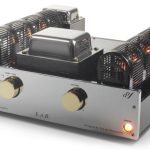
EAR Yoshino 912 Tube Preamplifier
11 000,00 €
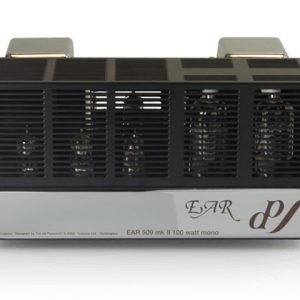
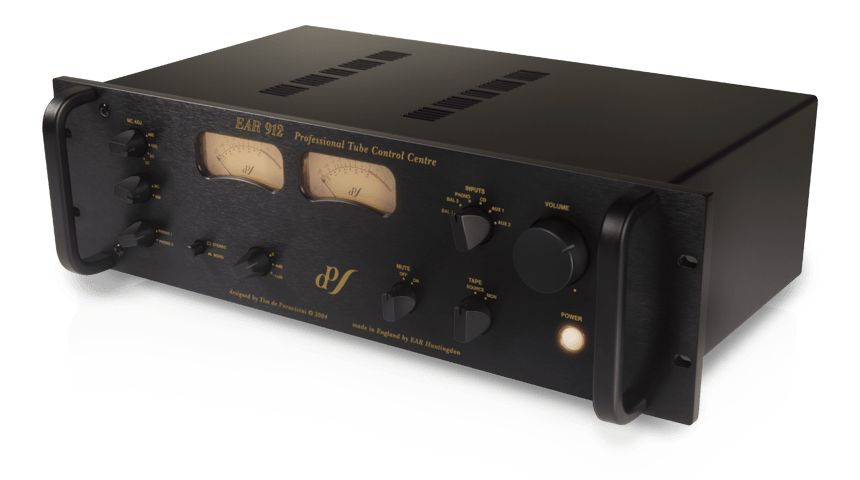
EAR Yoshino 912 tube preamplifier is designed for an analogue stereo system and a turntable fitted with an MM or MC cartridge. Its integrated phono stage offers four MC loading values and a 47 kΩ MM input. Two analogue VU meters help you monitor the signal and balance the levels of different sources. RCA and XLR inputs and outputs let you choose the appropriate analogue connection for your system.
EAR Yoshino 912 tube preamplifier is designed to connect analogue sources, including a turntable, within a stereo system. It uses five PCC88 (7DJ8) valves and features an integrated MM/MC phono stage. Two analogue VU meters help you monitor the signal and balance the levels of different sources.
The design was influenced by Tim de Paravicini’s work in professional studios. As a result, the 912 combines the connections required for a home system with more detailed control over signal levels.
Purpose and position in the system
This is not an integrated amplifier, so it cannot drive passive loudspeakers directly. Its outputs must be connected to a power amplifier or to active loudspeakers with suitable line-level inputs.
Four RCA line inputs accept analogue sources such as a player or converter with a line-level output. Two separate RCA phono inputs are provided for turntables. They support both MM and MC cartridges.
Construction and everyday use
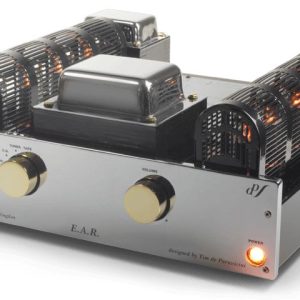
The front panel and control knobs are made from brushed anodised aluminium. Solid aluminium handles provide a secure place to grip the unit when moving its 13 kg chassis.
At 490 mm wide, the EAR Yoshino 912 requires a broader shelf than many standard audio components. Its 270 mm cabinet length also means that additional space should be allowed behind the unit for the rear connections and the natural bend of the cables.
As this is a valve component, leave unobstructed space above it for ventilation. Do not install it inside an enclosed compartment or place it directly beneath a power amplifier that produces heat.
Analogue inputs and connection choices
Four RCA line inputs allow several analogue sources to remain connected at the same time. Two balanced XLR inputs are available for source components equipped with corresponding balanced outputs.
An XLR connection is worth choosing when both components in the signal path provide balanced connections. It is particularly practical when a longer cable is required. RCA connections are suitable for conventional unbalanced sources.
The MM input impedance is 47 kΩ. In MC mode, the available load settings are 40, 12, 6 or 3 Ω. This selection allows the phono stage to be matched to the electrical loading requirements of a particular MC cartridge.
Outputs and recorder connection
Two RCA line outputs deliver a signal of up to 5 V into a 600 Ω load. Two balanced XLR outputs deliver a 5 V signal. Choose the connection type that matches the input provided by your power amplifier.
One RCA recorder-monitor connection is provided for the tape-monitor function. It allows a compatible recording device to be included in the analogue signal path so that its signal can be monitored.
Setting the signal level
Two analogue VU meters display the level of the signal passing through the preamplifier. They make substantial level differences between sources easier to identify. The gain can then be reduced before switching sources or continuing to listen.
The phono-stage level can be reduced by 6 or 12 dB before the signal reaches the audio transformers. These settings are useful when matching the level of a turntable to that of the other analogue sources in the system.
During the initial setup, begin with a low volume setting and play a recording you know well. Watch both meters and adjust the gain gradually. The final listening level should be selected according to the sensitivity of the complete system.
Choosing the correct mains version
Separate 240, 110 and 100 V mains versions are manufactured. This does not indicate a universal power supply. The voltage specified for the individual unit must match the mains supply where it will be used.
Technical specifications
| Type | Valve preamplifier with integrated MM/MC phono stage |
|---|---|
| Valves | 5 × PCC88 (7DJ8) |
| Level meters | 2 analogue VU meters |
| RCA line inputs | 4 |
| RCA phono inputs | 2, for MM/MC cartridges |
| Balanced XLR inputs | 2 |
| MC input impedance | 40, 12, 6 or 3 Ω |
| MM input impedance | 47 kΩ |
| Phono-level reduction | 6 or 12 dB before the audio transformers |
| Line-stage signal-to-noise ratio | 90 dB, referenced to 1 V at the output |
| Phono-stage signal-to-noise ratio | 68 dB, unweighted, referenced to 2.4 mV |
| RIAA accuracy | 0.2 dB from 30 Hz to 20 kHz |
| RCA line outputs | 2, 5 V into a 600 Ω load |
| Balanced XLR outputs | 2, 5 V |
| Recorder-monitor connection | 1 × RCA |
| Front panel and knobs | Brushed anodised aluminium |
| Handles | Solid aluminium |
| Dimensions | 490 × 135 × 270 mm (width × height × length) |
| Weight | 13 kg |
| Power consumption | 30 W |
| Mains versions | 240, 110 or 100 V, depending on the model version |
FAQ
Can this preamplifier be connected directly to passive loudspeakers?
No. The signal from the RCA or XLR output must first be sent to a power amplifier. The power amplifier then drives the passive loudspeakers.
Which input should I use for a turntable?
Connect the turntable to one of the two RCA phono inputs. Select MM or MC mode according to the type of cartridge fitted to the turntable.
How should I choose the MC input impedance?
Select the 40, 12, 6 or 3 Ω setting according to the intended load for your MC cartridge. Each setting changes the electrical load presented to the cartridge.
When should I use the phono-level reduction?
Select the 6 or 12 dB reduction when the turntable signal is considerably stronger than the signals from the other sources. The adjustment is applied before the audio transformers.
Should I use RCA or XLR connections?
Choose XLR when both connected components provide balanced connections; this option can be more practical with longer cables. Use RCA with unbalanced connections.
How can I include it in a home cinema system?
It can be used as a conventional analogue preamplifier. A fixed-level home cinema bypass is not specified, so adjust the volume carefully.
Which mains version should I choose?
Choose the 240, 110 or 100 V version that matches your local mains supply. These are separate model versions rather than a specified universal-voltage operating mode.