Oehlbach Bi-Tech 4 M Speaker Cable
35,00 €
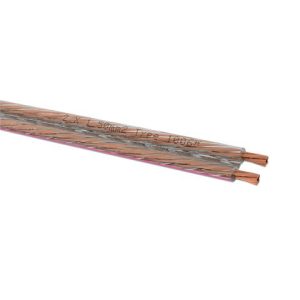
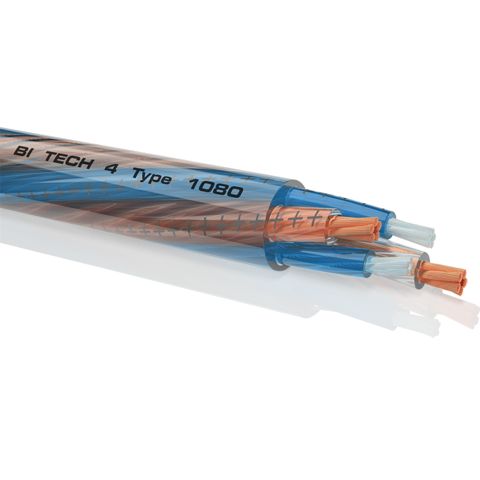
Oehlbach Bi-Tech 4 M is a bi-wiring speaker cable sold by the metre for stereo systems and compatible home cinema channels. A 2 × 4 mm² oxygen-free copper pair serves the bass section, while 2 × 2.5 mm² silver-plated oxygen-free copper conductors carry the midrange and treble signal. The cable is supplied without factory-fitted connectors, allowing its ends to be prepared for the terminals in your system.
Oehlbach Bi-Tech 4 M is a bi-wiring speaker cable sold by the metre for stereo systems. It is designed for speakers with separate terminals for the bass section and the midrange/treble section. The cable is supplied without factory-fitted connectors, allowing each end to be prepared for the terminals used in your system.
Purpose and compatible systems
This cable is intended for systems in which each speaker has two separate pairs of terminals. One conductor pair serves the bass section, while the other carries the signal to the midrange and treble section. Any linking plates between the two terminal pairs must be removed before connection if the speaker uses them. Both cable paths are connected to the corresponding amplifier channel while maintaining consistent polarity.
In a stereo system, the cable runs to the left and right speakers are planned separately, so their lengths may differ according to the positions of the amplifier and speakers. In a home cinema system, a separate run must be measured for every channel that will use bi-wiring. As this version is sold by the metre, the required length can be selected for each individual run.
Separate conductor pairs
The bass section is served by 2 × 4 mm² oxygen-free copper conductors. Their larger cross-section is intended for carrying the more powerful bass portion of the signal. This is relevant in systems where the low-frequency drivers receive a greater share of the energy.
The midrange and treble section uses 2 × 2.5 mm² silver-plated oxygen-free copper conductors. This pair is intended to preserve detail and high-frequency definition. The assigned purpose of each conductor pair should remain unchanged throughout the entire run from the amplifier to the speaker.
The conductors consist of extremely fine individual strands. Together with the flexible insulation, this construction makes the cable easier to route behind equipment and furniture. It is also convenient when preparing the cable ends for the selected type of connection.
Connection without factory-fitted plugs
This version does not have factory-fitted banana plugs or other connectors. The ends can be connected directly or terminated with connectors suitable for the terminals already in use. When choosing terminations, take the different cross-sections of the two conductor pairs into account.
Consistent positive and negative polarity must be maintained at both ends. The bass conductor pair connects to the speaker’s bass terminals. The silver-plated pair connects to the terminals for the midrange and treble section.
It is sensible to label the purpose of each pair before preparing the ends. This reduces the likelihood of swapping the frequency sections or reversing polarity during final installation. Clear labelling is especially useful when the cables will be concealed in cable ducts or routed behind furniture.
Length planning and installation
The cable is sold in 1.00 m units. Measure each speaker run from the amplifier to the final terminal position. Allowing a small amount of extra length makes it easier to pull the equipment forward and to prepare the cable ends again if necessary.
The round geometry and 11.5 mm outer diameter should be considered when planning cable ducts and openings in furniture. The robust plastic sheath is suited to routine cable installation. Its flexible construction helps when routing the cable through confined spaces, but the cable should not be bent sharply.
The sheath is transparent, and the cable is made in Europe. It is intended for amplifiers with a power rating of no more than 350 W.
Sound reproduction approach
The separate conductor pairs with different cross-sections are designed with natural, detailed reproduction in mind. The thicker oxygen-free copper conductors are intended for firm bass transmission, while the silver-plated copper pair is oriented towards clear midrange and treble reproduction.
This construction is most relevant when the speakers genuinely provide separate terminals for their frequency sections. The cable does not replace the speaker’s crossover filters or the amplifier’s settings. Its role is to provide separate conductor paths for the speaker’s two terminal groups.
Technical specifications
| Model | Oehlbach Bi-Tech 4 M |
|---|---|
| Product type | Unterminated stereo speaker cable |
| Connection principle | Bi-wiring speaker connection |
| Sales unit | 1.00 m |
| Bass conductors | 2 × 4 mm² oxygen-free copper |
| Midrange and treble conductors | 2 × 2.5 mm² silver-plated oxygen-free copper |
| Conductor materials | Silver-plated oxygen-free copper (SPC) and oxygen-free copper (OFC) |
| Conductor construction | Extremely fine individual strands |
| Amplifier power | Up to 350 W |
| Sheath material | Robust plastic |
| Flexibility | Flexible cable and insulation |
| Cable geometry | Round |
| Outer diameter | 11.5 mm |
| Colour | Transparent |
| Place of manufacture | Europe |
| Factory-fitted connectors | None |
FAQ
Which speakers is this cable intended for?
It is intended for speakers with separate terminal pairs for the bass section and the midrange/treble section. A speaker with only one shared pair of terminals does not provide the intended bi-wiring option.
Are banana plugs fitted to the cable?
No. This cable is sold by the metre without factory-fitted connectors. Its ends can be prepared for direct connection or terminated with connectors suitable for the terminals in your system.
Which conductor pair is used for bass?
The thicker 2 × 4 mm² oxygen-free copper pair is used for bass. The silver-plated 2 × 2.5 mm² pair connects to the speaker’s other terminal group.
How do I calculate the required quantity for a stereo system?
Measure the run to the left speaker and the run to the right speaker separately. Add enough spare length for installation and for moving the equipment when required. The combined length is ordered in one-metre units.
Is the cable suitable for a home cinema system?
It can be used for system channels whose speakers have separate connections for their frequency sections. Each such channel requires its own cable run of the appropriate length.
What does the stated 350 W limit mean?
The cable is intended for amplifiers rated at up to 350 W. This figure is not a power rating for the speaker. Compatibility between a speaker and an amplifier is determined by the specifications of those components themselves.
What matters when preparing the cable ends?
Maintain consistent polarity and do not interchange the assigned roles of the conductor pairs. The selected connectors must accept the corresponding conductor cross-section. Clearly labelling both ends of the cable before final installation is also useful.