Audiovector R C Signature Center Speaker
2 300,00 €
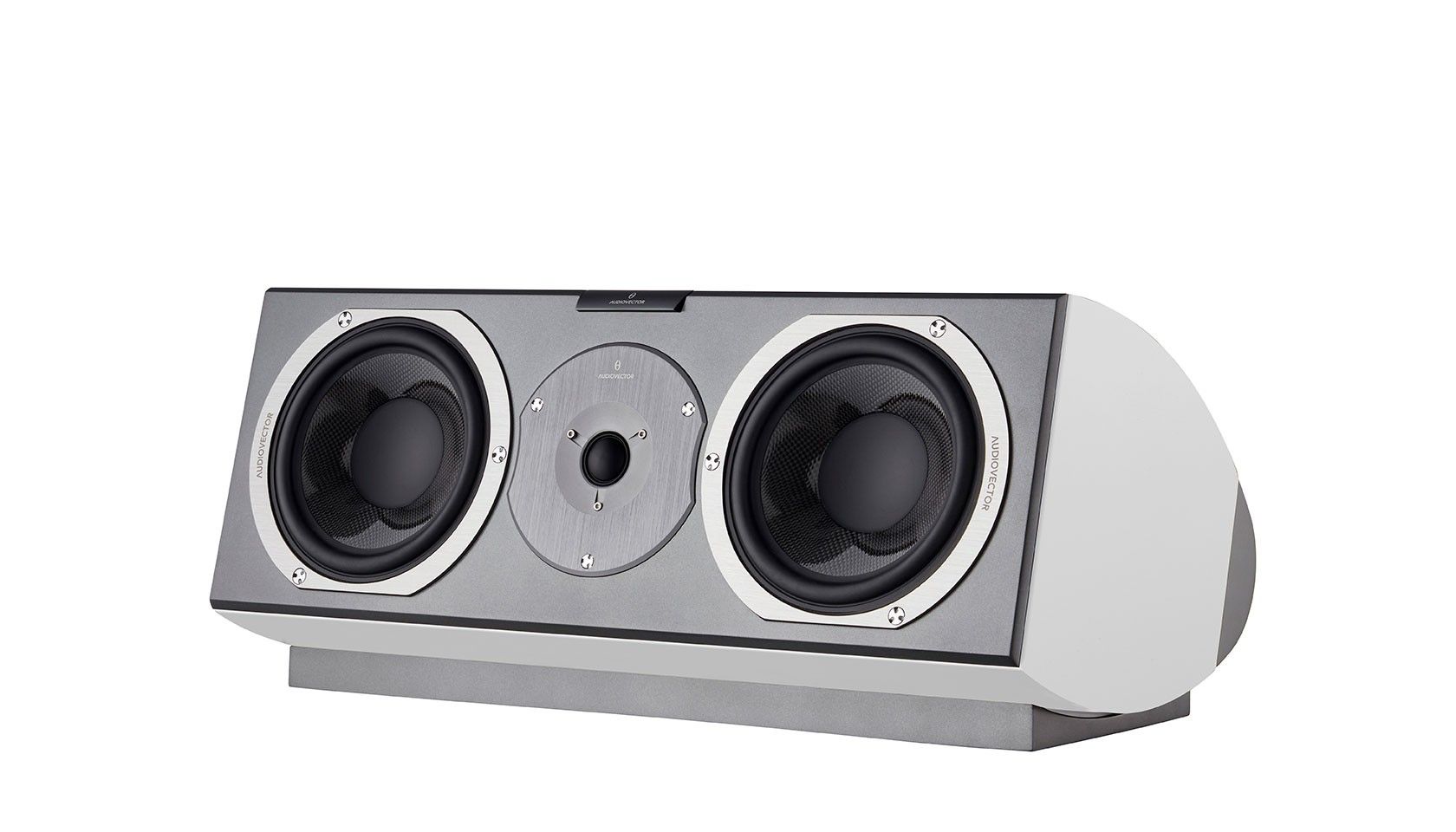
Audiovector R C Signature is a two-way center speaker for home theater dialogue and the main on-screen audio channel. Its bass-reflex system and 6.5-inch Carbon driver design handle the bass and midrange section. Non-parallel cabinet surfaces and internal shock absorbers are intended to control resonances and mechanical vibration. Nominal impedance is 8 ohms, and a black cloth protective grille is included.
Audiovector R C Signature is a two-way center speaker designed to reproduce dialogue and the main on-screen audio channel in a home theater system. It uses a bass-reflex system, a 6.5-inch Carbon bass/midrange driver design, and a cabinet with non-parallel surfaces.
This Signature variant is designed according to the principles of the Audiovector R series and uses components from that range. It is therefore intended to match an R-series home theater system. Technologies from other versions in the series, including Arreté models, should not be attributed to this speaker.
Purpose in a home theater system
The center channel reproduces most movie dialogue and many sounds associated with the action on screen. This speaker should be positioned between the main left and right channels, as close as practical to the center of the screen. Correct placement helps voices and other central sounds remain convincingly connected to the picture.
Sensitivity is specified as 91.5 dB; the seller’s data also places an 8 Ω condition next to this figure, but does not explain it. The nominal impedance is also 8 ohms. The center-channel amplifier in the AV receiver must be designed to operate with this nominal load.
This speaker does not replace a separate left and right stereo pair. It complements a multichannel system by reproducing the dedicated center channel. It is not intended to serve as an additional third speaker with a conventional two-channel amplifier that has no center-channel output.
Acoustic design
The two-way design divides the reproduced signal between separate frequency sections. A 6.5-inch Carbon driver design handles the bass and midrange section. This range is important for reproducing the body of voices as well as sounds linked to events taking place on screen.
The bass-reflex system uses a cabinet port to support low-frequency reproduction. During installation, the port must not be blocked by a shelf, cabinet wall, or another piece of equipment. Leaving clear space around the speaker allows it to operate according to its intended acoustic principle.
The cabinet’s non-parallel surfaces are designed to help control internal resonances. The enclosure also contains internal shock absorbers, whose purpose is to reduce the transfer of mechanical vibration between cabinet components.
This Signature version does not include Energy Storage technology. This distinction helps clarify its configuration in relation to other versions within the R series.
Connection and initial setup
Connect the speaker to the center-channel output of an AV receiver or multichannel power amplifier. The connection type is not specified, so the cable terminations should be selected to suit the terminals fitted to the particular speaker and amplifier.
Assign this speaker to the center channel in the AV receiver’s setup menu. Adjust the channel level from the main listening position. Dialogue should be clear and firmly associated with the screen, but the center channel should not overpower the left and right speakers.
If the receiver allows individual speaker distances to be entered, use the actual distance from the speaker to the listening position. It is also worth checking the result of automatic calibration with familiar dialogue. If the center channel is set too loud, voices can become detached from the overall sound field.
Set the crossover in conjunction with the main speakers and subwoofer. No model-specific crossover recommendation is provided. Begin with the AV receiver’s calibration result, then make adjustments according to how evenly the sound transitions between channels.
Placement and dimensions
The cabinet is 52.5 cm wide, so the television cabinet or shelf should be measured before purchase. It is 23.2 cm high and 28.9 cm deep. Additional clearance is required for cable routing and to keep the bass-reflex port unobstructed.
Position the speaker horizontally and as close as possible to the middle of the screen. The front of the cabinet should not be pushed far behind the front edge of the furniture, as this placement helps reduce early reflections from the shelf surface.
When the speaker is installed below the screen, angle it toward the main listening area. If it is mounted above the screen, tilt it downward accordingly. The important point is to maintain a direct sound path toward the listeners.
Finishes and supplied item
Four standard finishes are available: White Silk, Black Stained Ash, Italian Walnut, and African Rosewood. Custom gloss piano-lacquer finishes are also available to order.
A black cloth protective grille is included. It covers the front acoustic section while maintaining a consistent dark appearance across the speaker’s front face.
Technical specifications
| Model | Audiovector R C Signature |
|---|---|
| Type | Home theater center speaker |
| Acoustic principle | Two-way |
| Bass system | Bass reflex |
| Bass/midrange driver | 6.5-inch Carbon |
| Sensitivity | 91.5 dB; the seller’s data also shows an unexplained 8 Ω condition next to this figure |
| Nominal impedance | 8 ohms |
| Dimensions | 23.2 × 52.5 × 28.9 cm (height × width × depth) |
| Cabinet surfaces | Non-parallel |
| Internal shock absorbers | Included |
| Energy Storage technology | Not included |
| Standard finishes | White Silk, Black Stained Ash, Italian Walnut, African Rosewood |
| Custom finish | Custom gloss piano-lacquer finishes available to order |
| Supplied item | Black cloth protective grille |
FAQ
What is this center speaker designed for?
It is designed for the center channel of a home theater system. The speaker reproduces dialogue and other sounds associated with the center of the screen.
Can it be connected to a stereo amplifier?
Not to a conventional two-channel stereo amplifier. The speaker should be connected to the center-channel output of an AV receiver or multichannel amplifier.
What type of AV receiver is suitable for this model?
Its center-channel amplifier must be designed for an 8-ohm nominal load. Amplifier selection should not be based on unspecified or unverified power figures.
Where should the speaker be placed?
Place it as close as possible to the center of the screen and aim it toward the main listening position. Do not obstruct the front of the speaker or the bass-reflex port.
Will the speaker fit inside a television cabinet?
The available space must be at least 52.5 cm wide, 23.2 cm high, and 28.9 cm deep. Allow additional clearance for connections and airflow.
How should I adjust the center-channel volume?
Start with the AV receiver’s calibration. Then listen from the main seating position and check that dialogue is clear without overpowering the other channels.
Is a protective grille included?
Yes. A black cloth protective grille is supplied. No inclusion of other accessories or cables is specified.
Can I order a different finish?
In addition to the four standard choices, custom gloss piano-lacquer finishes are available to order.