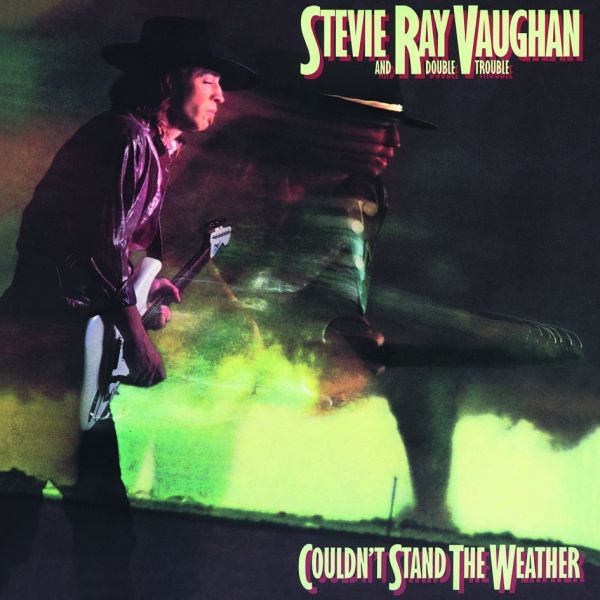

Stevie Ray Vaughan Vinyl – Couldn’t Stand the Weather (Double Trouble)
52,00 €
STEVIE RAY VAUGHAN & DOUBLE TROUBLE – COULDN’T STAND THE WEATHER is an expanded double vinyl record for blues and guitar-music listeners. Its 13 tracks are spread across four sides and include five recordings omitted from the original LP. Ray Staff remastered the release from analogue tapes at Alchemy Mastering.
STEVIE RAY VAUGHAN & DOUBLE TROUBLE – COULDN’T STAND THE WEATHER is an expanded and remastered double vinyl record. This Stevie Ray Vaughan vinyl is intended for collectors and listeners interested in blues, electric guitar music and recordings by Double Trouble. Its 13 tracks are spread across four record sides, with five tracks that did not appear on the original LP.
The album was first released in May 1984. This edition offers both the core album programme and an expanded selection of material. It is therefore a suitable choice for listeners seeking a broader version of the album rather than only the original LP track list.
Remastered edition
This release was remastered from analogue tapes by Ray Staff at Alchemy Mastering. The stated source will be particularly relevant to listeners who prefer vinyl editions derived from analogue tape material.
This is a double LP, with the programme divided between four sides. The arrangement separates the album into shorter listening sections and provides space for the expanded track selection. During playback, each record must be turned over after its first side has finished.
Track programme
Side one opens with the brief track Scuttle Buttin’. It is followed by the title track, Couldn’t Stand the Weather, and The Things (That) I Used to Do.
Side two contains two tracks: Voodoo Chile (Slight Return) and Cold Shot.
Side three features Tin Pan Alley, Honey Bee and Stang’s Swang.
Side four contains five selections: SRV Speaks, Hide Away, Look at Little Sister, Give Me Back My Wig and Come On (Pt. 3). Altogether, the complete programme consists of 13 tracks.
Performers and instruments
Stevie Ray Vaughan performs the album’s vocals and guitar parts. Jimmie Vaughan also plays guitar, making the presence of two guitarists an important part of the credited performing line-up.
Tommy Shannon plays bass guitar, while Chris “Whipper” Layton and Fran Christina are credited on drums. Stan Harrison plays tenor saxophone. These credits provide a clear overview of the instruments represented across the album programme and help listeners identify the musicians involved in the recording.
Its place in the discography
Couldn’t Stand the Weather is the second album by Stevie Ray Vaughan and Double Trouble. It followed their debut album, Texas Flood. The album reached number 31 on the music charts and had received gold status by the end of 1985.
This edition is suited to anyone looking to add an important stage in the group’s discography to a vinyl collection. Its expanded programme offers more material than the original LP sequence while retaining the identity of the album and its established place in the band’s recorded catalogue.
Playback
A turntable is required to play this release. The supplied product information does not state the playback speed, so select the correct setting by checking the marking printed on the centre label of the individual record. The required speed cannot be determined from the double-LP format alone.
Before playback, confirm the label marking for each disc and set the turntable accordingly. This avoids relying on assumptions based only on the number of records or sides included in the edition.
Connecting it to an audio system
A turntable can be connected to an amplifier’s PHONO input. If the amplifier does not have this input, use a suitable phono preamplifier and connect its output to a line-level input. A turntable with an integrated phono preamplifier can be connected directly to a compatible line-level input on the amplifier.
The appropriate connection therefore depends on whether the turntable or amplifier already provides the required phono stage. The record itself does not connect directly to an audio system; it must be played on a turntable that supplies a properly prepared signal to the amplifier or receiver.
Technical specifications
| Artist | Stevie Ray Vaughan & Double Trouble |
|---|---|
| Album | Couldn’t Stand the Weather |
| Product type | Expanded, remastered double vinyl record |
| Format | Double LP, four record sides |
| Number of tracks | 13 |
| Additional material | Five tracks not included on the original LP |
| Original album release | May 1984 |
| Remastering | Ray Staff, Alchemy Mastering |
| Remastering source | Analogue tapes |
| Side one | Scuttle Buttin’, Couldn’t Stand the Weather, The Things (That) I Used to Do |
| Side two | Voodoo Chile (Slight Return), Cold Shot |
| Side three | Tin Pan Alley, Honey Bee, Stang’s Swang |
| Side four | SRV Speaks, Hide Away, Look at Little Sister, Give Me Back My Wig, Come On (Pt. 3) |
| Vocals and guitar | Stevie Ray Vaughan |
| Guitar | Jimmie Vaughan |
| Tenor saxophone | Stan Harrison |
| Bass guitar | Tommy Shannon |
| Drums | Chris “Whipper” Layton, Fran Christina |
FAQ
Who is this edition for?
It is intended for listeners of Stevie Ray Vaughan, Double Trouble and electric blues. It will also appeal to collectors looking for expanded editions of established albums.
How does this version differ from the original LP?
This edition contains 13 tracks arranged across four sides. Five of those tracks were not included on the original LP version.
At what speed should the records be played?
Set the playback speed according to the marking on each record’s centre label. The description “double LP” does not, by itself, identify the required playback speed.
Can the album be played through a stereo amplifier?
Yes. Connect the turntable to the amplifier’s PHONO input. If no PHONO input is available, use a suitable phono preamplifier and a line-level input.
Can this release be played through a home cinema system?
Yes, provided the system can accept a correctly prepared analogue signal. This requires either a PHONO input or a separate phono preamplifier connected to an appropriate line-level input.
Are the vinyl weight and pressing origin specified?
No. The supplied information does not state the vinyl weight, pressing country or pressing plant. These details should not be inferred solely from the double-LP format.
Are the record label and catalogue number provided?
No. The supplied information does not identify the record label or catalogue number. If these details are important for identifying the exact edition, check the records themselves or the cover.