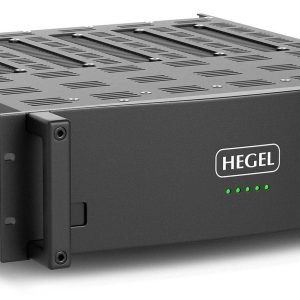

Hegel P30 Preamplifier
6 495,00 €
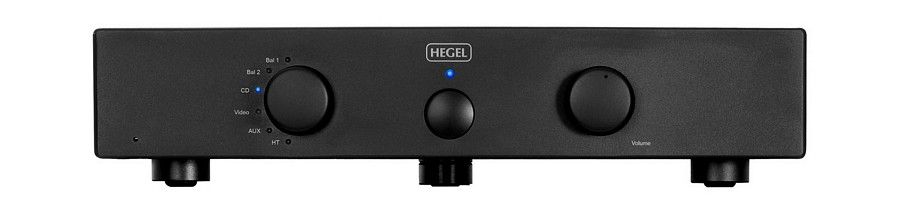
The Hegel P30 is an analogue stereo preamplifier for a system with a separate power amplifier. It provides two pairs of balanced XLR inputs, three RCA inputs and a dedicated Home Theatre connection. Its short SoundEngine signal path uses hand-matched FET transistors. Volume, source selection and mute can be controlled with a compatible Hegel RC2 remote.
The Hegel P30 preamplifier is the control centre of an analogue stereo system. It connects line-level sources to a power amplifier and provides centralised volume control. Two pairs of balanced XLR inputs and three RCA inputs make it easier to connect several analogue sources.
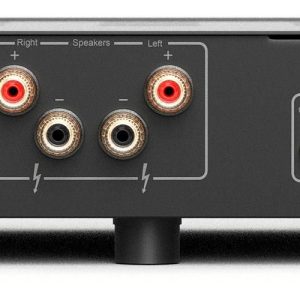
A dedicated Home Theatre input allows the stereo system to be integrated into a home cinema setup. This model is intended for buyers who already own or are choosing a separate power amplifier. Speakers cannot be connected directly to the P30.
Short analogue signal path
The amplification circuit uses Hegel SoundEngine technology together with hand-matched FET transistors. The signal path contains two transistors and between one and three resistors. This means that the signal passes through relatively few active and passive components within the circuit.
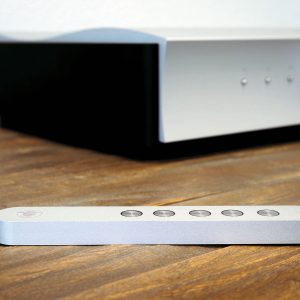
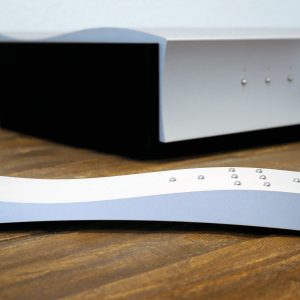
Volume is regulated through an array of MOS transistors and a network of resistors. With a compatible Hegel RC2 remote control, you can adjust the volume, select the source and mute the sound.
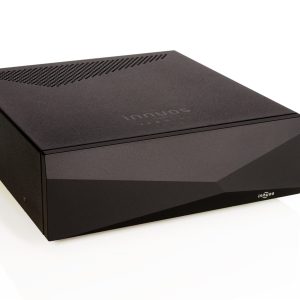
The enclosure was offered in black and silver finishes. Its width follows the conventional format used by full-size Hi-Fi equipment. As the unit weighs 10 kg, it should be placed on a stable shelf with a suitable load capacity.
Connecting analogue sources
The two pairs of balanced XLR inputs are intended for sources fitted with corresponding balanced outputs. This connection type is worth considering for longer cable runs or in an environment where resistance to interference is particularly important.
Three unbalanced RCA inputs accommodate conventional analogue line-level sources. They can be used with equipment such as a CD player, media player or separate converter. In every case, the source must supply an analogue signal at line level.
The connection list does not include a built-in phono stage or digital inputs. A turntable without its own integrated phono stage therefore requires a separate phono preamplifier. A digital source requires a digital-to-analogue converter equipped with RCA or XLR outputs.
Home Theatre integration
The dedicated Home Theatre input bypasses the P30 volume control. It is designed for a controlled output from an AV processor or home cinema amplifier. In this configuration, the home cinema component sets the final volume level for the front channels.
Do not connect a conventional line-level source to this input. Because the volume control is bypassed, the signal could be passed through at an unintended level. When configuring the system for the first time, begin with the AV component set to a low volume.
Outputs and system control
Connections for a power amplifier comprise one balanced XLR output and two unbalanced RCA outputs. Choose the XLR connection when both components in the system support it. The RCA outputs are provided for equipment with unbalanced line-level inputs.
A balanced cable is not essential in every system. Select the connection type according to the inputs available on the power amplifier, the required cable length and the potential for interference in the installation environment. The P30 supports both methods of analogue connection.
A 3.5 mm IR-direct input allows connection to a compatible wired control system. The 12 V trigger output also uses a 3.5 mm connection and can send a power-on signal to a compatible power amplifier or another compatible component.
Initial start-up and placement
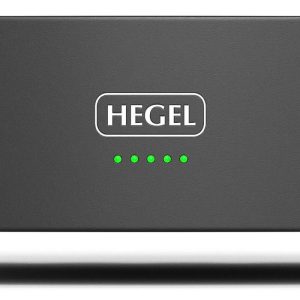
When the unit is switched on, its volume-control system performs a calibration lasting approximately 60 seconds. The power indicator flashes during this process. A steadily illuminated indicator shows that the preamplifier is ready for use.
The enclosure measures 43 cm wide, 30 cm deep and 8 cm high. Allow additional room on the shelf for the RCA and XLR plugs. Cables should not be bent sharply where they meet the rear-panel connections.
When planning the installation, it is useful to route signal and power cables separately. This makes it easier to connect several sources neatly while maintaining access to the rear panel.
Electrical performance
The signal-to-noise ratio is specified as greater than 130 dB in balanced mode. The balanced-mode qualification is important when comparing this figure, as it is not presented as a general result covering every connection type.
Crosstalk is specified as less than -100 dB, while distortion is less than 0.005%. Intermodulation distortion is specified as less than 0.01%. The latter figure was measured using 19 kHz and 20 kHz signals.
These figures describe the performance of the preamplifier’s analogue circuitry. They are not power-output ratings. The P30 does not amplify the signal to the level required to drive loudspeakers.
Technical specifications
| Model | Hegel P30 |
|---|---|
| Type | Analogue stereo preamplifier |
| Balanced inputs | 2 pairs of XLR inputs |
| Unbalanced inputs | 3 × RCA |
| Home Theatre connection | 1 dedicated input that bypasses volume control |
| Balanced output | 1 × XLR |
| Unbalanced outputs | 2 × RCA |
| IR-direct control | 3.5 mm input |
| Trigger output | 12 V, 3.5 mm connection |
| Remote control | Volume, source selection and mute with Hegel RC2 |
| Amplification technology | Hegel SoundEngine and hand-matched FET transistors |
| Signal path | 2 transistors and 1-3 resistors |
| Volume regulation | MOS transistor array and resistor network |
| Signal-to-noise ratio | Greater than 130 dB in balanced mode |
| Crosstalk | Less than -100 dB |
| Distortion | Less than 0.005% |
| Intermodulation distortion | Less than 0.01% with 19 kHz and 20 kHz signals |
| Finishes | Black or silver |
| Dimensions | 8 × 43 × 30 cm (H × W × D) |
| Weight | 10 kg |
| US dimensions | 3.2 × 17 × 12 inches (H × W × D) |
| US weight | 22 lb |
FAQ
Can speakers be connected directly to this preamplifier?
No. A separate power amplifier is required between the preamplifier and passive speakers. The P30 manages source selection and signal level.
How do I connect it to a home cinema system?
Connect the controlled front-channel output of the AV component to the dedicated Home Theatre input. The AV component will control the volume in this mode.
Can I connect a turntable?
Yes, provided that the turntable has a line-level output. Otherwise, a separate phono stage is required between the turntable and an RCA input.
Can I connect a digital audio source?
A digital source requires a separate digital-to-analogue converter. Connect the converter’s analogue XLR or RCA output to the corresponding input on the P30.
Do I have to use balanced XLR cables?
No. Either XLR or RCA connections can be used. The appropriate choice depends on the source, power amplifier and cable run.
Why does the power indicator flash after switch-on?
The flashing indicator shows that the volume-control system is completing its approximately 60-second calibration. The unit is ready when the indicator remains steadily illuminated.
How much space does it require on an equipment shelf?
The shelf must support the unit’s 10 kg weight and accommodate its 43 cm-wide enclosure. Leave additional clearance behind the rear panel for the plugs.