


Copland CSA 100 Hybrid Integrated Amplifier
4 400,00 €
The Copland CSA 100 is a hybrid integrated amplifier for 8-ohm and 4-ohm home stereo speakers, with a minimum permitted load of 2 ohms. It supplies 100 W or 180 W per channel at those respective loads. A 6922 tube line stage works with MOSFET circuitry, while the built-in ES9018 Reference DAC, asynchronous USB input, and RIAA phono input connect digital sources, computers, and compatible turntables.
The Copland CSA 100 is a hybrid integrated amplifier for home stereo systems with 8-ohm or 4-ohm speakers. It delivers 100 W per channel into 8 ohms and 180 W per channel into 4 ohms. Its minimum permitted speaker load is 2 ohms.
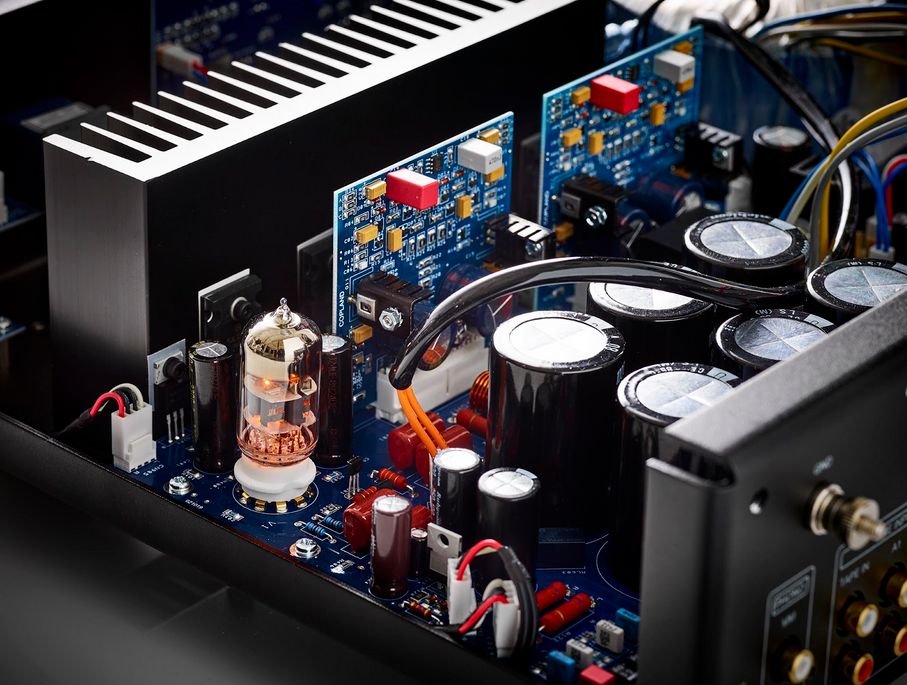
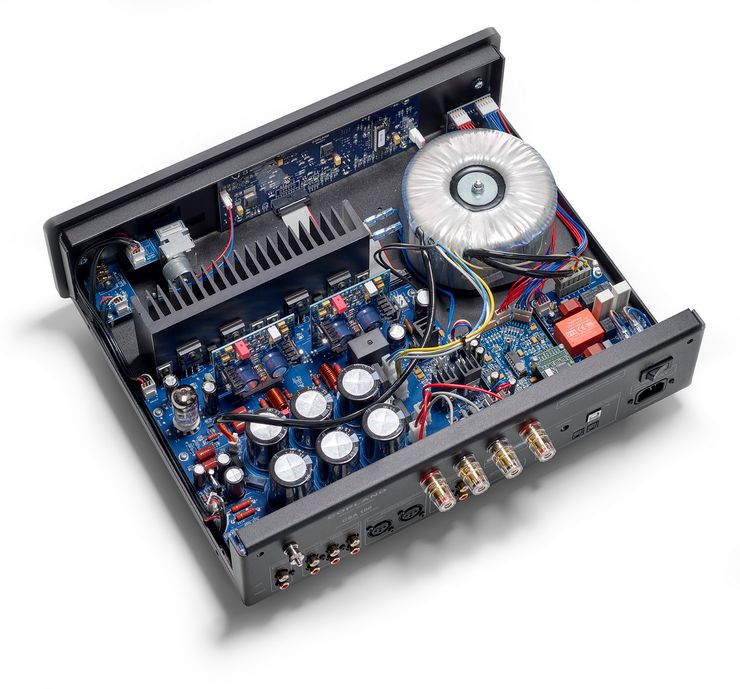
A 6922 tube handles voltage gain in the line stage, while a MOSFET circuit controls its output and feedback. The CSA 100 also includes an RIAA phono input and an ES9018 Reference 32-bit digital-to-analog converter. These connections accommodate a turntable, computer, and other digital audio sources.
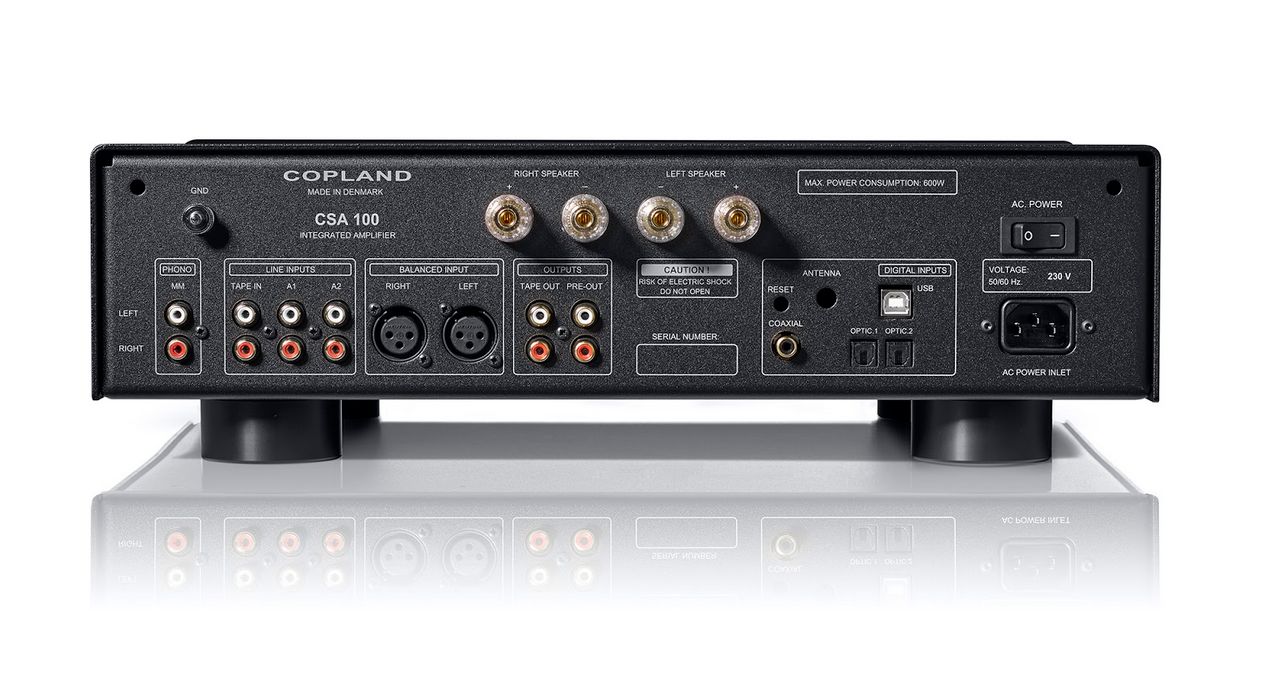
Five analog inputs serve balanced and unbalanced sources, including compatible turntable cartridges. Four built-in digital inputs cover USB, coaxial S/PDIF, and two optical S/PDIF connections. An aptX HD Bluetooth input is available as optional equipment.
Benefits
- Power for stereo speakers – Delivers 2 × 100 W into 8 ohms or 2 × 180 W into 4 ohms.
- Hybrid amplification – A high-voltage 6922 dual triode provides line-stage voltage gain alongside MOSFET circuitry.
- Turntable connection – The RIAA input accepts moving-magnet and high-output moving-coil cartridges.
- Built-in DAC – The 32-bit ES9018 Reference uses a quad-mono configuration for digital conversion.
- Computer audio – Asynchronous USB-B accepts PCM up to 384 kHz, native DSD64, and high-resolution DSD128.
- Digital source options – One coaxial and two optical S/PDIF inputs connect additional digital components.
- Aluminum alloy chassis – Its single-piece construction helps prevent magnetic interference.
Who Is This Amplifier For?
The CSA 100 suits a home stereo system using 8-ohm or 4-ohm speakers. It also permits a minimum speaker load of 2 ohms. Listeners with balanced sources can use the XLR input, while three RCA inputs serve unbalanced line-level components.
Turntable owners can connect moving-magnet (MM) or high-output moving-coil cartridges to the RIAA phono input. Computer listeners can connect a computer USB-A port to the amplifier’s asynchronous USB-B port. This sends digital audio to the CSA 100 while bypassing the computer’s internal audio circuitry.
Other digital sources can use the coaxial or optical S/PDIF inputs. The optional aptX HD Bluetooth input adds a wireless source connection when that equipment is installed. A dedicated headphone amplifier provides another listening option.
Technical Specifications
| Type | Hybrid integrated amplifier with DAC and phono input |
|---|---|
| Power output | 2 × 100 W into 8 ohms; 2 × 180 W into 4 ohms |
| Minimum load | 2 ohms |
| Analog inputs | Five: one balanced XLR, three unbalanced RCA, and one RIAA phono input |
| Built-in digital inputs | Four: one coaxial S/PDIF, two optical S/PDIF, and one USB |
| Optional input | aptX HD Bluetooth |
| Phono compatibility | Moving-magnet and high-output moving-coil cartridges |
| Line outputs | One unbalanced RCA line output; one variable unbalanced RCA preamplifier output |
| Line input impedance | 50 kΩ |
| Phono input impedance | 47 kΩ for MM |
| Phono input capacitance | 200 pF |
| Line input sensitivity | 250 mV |
| Phono input sensitivity | 2.6 mV |
| Frequency response | 10 Hz-150 kHz, -3 dB |
| Total harmonic distortion | Less than 0.06% |
| Signal-to-noise ratio | Greater than 90 dB, IHF-A weighted |
| Phase | Inverting |
| DAC | ES9018 Reference, 32-bit; quad-mono configuration combining eight mono channels into two stereo channels |
| USB audio | USB 2.0; 24-bit or 32-bit PCM up to 384 kHz; native DSD64 and high-resolution DSD128 |
| USB connection | Asynchronous USB-B input for a computer USB-A port |
| Headphone amplifier gain | 22 dB into a 100-ohm load |
| Headphone output impedance | 40 ohms |
| Headphone amplifier distortion | Less than 0.05% |
| Headphone frequency response | 10 Hz-150 kHz, -3 dB |
| Tube | 1 × 6922 |
| Maximum power consumption | 700 W |
| Dimensions | 435 × 135 × 370 mm (width × height × depth) |
| Packaged weight | 14 kg |
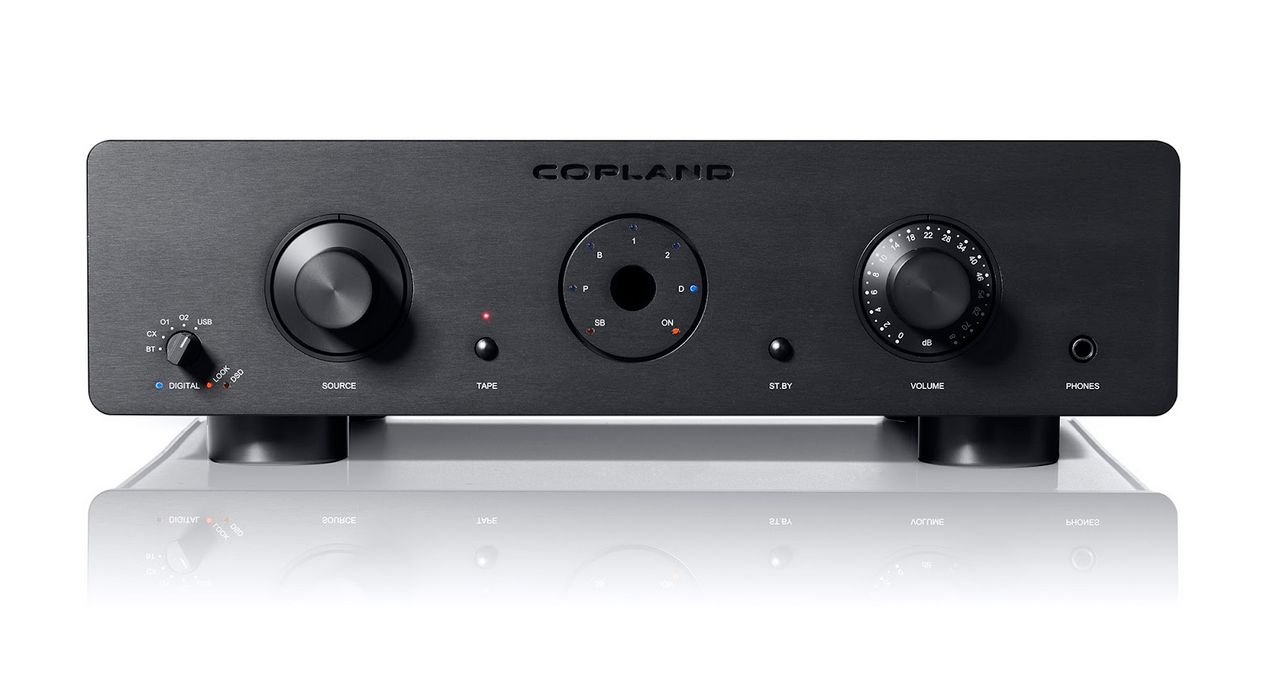
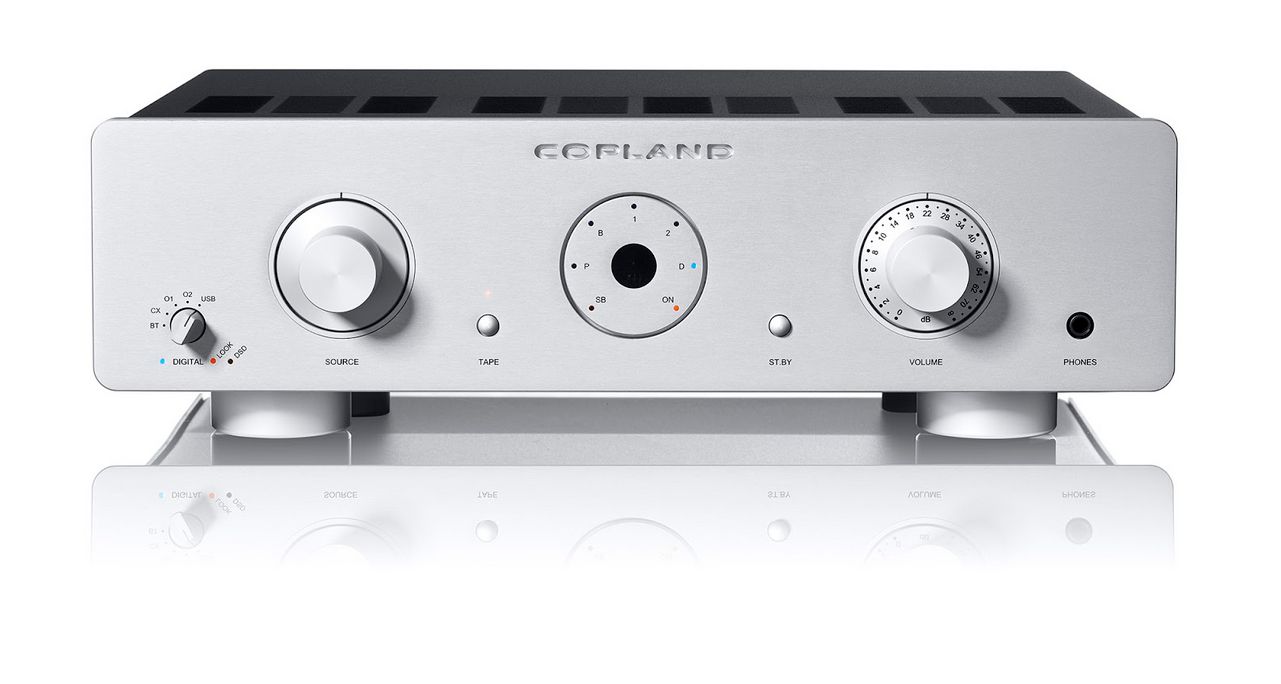
| Available colors | Black or silver |
Why Choose the Copland CSA 100?
The CSA 100 assigns voltage amplification to one high-voltage 6922 dual triode. A MOSFET circuit then controls the line-stage output and feedback circuit. This division of work defines its hybrid amplifier design.
Its ES9018 Reference DAC uses four mono circuits, combining eight mono channels into two stereo channels. The asynchronous USB input accepts both high-sample-rate PCM and DSD audio from a computer. Meanwhile, the phono stage provides a direct connection for compatible turntables.
The amplifier brings analog, digital, phono, and headphone connections into one chassis. Its aluminum alloy, single-piece construction helps prevent magnetic interference. Black and silver finishes are available.
FAQ
Can the Copland CSA 100 drive 8-ohm speakers?
- Yes. It delivers 2 × 100 W into an 8-ohm load.
Can the Copland CSA 100 drive 4-ohm speakers?
- Yes. It delivers 2 × 180 W into a 4-ohm load.
What is the minimum permitted speaker load?
- The minimum permitted load is 2 ohms.
Which turntable cartridges can connect directly?
- The RIAA phono input accepts moving-magnet and high-output moving-coil cartridges.
How does a computer connect to the amplifier?
- Connect the computer’s USB-A port to the CSA 100’s asynchronous USB-B input.
Which USB audio formats does it accept?
- USB accepts 24-bit or 32-bit PCM up to 384 kHz, native DSD64, and high-resolution DSD128.
Is Bluetooth built in?
- aptX HD Bluetooth is available as optional equipment.
For a stereo system built around speakers, a turntable, and digital sources, the CSA 100 offers integrated amplification and flexible connections.